


THE ESTABLISHMENT OF THE PARLIAMENTARY BUDGET OFFICE
The Money Bills Amendment Procedure and Related Matters Act No.9 of 2009 provides for the establishment of the Parliamentary Budget Office. Section 15(1) of the Act reads as follows: "There is hereby established a Parliamentary Budget Office headed by a Director, the main objective of which is to provide independent, objective and professional advice and analysis to Parliament on matters related to the budget and other money Bills."
FUNCTIONS OF THE PARLIAMENTARY BUDGET OFFICE
The core function of the Parliamentary Budget Office is to support the implementation of the Money Bills Act by undertaking research and analysis for the four committees on Finance and Appropriations in the National Assembly and National Council of Provinces, including:
- Annually providing reviews and analysis of the documentation tabled in Parliament by the Executive in terms of this Act;
- Providing advice and analysis on proposed amendments to the fiscal framework, the Division of Revenue Bill and money Bills, and on policy proposals with budgetary implications;
- Monitoring and synthesising matters and reports tabled and adopted in a House with budgetary implications, with particular emphasis on reports by other committees;
- Keeping abreast of policy debates and developments in key expenditure and revenue areas;
- Monitoring and reporting on potential unfunded mandates arising out of legislative, policy or budgetary proposals; and
- Undertaking any other work deemed necessary by the Director to support the implementation of this Act.
About Us
OVERVIEW OF THE PARLIAMENTARY BUDGET OFFICE
The Parliamentary Budget Office (PBO) is a critical resource for South Africa's Parliament, established by the Money Bills Amendment Procedures and Related Matters Act of 2009. Its primary purpose is to empower Parliament to exercise robust oversight of the nation's finances. The PBO achieves this through the provision of expert research and analysis that maintains the highest standards of independence, professionalism, and objectivity.
Key Functions:
- Empowering Parliament: The PBO's work gives Members of Parliament the tools and insights to meticulously examine budgets and policy proposals by government. This translates into greater accountability for the Executive in the use of public funds, and stronger alignment of budgetary decisions with the societal goals set out in the National Development Plan (NDP) for example.
- Clarity and Strategic Balance: The PBO recognizes that parliamentary time is valuable. Reports and analyses are carefully crafted to maximize clarity and minimize jargon. Furthermore, the PBO adopts a strategic approach, balancing timely responses to parliamentary requests with the initiation of self-directed research projects that offer a proactive perspective.
- Fostering Trust: The PBO's reputation for neutrality, evidence-based analysis, and non-partisanship is invaluable. It cultivates trust from both Parliament and the Executive, allowing the PBO to play a constructive role in the budgetary process.
- Real-World Impact: The PBO recognizes that government budgets are more than just numbers. Its analysis emphasizes the potential consequences of budgetary choices on crucial socioeconomic indicators. This allows MPs to assess the likely impact on economic growth, employment creation, poverty reduction, and efforts to bridge the inequality gap.
STRATEGIC FOCUS
Vision
To build an Office that provides a strong and independent professional voice within the budget process and strengthens the oversight capacity of Parliament.
Mission
To provide independent economic and fiscal advice to Members of Parliament that enriches and supports informed recommendations in their oversight function as the Executive.
Values
- Independent
- Objective
- Professional
- Transparent
- Accountable
- Innovative
- Collaborative

LEGISLATIVE AUTHORITY AND MANDATE
The Parliamentary Budget Office (PBO) derives its authority from the Money Bills Amendment Procedure and Related Matters Act of 2009 (Act No. 9 of 2009). This Act reinforces Parliament's constitutional mandate (Section 77 and 42(3)) to oversee national finances and scrutinize Executive actions. The Act led to the creation of specialised parliamentary committees – the Finance and Appropriations Committees in both Houses – tasked with budgeting and public finance oversight. The PBO was established as a special-purpose entity to provide these committees specifically with essential technical support. The Office is further required to extend its support to other Parliament Committees and Individuals Members of Parliament.
Section 15(1) of the Act defines the PBO's core objective: to furnish Parliament's Finance and Appropriations Committees with independent, objective, and professional analysis of the budget and other money bills. Its key function, outlined in Section 15(2), is to support the Act's implementation through rigorous research and analysis.
IN PRACTICE
To fulfill its mandate, the PBO provides Parliament with expert guidance on economic, fiscal, and policy matters, aiding in both Parliament's constitutional oversight of the Executive and its specific duties under the Money Bills Act.
Legal FrameworkThe PBO operates within the following legal parameters:
- Primary legislation: The Money Bills Amendment Procedure and Related Matters Act of 2009 (Act No. 9 of 2009).
- Secondary legislation: The Financial Management of Parliament and Provincial Legislatures Act 2009 (specifically Section 35).
OFFICE GOVERNANCE AND ACCOUNTABILITY
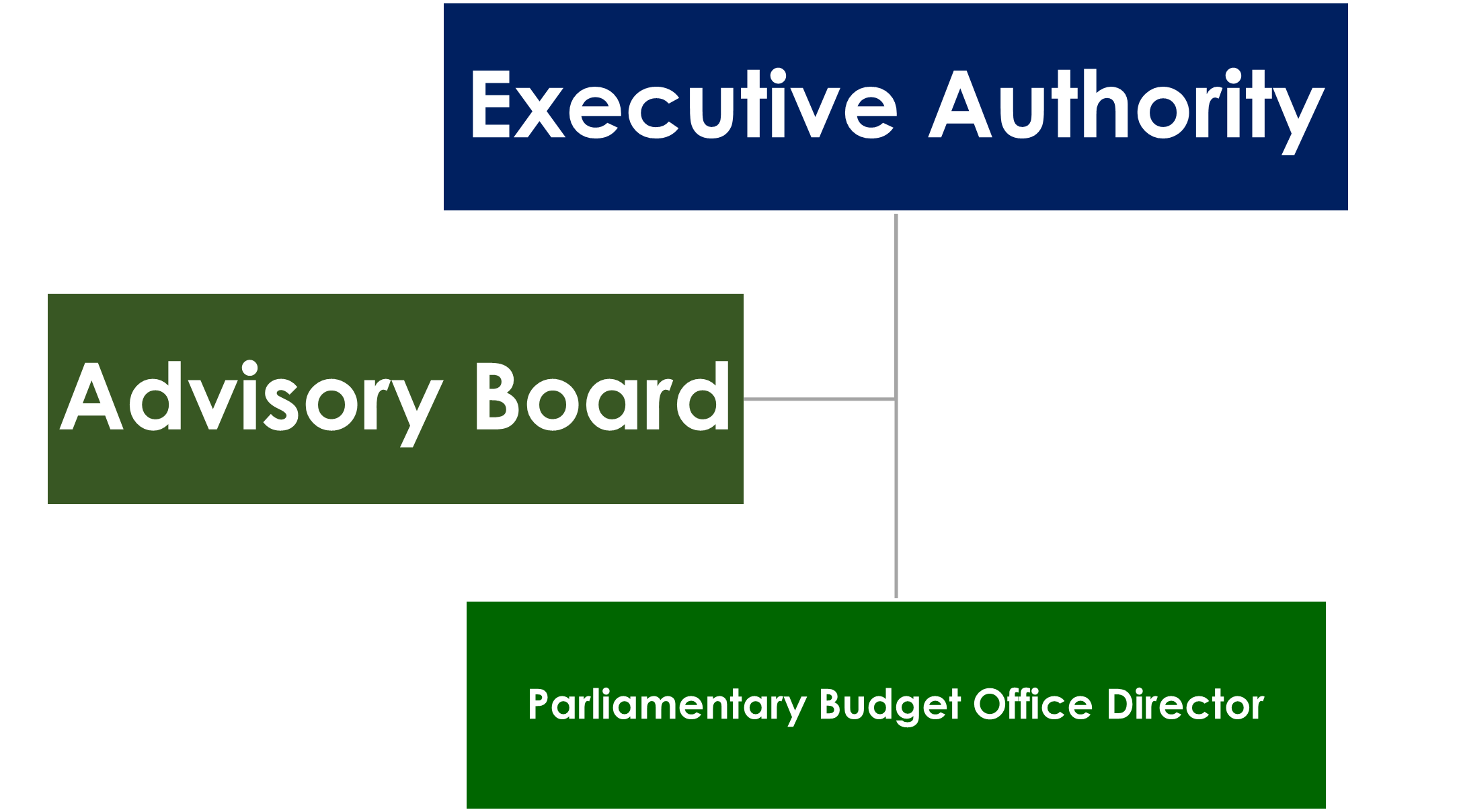
The Parliamentary Budget Office (PBO) operates under a robust governance framework, with the Advisory Board and Parliament's Executive Authority (the Speaker of the National Assembly and Chairperson of the National Council of Provinces) as core oversight bodies. The Director is ultimately accountable to Parliament, as outlined in Section 42 of the South African Constitution.
Advisory Board FunctionsEstablished by the Money Bills Amendment Procedure and Related Matters Act, the Advisory Board has key responsibilities:
Organizational Structure: Consults with the Director to determine the PBO's structure.
Employment Conditions:Provides input on conditions of service for PBO personnel, ensuring alignment with broader Parliamentary Service guidelines.
Acting Director:Nominates a PBO employee to serve as Acting Director if the Director's position is vacant or the Director is incapacitated.
DIRECTOR'S ROLE
The Director enters into a performance agreement with the Executive Authority on fulfilling the mandate of Office as outlined in the Money Bills Act. The Director would then regularly provide the Executive Authority with reports and briefings on the Office developments. The Director engages regularly with the Advisory Board on matters impacting the PBO's work. In line with the amended Money Bills Act (2018), the PBO maintains a comprehensive Governance and Reporting Model emphasizing:
Accountability to Parliament:The Director reports to Parliament through the Executive Authority. This includes Annual Financial Statements, Annual Reports, and additional submissions (quarterly reports and monthly financial statements) as appropriate.
Executive Authority Feedback: The Executive Authority guides the PBO on sound management and performance and presents the PBO's planning, budgeting, and reporting to Parliament for oversight review.
Transparency: The Director consults the Advisory Board, which includes Finance and Appropriations Committee representatives, during planning, budgeting, and reporting processes.
Director Appointment and Oversight: The Finance and Appropriations Committees recommend candidates for the Director position, as well as renewals or terminations of the Director's contract, to Parliament for decision.
Ms Linda Gxabela
Executive Assistant to the Director
Mr Alfred Monnakgotla
Office Manager

Dr Seeraj Mohamed
Deputy Director: Economics
Prof. Seeraj Mohamed is a highly qualified economics expert and advisor with over three decades of experience working in the public sector and universities. He has played a senior leadership, management and advisory role in research, policymaking, teaching and development of postgraduate university courses and programmes. He is a published author and editor who authored and co-authored dozens of documents and articles for the government and peer reviewed academic books and accredited international journals.
Prof. Mohamed is the Deputy Director for Economics in the South African Parliamentary Budget Office and Adjunct Professor in the School of Government at the University of the Western Cape. He was Associate Professor in the Department of Economics at the University of the Western Cape and Director of the Corporate Strategy and Industrial Development Research Programme at the University of the Witwatersrand. He has worked on economic and industrial development issues since the early-1990s.
Prof. Mohamed holds a BA Degree (UCT), Honours Degrees in Economic History (UCT) and Economics (Wits), a Graduate Diploma in Engineering focused on Minerals Economics (Wits), Masters Degrees in Development Economics (Williams College, Massachusetts) and Economics (University of Massachusetts, Amherst) and he completed the Parliament Senior Manager Development Programme (Stellenbosch Business School). His PhD in Economics is from the University of Massachusetts, Amherst
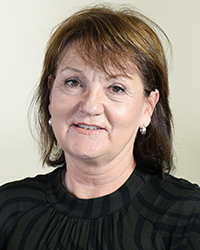
Dr Nelia Orlandi
Deputy Director: Public Policy
Dr Nelia Orlandi is the Deputy Director in the Policy Cluster and is responsible for policy and budget analysis as well as the monitoring of policy implementation on a national level. Doctor Orlandi started in the Parliamentary Budget Office on 1 January 2014. Prior to this, she worked in the Western Cape Provincial Treasury, Budget Office. Doctor Orlandi holds a Doctor of Philosophy (PhD) in Public Management and Development from the University of Stellenbosch. She also holds a Master of Business Management and Administration (MBA)and M.Phil (Economic Policy), both from the University of Stellenbosch. Doctor Orlandi strives to make a difference, specifically in capacitating colleagues to understand how organisational structures, planning and budgeting needs to be integrated to ensure efficiency and effectiveness.

Ms Kagiso Mamabolo
Economic Analyst
Kagiso Mamabolo is an economic analyst at the Parliamentary Budget Office, where she is responsible for conducting quantitative and qualitative research and analysis on macroeconomic policies and macroeconomic modelling. Before joining the PBO, she worked as Deputy Director at the Department of Trade, Industry and Competition in the Office of the Minister. She was also an associate at Genesis Analytics, where she gained experience conducting socio-economic impact assessments and providing strategic advice on the potential risks and benefits of policy reforms and regulatory changes. Kagiso holds a Master’s degree in Economics from the University of Pretoria and a Three-Continent Master’s Degree in Global Management from Fordham University in the United States and Antwerp Management School in Belgium. She earned a BCom (Honours) in Economics from the University of Pretoria and a National Diploma in Accounting. Kagiso is a member of the Economic Society of South Africa (ESSA), Golden Key International Honour Society, and the Pan-African Scientific Research Council.

Ms Sibusisiwe Sibeko
Public Finance Analyst
Busi Sibeko is a finance analyst at the Parliamentary Budget Office. She holds a BSc in Economics from Duke University and a Masters in the Political Economy of Development from SOAS, University of London. She was previously at the Institute for Economic Justice (IEJ) where her research focus was macroeconomic policy. She was the co-chair of the Budget Justice Coalition, comprised of 14+ civil society organisations. While at the IEJ, Busi
published several works, including The Cost Austerity: Lessons for South Africa and A fiscal stimulus for South Africa. Busi was featured in the roundtable series of renowned economists on Rebirthing the Global Economy to Deliver Sustainable Development by the United Nations Secretary-General. She was a part of the UN Women expert group which informed the Beyond COVID-19: Feminist Plan. Her works include a paper titled A feminist Approach to Debt in Africa and Feminist Proposals on Macroeconomic Policies Needed for a COVID-19 Economic Recovery.

Dr Mukundi Maphangwa
Public Finance Analyst
Dr. Mukundi Maphangwa is a seasoned public finance expert with over 15 years of experience, currently serving at the Parliamentary Budget Office. Holding a PhD in Public Management and Governance from the North-West University, Dr. Maphangwa brings extensive expertise in financial analysis, budget and costing analysis, tax and revenue analysis, as well as research and statistical analysis. Prior to his current role, Dr. Maphangwa was an Economic Growth Cluster Specialist at the City of Johannesburg, Deputy Director: Senior Budget Analyst at the National Treasury of South Africa, and an economist at the Gauteng Provincial Treasury. He gained valuable experience in monitoring, evaluating, and reporting on financial performance, service delivery, corporate governance and compliance. His academic credentials include a Master of Public Administration, an Honours Bachelor of Commerce in Economics, a Bachelor of Accounting Science (BCompt), a BCom General, and a CIMA Advanced Diploma in Management Accounting.
Dr Mmapula Sekatane
Policy Analyst
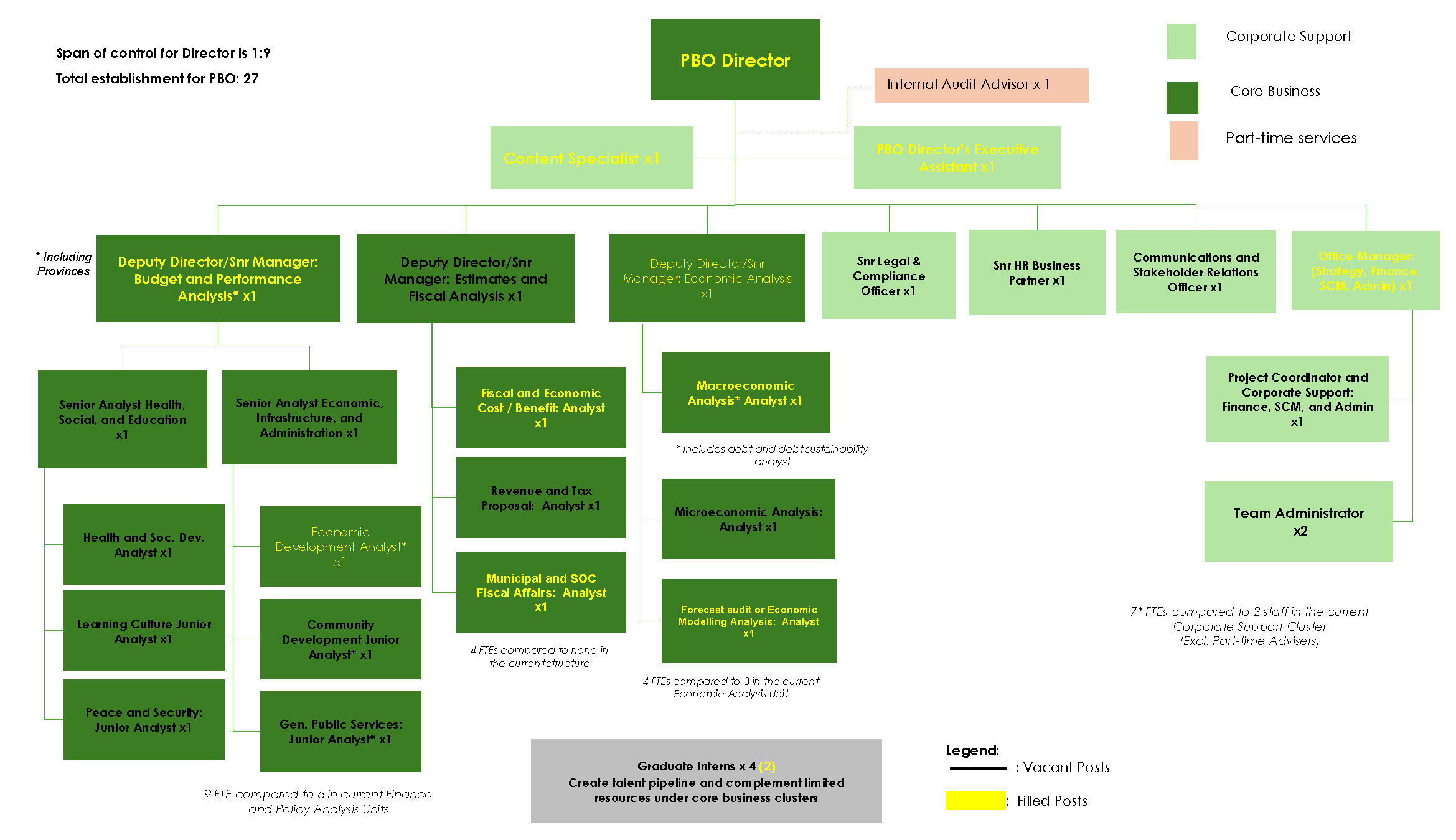
Vacant
Director of the PBO
Vacant
Deputy Director: Finance
Vacant
Policy Analyst
Vacant
Economic Analyst
Vacant
Project Coordinator
Acts
Money Bills Act
Amended Money Bills Act
Publications
Upon request from Parliamentary committees, the PBO provides analysis and advice ahead of and following the annual tabling of the Budget Review and Medium-Term Budget Policy Statement.
PBO 2026 pre MTBPS Workshop presentation 30 September 2026Municipal Finance Brief Q3 2025-26
PBO assessment on the Second Special Appropriations Bill 26 Aug 2026
Fiscal Brief May 2026 final
Municipal Finance Brief Q2 2025-26
PBO 2026 DORA Appropriations Bill other Bills 6 March SCOA
PBO 2026 Budget presentation 3 March 2026
PBO 2026 pre-Budget presentation 23 February 2026 final
PBO Global and South African outlook brief 20 Feb 2026
PBO Pre-Brief Turning The Corner But at What Cost
PBO Taxation Brief 2025
Fiscal Brief February 2026
Fiscal Brief December 2025 final
PBO 2025 Adjustments Budget and Division of Revenue Amendment Analysis 28 November 2025
The PBO 2025 MTBPS presentation 18 Nov 2025
PBO 2025 pre-MTBPS Workshop 11 Nov 2025
Select Committees on Appropriations and Finance 08 October 2025
Municipal Finance Brief Q3 2024-25
Fiscal Brief April to March 2025
PBO 2025 DORA Appropriations Bill other Bills 17 June 2025
PBO Budget Analysis 2025-27 May 2025
PBO Pre-Budget 3.0 PreBrief Economic Context Fiscal Review and Parliamentary Budget Process May 2025
PBO 2025 DORA analysis 9 April 2025
PBO 2025 DORA analysis 26 March 2025
PBO 2025 Budget analysis 18 March 2025
PBO Pre-budget brief Exploring alternative revenue sources and fiscal strategies 07 March 2025
Fiscal Brief Feb 2025
2022-2023 Performance on EPWP conditional grants 4 Feb 2025
PBO Pre-Brief Fiscal Framework Brief Feb 2025
PBO Pre-Budget 2025 Municipal Finance Brief Feb 2025
PBO Pre-budget brief global economi outlook Feb 2025
PBO Pre-budget brief on SA's Sovereign Debt Feb 2025
PBO Pre-budget brief South Africas trade relations with the USA
PBO Pre-budget brief spending and revenue Feb 2025
PBO pre budget brief on SRD Feb 2025
Pre-budget Government capital spending brief 6 Feb 2025
PBO A DoRa and A-Appropriations presentation 13 November 2024 SCOA
PBO 2024 MTBPS Analysis 05 November 2024
PBO Taxation Brief 2024
Fiscal Brief April 2023 to March 2024
PBO 2024 Appropriations Bill Presentation 23 July 2024 Select Appropriations Committee
PBO 2024 DORA Analysis 5 March 2024
PBO 2024 Appropriations Bill Presentation FINAL 17 JUN 2024
The PBO Induction Presentation 04 July 2024
PBO 2024 DORA Analysis 27 March 2024 updated
PBO 2024 Budget analysis 27 Feb 2024 Final
PBO 2024 DORA Analysis 5 March 2024
2024 Pre-budget brief Service delivery situational analysis PBO
Fiscal Brief Feb 2024
Pre-budget 2024 skills development and training brief
Pre-budget brief Global and South African economic outlook for 2024 PBO
Pre-budget brief on SA Debt and the Fiscal framework 2024
Pre-budget NSFAS brief
Local Government Underspending Metros Brief Feb 2024
DORAB Adjusted Appropriations and Eskom debt relief amendment bill 14 Nov 2023
Summary of PBO presentation 2023 MTBPS 11 Nov 2023
Q and A 07 Nov 2023 Revised Fiscal Framework
2023 MTBPS Brief 07 November 2023
Pre-MTBPS Briefs Oct 2023
Fiscal brief October 2023
Analysis of Government Underspending – Higher Education and Training 22 May 2023
Analysis of Government Underspending – Basic Education 22 May 2023
Appropriations Bill and Eskom Debt Relief – 17 May 2023
April 2023 PBO Budget and Division of Revenue Brief - 04 April
Appropriations Bill and Eskom debt relief - SCOA 20 April 2023
Brief on 2023 Division of Revenue Bill for Standing Committee on Appropriation - PBO Presentation 8 March 2023
March 2023 DORA and Second Adjustments Appropriations - PBO Presentation 15 March
Government underspending analysis 2011 - 2021 the case studies of the Departments of Health and Social Development
March 2023 PBO Fiscal Framework Summary
Oct 2022 Fiscal Brief
Oct 2022 Pre MTBPS Brief
Oct 2022 Pre MTBPS Presentation
2022 Appropriations Bills 4 May 2022
2022 Appropriations Bills 25 May 2022 PBO
2022 Appropriations Bill Parliamentary Budget Office Notes on Vote 26 Military Veterans
March 2022 Budget presentation
March 2022 DORA PBO Presentation
March 2022 DORA PBO Presentation March 2022
Feb 2022 Pre-Budget analysis report
Pre-MTBPS Brief
MTBPS Analysis
2021 Adjusted Budget
Comments on the 2021 Appropriation and Supplementary Appropriation Bills, 05 May 2021
Feb 2021 PBO Pre Budget presentation 23 Feb 2021
Feb 2021 Pre Budget analysis report version 3
March 2021 Briefing Note to Select CoA
March 2021 DORA PBO Presentation 09 March 2021 Standing CoA final converted
March 2021 DORA PBO Presentation SelectCoA 17 March 2021 final converted
March 2021 PBO Budget Presentation 02 March 2021 converted
Nov 2020 Adjusted Appropriations and DORB
Nov 2020 MTBPS Analysis 03 Nov 2020 Joint Committees Finance and Appropriations
Oct 2020 Pre MTBPS Updated
2016 Budget Review Analysis Report
2016 Pre-budget Report
Analysis of the 2016 Budget
Analysis of the 2015 Budget
The PBO provides quarterly analysis of economic developments for Members of Parliament following the release of quarterly economic data by Stats SA, the South African Reserve Bank and the National Treasury, and discusses implications of these developments for public finances. Publication dates are aligned to parliamentary terms.
PBO June 2026 Quarterly Economic BriefPBO March 2026 Quarterly Economic Brief
PBO December 2025 Quarterly Economic Brief
PBO September 2025 QEB
PBO June 2025 QEB
March 2025 QEB
PBO December 2024 Quarterly Economic Brief
PBO QEB September 2024
PBO Quarterly Economic Brief June 2024
Quarterly Economic Brief March 2024
Quarterly Economic Brief December 2023
Quarterly Economic Brief - 19 September 2023
June 2023 Fiscal Brief 15 June 2023
June 2023 QEB 22 June
March 2023 PBO- Quarterly Economic Brief
December 2022 Quarterly Economic Brief
Quarterly Economic Brief
June 2022 QEB
March 2022
December 2021
September 2021
June 2021
March 2021
December 2020
September 2020
July 2020
April 2020
December 2019
November 2019
July 2019
September 2018
May 2018
February 2018
October 2017
July 2017
March 2017
December 2016
September 2016
June 2016
March 2016
December 2015
September 2015
June 2015
October 2014
The PBO provides analysis and advice to the legislature on a range of economic, policy and social issues with implications for money-bills and the overall health and sustainability of public finances in the realisation of the country’s development goals. Analysis and advice take the form of in-depth analysis, briefing notes, parliamentary committee briefings, and policy costings. These are generally upon request of a parliamentary committee(s), subject to capacity. The PBO also initiates research and analysis with direct implications for money bills.
PBO Brief on Revenue Amendment Bill Amendments SCOF 27 November 2023Government Underspending Analysis 2011-12 -2020-21 A Case Study of the Departments of Social Development and Departments of Basic Education - 06 September
Brief on the 2023 Taxation and Revenue Proposals - 19 September 2023
Government Underspending Analysis 2011-12 2020-21 Case Study of Basic Education 21 June 2023
PBO Brief on Vote 38 Tourism and SAT – 30 May 2023
Rules Subcommittee Briefing - 21 April 2023
PBO’s written answer to the question raised by the Select and Standing Committees on Finance on austerity
Thinking about Fiscal Consolidation - theory, ideology and consequences
June 2022 PBO Taxation Brief
DOR Adjusted Appropriations and Specl Apprn for SCOA 9 Nov 2022
DOR Presentation 10 Nov 2022
MTBPS Discussion 16 Nov
PBO briefing 2022 MTBPS 01 Nov
Fiscal Brief
Brief on Government support interventions
PBO Fiscal Brief 2021/22 Analysis 03 Aug
Orientation of the Secretary to Parliament 28 June 2022
PBO Briefing- Business Bounce-back Support and the Credit Loan Guarantee Schemes - SMMEs
PBO Brief on 2022 Draft Preferential Procurement Regulations
Feb 2022 PBO Fiscal Brief
Brief on Transport Conditional Grants
November Fiscal Brief
Understanding the sources of municipal revenue
Sep 2021 Brief on 2021 Budget Cuts on National Votes
Sep 2021 Second Special Appropriations Bills Briefing 3 September 2021
Sep 2021 Second Special Appropriations Bills
August 2021 Performance on August 2021 Basic Education Conditional Grants 18 Aug
June 2021 PBO presentation on the Fiscal Responsibility Bill 2020 June 01
June 2021 Economic Challenges for development and growth 08 June 2021 SelCOF PBO
Tools for effective budget and fiscal oversight: Parliament Existing Procures and Practice for Effective Financial Oversight- the Case for Budget Office”, NCOP Budget and Oversight Workshop, 05 May
Economic Reconstruction and Recovery Plan, SCAP Planning, Select Committee on Finance. 11 May
A guide to understanding major cryptocurrency issues and regulatory frameworks, Select Committee on Finance, 25 May 2021
2016 - The Costs and Outcomes of Industrial Development Initiatives 1994/95 -2014/15
2016 - Report on the Sustainability of South Africa’s Social Grants System
2016 - The costs and outcomes of industrial development initiatives 1994-95 - 2014-15
2016 - Electricity generation technology choice: Costs and considerations
2016 - Fiscal Analysis on Cost of Higher Education Funding in South Africa
2016 - The involvement of Public Accounts Committees in the Budget Process
2016 - 2016 Budget Analysis: Trade and Industry
2016 - The costs and outcomes of industrial development initiatives 1994/95 -2014/15
2016 - Fiscal Analysis of the Cost of Higher Education in South Africa- SCOA
2015 - BRICS New Development Bank
2015 - Funding of Heritage Commissions
2015 - Briefing note on withdrawal of the proposed UIF reduction for 2015/16
2015 - Report on State-owned Enterprises for the Standing Committee on Finance
2015 - Eskom Appropriation Bills
2015 - International agreement on the New Development Bank
2015 - Input on Rates and Monetary Amounts Amendment Bill (2015/16)
2015 - Summary Report on State-owned Enterprises for the Standing Committee on Finance
2015 - Presentation of the PBO Report on State-Owned Enterprises
2015 - The Public Sector Wage Bill: Implications for Public Finances and Economic Growth
2014 - The Regulation and Policies of the National Treasury and the South African Reserve Bank and Economic Growth
2014 - Briefing Note: The NCOP and advancing economic transformation
2014 - Briefing Note: Public infrastructure and the triple challenges of poverty, unemployment and inequality
2014 - Briefing note: the minimum wage debate in South Africa
2014 - Briefing Note: Value Added Tax VAT
2014 - The Impact of Investment on South Africa
2014 - An Overview of Government’s Medium Term Strategic Framework (MTSF) 2014 -2019 for the Standing Committee on Finance
2014 - The Impact of Investment
The PBO has undertaken…
Vote 33 Human Settlements Budget assessment 26 May 2026Priority 3 part II progress report 27 March 2026
Strategic Priority 3 progress part I Feb 2026
2021-2024 Performance on Basic Education Conditional Grants final
2021-2024 Performance on Health Conditional Grants FINAL
2021-2023 Infrastructure Conditional Grants to local government August 2025
2022-2024 Capacity Building conditional grants to municipalities
2023-24 Performance on Agriculture Conditional Grants Final
2022-2023 Performance on EPWP conditional grants 4 Feb 2025
Pre-budget Government capital spending brief 6 Feb 2025
2022-2023 Performance on Transport conditional grants 31 Oct 2024
2022-2023 Performance on Basic Education Conditional Grants July 2024
Priority 2 Outcome 1 More decent jobs sustained final PBO
2021-2022 Performance on Basic Education Conditional Grants - 19 September
Priority 2 Outcome 3 Industrialisation localisation and exports - 19 September
2021-2022 Performance on Transport Conditional Grants - 19 September
Priority 2 Outcome 2 Investing for accelerated inclusive growth 21 June
Policy Brief Performance on the 2019-2024 MTSF Policy Priority 3 Education Skills and Health
Policy Brief Performance on the 2019-2024 MTSF Priority 2 Economic Transformation and Job Creation
Policy Brief Performance on the 2019-2024 MTSF Priority 3 Education Skills and Health
Policy Brief Performance on the 2019-2024 MTSF Priority 4 Consolidating the Social Wage through Reliable and Quality Basic Services
Policy Brief Performance on the 2019-2024 MTSF Priority 5 Spatial Integration Human Settlements and Local Government
Policy Brief Performance on the 2019-2024 MTSF Priority 6 Social Cohesion and Safer Communities Part 1
Policy Brief Performance on the 2019-2024 MTSF Priority 6 Social Cohesion and Safer Communities Part 2
Policy Brief 2020-21 Performance on Basic Education Conditional Grants
Policy Brief Performance on Agriculture Conditional Grants 2020 21 April 2022
March 2022 Performance on Health Conditional Grants
Feb 2022 Performance on Transport Conditional Grants Presentation
August 2021 Policy Brief Performance on Basic Education Conditional Grants 18 Aug
August 2021 Policy Brief Performance on Human Settlement Conditional Grants
Social grant performance as at end March 20/21, 25 May 2021
Feb 2021 Policy Brief Performance on Health Conditional Grants
March 2021 Policy Brief 2019 20 Performance on Agriculture Conditional Grants
The National Development Plan Outcome 5: A skilled and capable workforce to support an inclusive growth path
The National Development Plan Outcome 4: Decent employment through inclusive economic growth
The National Development Plan Outcome 10: Protect and Enhance Our Environmental Assets and Natural Resources
The National Development Plan Outcome 12: An efficient, effective and development-oriented public service Alignment and Progress
Alignment and Progress Report on The National Development Plan Outcome 7: Comprehensive rural development and land reform
The National Development Plan Outcome 6: An efficient, competitive and responsive economic infrastructure network
2016 Budget Analysis: Trade and Industry
NDP alignment with the MTSF and progress 2014-15
The National Development Plan Outcome 3: All people in South Africa are and feel safe Alignment and Progress
The National Development Plan Outcome 13: An inclusive and responsive social protection system
The National Development Plan Outcome1: Quality Basic Education Alignment and Progress
The National Development Plan Outcome 2: A Long and Healthy Life for All South Africans: Alignment and Progress
The National Development Plan Outcome 8: Human Settlements Alignment and Progress
Budgetary proposals made by government in the Budget and Medium-Term Budget Policy Statement (MTBPS) are based on forecasts of economic growth and revenue collection. It is therefore critical for fiscal oversight that these forecasts are unbiased and as accurate as possible. The PBO conducts technical assessments for Parliament of the performance government’s forecasts of economic growth and revenue collection.
2018 - Assessing the Performance of National Treasury’s Tax Revenue Forecasts2018 - Technical Report Assessing the Performance of National Treasury’s Tax Revenue Forecasts
2017 - Assessing the Performance of National Treasury’s Tax Revenue Forecasts
2016 - Assessing the Performance of National Treasury’s Economic and Fiscal Forecasts
2016 - Assessing the Performance of National Treasury’s Economic and Fiscal Forecasts.
Brief on funding the elections
Municipal Unfunded Mandates July 2026
Local Government Audit Outcomes 2019-20FY to 2023-24FY
Statistics South Africa Request for additional funding 26 May 2026
Brief on the Budget Facility for Infrastructure (BFI) 18 Feb 26
Gender Budget Statement Feb 2026
Pre-budget Fiscal anchor brief February 2026
North West Province Oversight Visit 20-23 October 2025
PBO Brief Rejection of Budget Votes and Appropriation Bill Implications July 2025
PBO Brief Section 139 and 154 Municipal Interventions May 2025
PBO Gender Responsive Budgeting March 2025
South Africa MPPN Roundtable Summary Report 2024
Brief- BRICS-PF - 27 September
Presentation Rules Committee UK Study Tour 16 July 2023
KZN PBO Presentation 28 June Dr Dumisani Jantjies
PBO Costing Estimate Analysis SL and IPU 29 June 2023
Eastern Cape Provincial Legislature Budget Committee Workshop 23-24 May 2023
PBO Joint Chair of Chairs Workshop 27-28 March 2023
Tongaat Hullett the PBOs written answer to the SCOA Nov 2022
PBO Briefing on Vote 1 Presidency Oversight November 2022
05-12-2022/FFC 23 Nov 2022
Uganda Study Visit
NCOP Legislative Review 25 November 2022 Dr Dumisani Jantjies Presentation
Members Training 17 August 2022
Public Participation AN PBO presentation 23 August
Eastern Cape Provincial Legislature Budget Committee Workshop
Orientation of the Secretary to Parliament 28 June 2022
Submission on the SADC Model Law of PF- 31 May 2022
Presentation on Mar 2022 QEB Speakers Forum 13 April 2022
March 2022 NCOP Strategic Plan 01 and 03 March 2022 DJ Jantjies
Mapping and the Budget Process Financial and Fiscal Commission
Sep 2021 BRRR Chairpersons PBO presentation 8th Sep 2021
Western Cape Legislature Budget Committee Workshop on Money Bills Amendment Procedure 21 July 2021
Workshop between PBO and AGSA 08 July 2021
March 2021 NCOP Strategic Planning Session PBO 02 March 2021
Nov 2020 Parliament Inclusive Growth Summit 25 November 2020 Dr DJ Jantjies
Oct 2020 Draft Public Procurement Bill

Contact Us
Parliamentary Budget Office
4th Floor
Parliament Towers
103 - 107 Plein Street
Cape Town
8001
Tel: +27 21 403 2360
Fax: +27 21 403 3153
Fax to Mail: +27 86 718 2531
Email: pboinfo@parliament.gov.za