



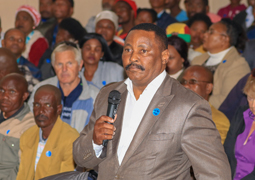
The public hearings on whether to amend or not section 25 of the Constitution of the Republic of South Africa, to make it possible to expropriate land without compensation inadvertently open the wound of bitter and painful histories of the brutality of the system of colonialism in the hearts of black people.
That history of the atrocious killing of peaceful and vulnerable people for dispossessing them of their inheritance inevitably becomes fresh in the people’s minds and automatically creates a mixture of contrasting emotions of anger in the people’s hearts for the killing of their ancestors, including their traditional leaders, dispossession of their land and cattle, and the emotion of excitement for the hope of regaining what was lost centuries ago. Furthermore, that history becomes new and alive when those who own land resist the attempts of land redistribution and to undo the haunting legacy of inequality among South Africans.
However, the strength of the emotion of excitement about the hope for the redistribution of the land triumphs and supresses the one of bitterness and anger. Also, the coincidence of the discourse on expropriation of land without compensation with the celebration of the commemoration of the centenary of the birth of the icons of liberation struggle, Mr Nelson Mandela and Ms Albertina Sisulu, help to keep the perfect balance between the paradoxical emotions to a greater extent. Notwithstanding the depth of the damage caused by land dispossession to black South Africans, the two struggle icons are the symbols of reconciliation and justice and their names are the antithesis of anything which is against peace and justice.
At the Mthatha Town Hall at the beginning of the week, the writing of the opening of that painful and bitter history was clear on the inside and outside walls of the hall where the first Eastern Cape hearings began. Outside the hall some people reminded each other about the use of brutal and the sophisticated system of colonialism in dispossessing the indigenous people of their land and livestock in all the historical kingdoms in the former Transkei, namely AbaThembu, AmaXhosa and AmaMpondo. As a way of sustaining themselves in the long queues for participation in the hearings the people drew galaxies of the lists of names of the heroes and heroines from their hearts’ and minds’ archives. The famous, fierce 18th century Eastern Cape frontier wars ((from 1779 to 1879) became part of the common narrative that people shared at the Mthatha Town Hall – and which is highly likely to be the same in Queenstown today, 25 July, and at the Orient Theatre in East London on Thursday, 26 July, when the hearings would be moving to those venues.
The people reminded each other about the killing of the famous King of AmaXhosa, King Hintsa who according to history, was painfully tortured before he was killed near Nqabara River during one of those frontier battles. People pulled the entire 18th century period of years and placed it before them, opened the graves and resurrected their heroes and heroines. They were complaining about the impossibility to get the mandate from them on what to say at the hearings.
Ms Noziyolo Phethani of the town of Mqanduli, said it was very difficult to imagine the extent of pain to the real rightful owners when their land was grabbed by force from them. “We hear about this from history and it is very painful. How much more to those who experienced this pain in their lifetime,” she asked.
One of the participants at the Mthatha hearings, Ms Phillis Noah, who identified herself as a descendant of the Griquas and who is also a Mthatha resident, as a way of prefacing her submission to the delegation, shared an emotional history of the killing of the Khoisan Kings and their people before the popular Eastern Cape frontier wars, for defending their land. She said the Khoisan Kings were the organic citizens and owners of the land.
“The Khoisan people were created in South Africa by God – and settled them in their country and were prepared to share their country with all the refugees that came later.”
Based on that history she referred to as a sacred genesis of South Africa, she argued for the expropriation of the land with compensation. She said expropriation with compensation is consistent with the spirit of reconciliation and inclusive nation-building of Nelson Mandela.
Expressing a word of welcome on behalf of the King of AbaThembu, Chief Zwelenqaba Mgudlwa and who is the King of AbaThembu’s spokesperson, told the Co-Chairperson of the committee, Mr Lewis Nzimande and members of the delegation, that the King of AbaThembu welcomed the delegation in Mthatha and supports the expropriation of the land without compensation. Chief Mgudlwa also told the delegation that the King believes that the land must be under the custodianship of the Kings as it was taken from the Kings. “The land must be returned to the traditional leaders where it was taken from, not the government,” stressed Chief Mgudlwa.
The dimension of custodianship in the discourse on expropriation of the land makes the discourse heavier than anticipated. However, the popular and the majority view on custodianship at the Mthatha hearings was that the state should be the custodian of the land, given the fact that we are in a constitutional democracy now. Indeed, in the 18th century when we were dispossessed, we were under the customary law system, hence the land was under the custodianship of the Kings.
People at the Mthatha hearings called for the acceleration of the process of amending the Constitution to ensure the acceleration of the long-overdue redistribution of land in South Africa. We are going to listen to the people of Chris Hani District Municipality today, what is their view on the expropriation of land and its custodianship.
By Mava Lukani
25 July 2018
 Arrange a tour