



To download the soundbite of the Chairperson of SCOPA, Mr Songezo Zibi click: https://iono.fm/e/1491072
Parliament, Friday, 11 October 2024 – Following an all-day oversight visit to the Passenger Rail Agency of South Africa (PRASA), the Standing Committee on Public Accounts (SCOPA) has noted the improvements in its operations and governance of rail infrastructure at the Passenger Rail Agency of South Africa (PRASA). SCOPA is cautiously optimistic that PRASA can recover, if legacy and ongoing challenges are overcome.
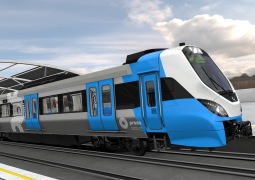
The introduction of the new stock of trains and the recovery of some of the vandalised rail corridors have allowed commuters to travel in more affordable, safe and comfortable trains. As part of its oversight visit, the committee caught a train from Naledi train station in Soweto to Park Station in Johannesburg at a cost of R8.50 for a single trip. Members of the committee spoke to some commuters during the train ride and got to understand their daily experiences.
Commuters identified symptoms of the remaining challenges:
• They wanted more and faster trains – a lack of an electronic signalling system prevents more trains from running faster but also safely. For instance, new signalling equipment will cut the traveling time from Naledi to Park station by almost 50%.
• Peak-time service is constrained, which forces commuters to resort to taxis, which are many times more expensive.
• Some routes remain closed due to lack of infrastructure due to PRASA’s financial constraints, notwithstanding current infrastructure grants from Treasury.
The aim of the committee’s visit was to observe PRASA’s progress in its recovery plans, particularly on the restoration of new rail corridors, restoration of infrastructure, security, financial sustainability and leadership performance.
Challenges noted by the committee for follow-up discussions with PRASA and the Minister of Transport include but are not limited to:
• How PRASA will achieve a clean audit without undue delay.
• The filling of several executive vacancies and the vetting of all executive and supply-chain personnel.
• PRASA’s IT recovery plan following adverse findings by the Auditor-General.
• A robust business model for PRASA given continued over-reliance on government subsidies.
• The agency’s capital requirements to meet its public mandate.
“What is a win is that there is now an infrastructure recovery programme. There are new trains, new stations, security is improving, and the passenger experience is improving. But it is not happening fast enough. The trains are still not enough and too slow, the signalling equipment is not in place, the platforms are not necessarily compatible with the new trains. Further infrastructure funding is needed, and it is not quite clear if government can provide all of it given current fiscal constraints,” said SCOPA Chair Mr Songezo Zibi.
SCOPA will send detailed questions to PRASA in due course for the agency’s presentation to Parliament during the current term.
ISSUED BY THE PARLIAMENTARY COMMUNICATION SERVICES ON BEHALF OF THE CHAIRPERSON OF SCOPA, MR SONGEZO ZIBI
For media enquiries, please contact the committee’s Media Officer:
Name: Ms Faith Ndenze
Parliamentary Communication Services
Tel: 021 403 8062
Cell: 081 377 0686
Email: fndenze@parliament.gov.za
 Arrange a tour