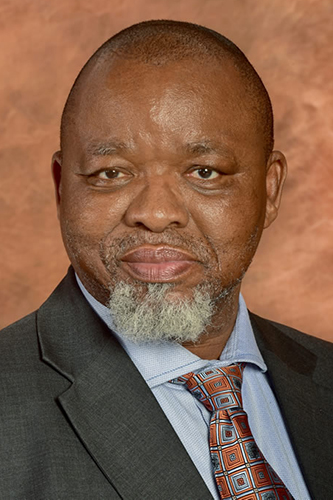



Speaking notes of the Chairperson of the Portfolio Committee on Higher Education and Training, Mr Tebogo Letsie, at the Social Services cluster media briefing on 23 June at Good Hope Chamber, Parliament.
To download a soundbite of Mr Letsie, click on this link: https://iono.fm/e/1568806
SECTOR EDUCATION AND TRAINING AUTHORITIES (SETAs)
The process of the appointment of the SETAs’ Accounting Authorities chairpersons has been a matter of public interest for a while. The Minister furnished the committee with a list of “Independent Panel” members for appointment of SETAs, NSFAS, NSA, universities and TVET Colleges, with some names on the list still concealed.
The independence of the panel was questioned given that the names on the list are of the Minister’s advisors, the Chief of Staff in the Office of the Minister and departmental officials. One of the people on the list has already denied that he was ever part of that panel, which raises more questions. The committee deliberated on the matter and resolved that:
(a) The Minister is legislatively obligated to furnish Parliament with the outstanding names of the panelists who were concealed on the submitted list.
(b) To write to all the panel members to submit:
• Communication/correspondence exchanged between the Minister and each panel member, including their acceptance to be a panelist.
• Terms of reference given by the Minister in respect of their expected roles as panel members.
• Remuneration, if any, for the services rendered in their capacity as panel members.
• Number of meetings attended by each panel member.
• The minutes of all the meetings of the selection and evaluation proceedings.
• A report that was compiled and sent to the National Skills Authority for consultation purposes.
(c) To invite the Minister and all the panel members to appear before the Committee and account for the appointment process of the SETA Accounting Authorities Chairpersons.
The committee will identify a suitable date to convene this meeting.
NATIONAL STUDENT FINANCIAL AID SCHEME (NSFAS)
NSFAS remains an important entity in South Africa as it redresses past injustices by ensuring that students from poor and working class families can access education and training. It is a key instrument for the eradication of poverty, inequality and unemployment. NSFAS has contributed 5 million graduates to the country’s skills pool, and the skills support for economic growth.
Therefore, it is critical to ensure the effective and efficient management and governance of the entity to enable it to perform its functions. At the last meeting with the NSFAS on 7 May 2025, we were concerned about the non-payment of private accommodation providers and its impact on small businesses, delays in the finalisation of appeals, provisionally funded statuses since January and the accreditation of private accommodation. Delays in the payment of TVET Colleges resulted in the burning of the Admin Block at the Northern Cape Urban TVET College.
Since our last meeting, the entity has embarked on provincial roadshows to engage stakeholders. NSFAS visited KwaZulu-Natal and engaged with accommodation providers. Issues were identified and are in the process of resolution. NSFAS will also visit other provinces to hold similar engagements. The entity committed that a dedicated team comprising student accommodation unit members, data specialists, and the disbursement team will be deployed to different provinces in a structured manner. A booking system will be introduced for APs to schedule sessions with the NSFAS team during their province visits to ensure individual attention.
The committee remains resolute that no student should be left behind, and NSFAS should improve payment system to ensure that all legitimate private accommodation providers are paid on time.
The committee is also concerned about:
• The slow pace at which issues that were identified at the meeting of 7 May 2025 are being resolved;
• Non-payment of student accommodation providers would have meant that they couldn’t service their bonds, pay their municipal debts, or cut service provided to students such as WIFI. As a result, many students went through the mid-term examinations while staying in accommodation with no electricity and were forced to take cold showers, and study in the dark, etc.
• Since the meeting of the 7th of May, we have received complaints from both students and institutions that NSFAS has gone ahead and defunded more students on technicalities. Student were defunded on the basis of late receipt of registration data from universities, which is not their doing. These students will incur outstanding debt, their certificates will be held after completion, and they will not be able to seek employment opportunities.
• NSFAS subjects students to poverty, unemployment and inequality, which the government is trying to eradicate.
• We are extremely worried about the operations at NSFAS, because all these matters fall under that entity!
INTERNATIONALISATION OF HIGHER EDUCATION AS IT PERTAINS TO ATTRACTING AND RETAINING INTERNATIONAL TALENT
South Africa has legislation and policies that govern and regulate how institutions should implement Internationalisation activities, especially when attracting and retaining international talent.
Legislation:
Employment Services Act, 2014 (Act No. 4 of 2014), Section 8 (2) of the Employment Services Act - The employers must satisfy themselves that there are no other persons in the Republic with suitable skills to fill a vacancy, before recruiting a foreign national;
Policy Framework for Internationalisation of Higher Education in South Africa (2019), determined in terms of Section 3 of the Higher Education Act, 1997 (Act 101 of 1997), as amended.
(d) Paragraph 3.6, sub-paragraph 3.6.3 - Initiatives to attract and retain international talent in the South African job market, including positions in higher education institutions, must not be to the detriment of job opportunities for equally qualified and experienced South African citizens. Moreover, institutions must observe national policies that guide equity and redress imperatives for all spheres of society.
(e) Paragraph 5.3, sub-paragraph 5.3.4 - It is in South Africa’s interests to appoint the best possible people in academic positions in its higher education institutions, including talented and qualified scientists and scholars from elsewhere in the world. This must be balanced with addressing race and gender transformation through creating opportunities for black and women South African citizens.
(f) Paragraph 5.3, sub-paragraph 5.3.5. There can be no justification for any South African institution prioritising and preferring foreign nationals to South Africans who qualify equally for the same post.
The Department of Higher Education’s oversight in this area is very weak. The Policy Framework was published in 2019, but the department informed the committee on 18 June 2025 that it had planned to convene a workshop with the universities’ Councils on the appointment of foreign nationals. While the committee fully supports attracting and retaining international talent, it does not support it outside of national legislation and policies.
Thank you
 Arrange a tour