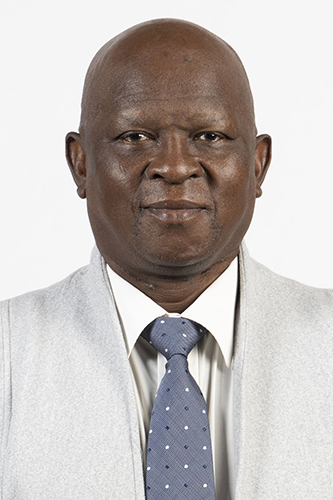
For a soundbite of Chairperson of the Select Committee on Security and Justice, Ms Jane Seboletswe Mananiso, click on this link: https://iono.fm/e/1689581
For a soundbite of the Chairperson of the Select Committee on Security and Justice, Ms Jane Seboletswe Mananiso, click on this link:
Good day to members of the media and fellow South Africans.
I would like to focus on three key issues that have dominated the work of the Select Committee on Security and Justice in recent months: border management and security, the renewal of the South African Police Service following the Madlanga Commission, and the fight against gender-based violence through improved forensic services and access to rape kits.
Border Management and Border Security
Border security remains a national priority as South Africa strengthens its response to organised crime, illegal migration, human trafficking, smuggling and other forms of cross-border criminality.
The Border Management Authority (BMA) has committed to intensifying border law enforcement through 158 risk-based operations during the 2026/27 financial year. These operations will focus on intelligence-led interventions and closer cooperation with the South African Police Service, the South African National Defence Force and other law enforcement agencies. The BMA has also committed to maintaining the detection and refusal of inadmissible persons at ports of entry and ensuring the apprehension and deportation of individuals who are unlawfully in the country.
The committee welcomes the BMA's efforts to modernise border management through the use of surveillance technology, drones, body-worn cameras, improved immigration verification systems and stronger access controls at ports of entry. These measures are essential in reducing opportunities for corruption, improving operational efficiency and strengthening the state’s ability to manage its borders effectively.
At the same time, we remain concerned about capacity constraints within the BMA. The committee has called for increased funding, the urgent filling of vacancies, stronger anti-corruption measures and enhanced cooperation between the BMA, SAPS, municipalities and traditional leaders in border communities.
The committee recognises that South Africa, as a constitutional democracy and signatory to international conventions, has obligations towards refugees, asylum seekers and migrants. These obligations, however, must be balanced against the state’s responsibility to uphold the rule of law, safeguard national security and ensure orderly migration. While those with legitimate claims to protection must be treated fairly and afforded due process, those who enter or remain in the country unlawfully must be dealt with in accordance with South African law.
Illegal migration places significant pressure on public services, law enforcement agencies and the criminal justice system. It also creates opportunities for criminal syndicates involved in human trafficking, document fraud, illicit trade and cross-border smuggling.
In this regard, the One-Stop Border Post Bill, currently before the Select Committee on Security and Justice, represents an important legislative intervention. The Bill seeks to improve cooperation with neighbouring countries through jointly managed border posts, integrated control zones and improved information-sharing mechanisms. By reducing duplication, strengthening coordinated border enforcement and improving the movement of people and goods across borders, the legislation has the potential to enhance security while supporting trade and regional integration.
SAPS Renewal and Accountability Following the Madlanga Commission
Another issue that continues to command public attention is the renewal and rebuilding of the South African Police Service.
The findings emerging from both the Madlanga Commission and Parliament's Ad Hoc Committee investigating allegations made by Lieutenant-General Nhlanhla Mkhwanazi exposed serious concerns relating to governance failures, corruption, weak consequence management and deficiencies in internal controls within SAPS.
The committee welcomes the government's commitment to implementing reforms aimed at restoring integrity and public confidence in policing. These reforms include the re-vetting of senior SAPS officials, lifestyle audits, strengthened anti-corruption mechanisms and dedicated structures to investigate matters arising from the commission's findings.
During a recent engagement with SAPS leadership, the committee was informed that the re-vetting process has already begun. We regard this as a critical intervention in identifying individuals who may have compromised the integrity of the organisation and ensuring that those entrusted with enforcing the law meet the highest ethical and professional standards.
We further note that SAPS has incorporated the implementation of the Madlanga Commission’s recommendations into its annual performance plan and has committed to addressing all recommendations arising from the process. This commitment must now translate into measurable outcomes.
South Africans expect more than plans and promises. They expect accountability, consequence management and a police service capable of combating crime without fear, favour or interference.
The committee's position is clear: success will not be measured by the number of reports produced, but by visible improvements in integrity, accountability and service delivery. We therefore expect regular reporting to Parliament on the progress of the re-vetting process, the outcomes of lifestyle audits, trends in corruption investigations and disciplinary action taken against officials implicated in wrongdoing.
We have also called on the Civilian Secretariat for Police Service and the Independent Police Investigative Directorate to strengthen their oversight and monitoring functions to ensure that implementation is independently verified.
The rebuilding of SAPS is essential to strengthening the entire criminal justice system. Without a professional, ethical and accountable police service, efforts to combat organised crime, corruption, gender-based violence and violent crime will continue to face significant obstacles.
Rape Kits, Forensic Services and the Fight Against Gender-Based Violence
The final issue I wish to address is the availability of rape kits and the effectiveness of forensic services in responding to gender-based violence and femicide.
The successful investigation and prosecution of sexual offences depend heavily on the timely collection, analysis and presentation of forensic evidence. Any shortcomings in these systems undermine victims’ access to justice and reduce the likelihood of successful prosecutions.
During its engagement with SAPS, the committee raised concerns about reports of shortages of child rape kits at certain police stations in the Western Cape, as well as persistently low detection rates in sexual offence cases. While SAPS assured the committee that rape kits are available and that additional funding has been allocated to maintain stock levels, Parliament will continue to monitor the situation closely.
Victims of sexual violence should never be denied access to critical forensic services because of stock shortages or administrative failures.
The committee welcomes efforts to strengthen Family Violence, Child Protection and Sexual Offences units and improve investigative capacity. These specialised units play a vital role in supporting victims, gathering evidence and ensuring that complex cases are properly investigated.
However, improved investigative capacity must be matched by a forensic system capable of processing evidence efficiently and without delay. The backlog within forensic laboratories remains a matter of concern, as delays in processing evidence negatively affect investigations, prosecutions and public confidence in the criminal justice system.
The committee has therefore recommended that all police stations in the Western Cape be fully stocked with child rape kits and that SAPS provide Parliament with a comprehensive turnaround strategy to address forensic backlogs and improve the investigation of sexual offences.
More broadly, the committee will continue exercising oversight across all provinces to ensure that police stations are adequately equipped, that rape kits remain consistently available and that sufficient forensic and investigative capacity exists to combat gender-based violence effectively.
The message from Parliament is clear: the fight against gender-based violence cannot succeed without a properly resourced forensic system, well-trained investigators and uninterrupted access to rape kits. Every victim deserves a professional response, every case deserves a thorough investigation, and every perpetrator must face the full might of the law.
Conclusion
The committee's priorities for 2026/27 reflect a commitment to strengthening border security, restoring integrity within SAPS and improving South Africa’s response to gender-based violence.
Success will depend on effective implementation, stronger accountability, improved oversight, adequate resourcing and a willingness to act decisively against corruption, criminality and institutional weaknesses wherever they exist.
Parliament will continue to exercise rigorous oversight to ensure that commitments made by departments and entities translate into tangible improvements in safety, security and justice for all South Africans.
I thank you.
 Arrange a tour