2 March 2026
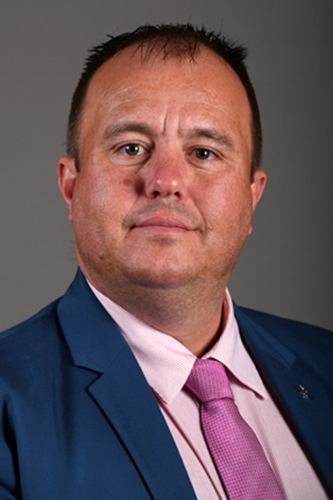
To download Ms Ndhlovu’s soundbite, click on this link: https://iono.fm/e/1651398
Members of the media, colleagues, and fellow South Africans,
As the Select Committee on Finance of the National Council of Provinces (NCOP), we have now entered one of the most critical phases of the parliamentary budget process: the consideration and adoption of the Fiscal Framework and Revenue Proposals. Now, in response to the tabling of the budget by the Minister of Finance last week Wednesday, I wish to address two central issues today:
- The importance of meaningful public participation in the drafting of our Fiscal Framework Report, in line with the Money Bills Amendment Procedure and Related Matters Act, and
- The critical question of revenue allocations to the local sphere of government.
The NCOP exists to ensure that provincial interests are represented in the national sphere of government. When we consider the Fiscal Framework as the Select Committee on Finance, we do so not in abstraction, but with full awareness that its implications are felt in provinces, districts, and municipalities. The Executive arm of the state may prepare and table a budget through the Minister of Finance in accordance with the Constitution and applicable legislative frameworks, such as the Money Bills Amendment Procedure and Related Matters Act, but Parliament is the final arbiter over the national budget.
The Importance of Public Participation
The budget is not merely a financial document. It reflects our national priorities. It tells us who and what the state values. Therefore, it cannot be shaped by the Executive alone, nor can it be shaped by Parliament alone. Public participation is not a procedural formality, but a constitutional imperative. As we meet here today, the finance committees have 12 days to table the Fiscal Framework and Revenue Proposals report, which must be informed by greater inputs from civil society formations, business and labour, and ordinary South Africans. We call on South Africans to make their inputs wherever they are.
As Chairperson of the Select Committee on Finance, I call upon communities in rural provinces, small towns and underdeveloped districts to make their voices heard no later than Monday, the 9th, which is the final day for submissions. Too often, fiscal debates are dominated by a small section of well-resourced stakeholders. Communities in rural areas, where poverty, unemployment, failing infrastructure and weak municipal capacity are most acute, do not always participate. Sometimes they do not know what the budget is about or when they need to make submissions. There is currently an advertisement out calling for public input.
The Fiscal Framework sets the macroeconomic envelope – revenue projections, expenditure ceilings, and borrowing levels. But behind these technical terms, there are questions to be asked:
- Will there be adequate funding for basic services?
- Will provinces receive a sufficient equitable share to sustain health and education?
- Will municipalities have the resources to fix water systems and maintain roads?
Public participation allows us, as Parliament, to ensure that these questions are answered not only in Pretoria but also in every province, district, and local municipality.
Revenue Allocation to the Local Sphere of Government
Let me now turn to the second issue: revenue allocations to local government. Minister Godongwana’s Budget outlines the vertical division of revenue among national, provincial, and local spheres. While we acknowledge the severe fiscal constraints facing the country, including slow economic growth, high debt-service costs and competing expenditure pressures, we must interrogate whether the local sphere is adequately funded relative to its constitutional mandate. Municipalities are at the coalface of service delivery. They provide water and sanitation, refuse removal, electricity distribution, local roads, and community infrastructure.
Yet many of our municipalities, particularly in rural provinces, are structurally unable to generate sufficient own revenue. Unlike metropolitan municipalities, rural municipalities often have limited industrial or commercial activity, high levels of indigence, a small property tax base, and vast geographic areas with scattered settlements. As a result, they rely heavily on intergovernmental transfers, including the equitable share and conditional grants. From the perspective of the NCOP, we must ask:
- Are these transfers sufficient?
- Are they predictable and sustainable?
- Do they take into account the developmental backlogs in historically underdeveloped provinces?
At a personal and political level, I remain guided by the African National Congress’s historic commitment to developmental local government. In the movement, we believe that local government must be empowered – not weakened because it is closest to the people. If municipalities collapse financially, it is the poorest households who suffer first. It is not sufficient to say municipalities must “improve revenue collection” when, in reality, many residents are unemployed and cannot afford to pay. At the same time, we will continue to insist on accountability, good governance, and consequence management. Increased allocations must go hand in hand with improved financial management and oversight at municipal level. Developmental funding and accountability are not mutually exclusive. They are complementary.
Minister Godongwana has emphasised fiscal consolidation and debt stabilisation, and we reiterate the call. As a committee, we understand the importance of macroeconomic stability. We are mindful of the fact that unsustainable debt could ultimately crowd out social and developmental spending to the detriment of the poor. However, fiscal consolidation must not undermine the constitutional mandate of local government. The challenge before us is to strike a careful balance in protecting the fiscus, stabilising debt, and at the same time, deepening developmental impact where it matters most – in communities. The NCOP is uniquely positioned to assess whether this balance is appropriately struck, because we are directly accountable to provinces.
Conclusion
The coming 12 days are critical. The Fiscal Framework is the foundation upon which the entire budget architecture rests. We call upon all South Africans, especially those in rural and underrepresented provinces, to participate actively in our processes. As Chairperson of the Select Committee on Finance, I commit that we will listen, we will interrogate the numbers, we will represent provincial interests robustly, and we will ensure that the voice of local government is not marginalised. Our democracy demands nothing less.
I thank you.
 Arrange a tour