



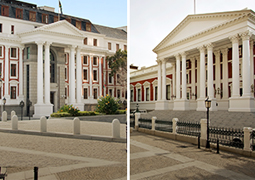
Parliament, Friday, 1 May 2026 - On behalf of Parliament, the Presiding Officers of Parliament - the Speaker of the National Assembly, Ms Thoko Didiza, and the Chairperson of the National Council of Provinces, Ms Refilwe Mtshweni-Tsipane - join the nation on this Workers’ Day in honouring the enduring contribution of workers to the building of a democratic, inclusive and resilient society. They pay tribute to the generations of workers whose courage, sacrifice and collective action secured the labour rights South Africans enjoy today.
Workers’ Day is not merely a date of remembrance; it is a constitutional marker of struggle, progress and unfinished work. It draws its meaning from the lived experiences of mineworkers who resisted exploitative labour systems, domestic workers who fought for recognition and protection, and countless others whose dignity was denied under apartheid’s system of racialised labour control. Their struggle laid the foundation for a democratic dispensation anchored in fairness, equality and human dignity.
Since 1994, South Africa has steadily built a progressive legislative framework to advance workers’ rights, including protections for workplace safety, fair labour practices and social security. These gains reflect the country’s constitutional commitment to justice and equality. Yet, Workers’ Day also compels reflection on whether these rights are being realised in practice and whether they are reaching those most in need.
This reflection is sharpened by current labour market realities. South Africa continues to face deep structural unemployment, with the official unemployment rate recorded at 31.4% in the fourth quarter of 2025. Beyond this, broader measures reveal a significant number of discouraged work seekers and individuals excluded from economic participation altogether. Of particular concern is the persistent vulnerability of young people, many of whom remain outside employment, education or training, signalling long-term risks to social stability and economic inclusion.
In this context, Parliament reaffirms that its constitutional mandate of oversight is central to advancing the dignity of workers. Through its committees, Parliament is intensifying scrutiny of whether public institutions, programmes and policies are delivering meaningful outcomes for workers.
Recent and ongoing oversight work reflects this commitment:
- In the mining sector, Parliament is interrogating the effectiveness of compensation systems to ensure that workers who have sacrificed their health in service of the economy receive the justice and support they are due.
- In public employment programmes, Parliament is examining whether initiatives such as the Expanded Public Works Programme are achieving the scale, quality and impact required to provide sustainable livelihoods.
- In the area of skills development, committees are addressing systemic inefficiencies, including certification backlogs, that prevent young people from accessing employment opportunities despite completing their qualifications.
- In transport and public services, oversight is focused on the operational capacity of key entities to ensure that workers in these sectors are supported by functional, safe and reliable systems.
- In rural and agricultural communities, Parliament continues to monitor the implementation of land reform commitments affecting labour tenants and farm workers, in line with constitutional obligations.
Parliament further recognises the evolving nature of work in South Africa’s economy. Increasingly, employment is being generated within small enterprises, informal sectors and digital platforms. While these sectors provide opportunity, they also expose workers to new forms of vulnerability. Parliament is therefore engaging on how to extend meaningful protections and support to workers across all forms of employment, ensuring that dignity is not conditional on the nature of one’s work.
As the nation commemorates Workers’ Day, the Presiding Officers call on all sectors of society to act with renewed purpose. Government must accelerate the delivery of basic services and create an enabling environment where workers and enterprises can thrive. Business, on the otherbhand, must recognise workers not as a cost to be minimised, but as partners in growth, deserving of fair wages, safe conditions and respect. For their part, Labour and civil society must continue to organise, advocate and engage, ensuring that the voices of workers remain central to national development.
Parliament remains committed to playing its part - through law-making, oversight and public participation - to advance a South Africa in which every worker can access opportunity, security and dignity.
ISSUED BY THE PARLIAMENT OF THE REPUBLIC OF SOUTH AFRICA
Enquiries: Moloto Mothapo, Parliament Spokesperson
 Arrange a tour