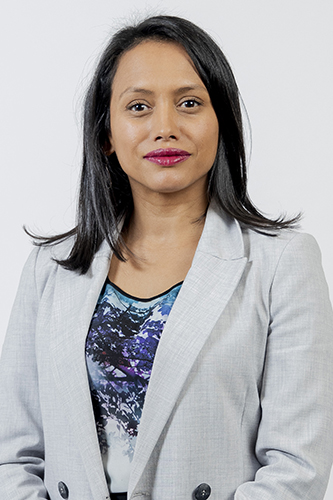



For a soundbite from Parliament Spokesperson Moloto Mothapo, please click: https://iono.fm/e/1264825
Introduction
Parliament, 21 December 2022 - The Parliament of the Republic of South Africa accounts to the people of South Africa regarding its performance during 2022, which was a momentous and eventful year. This is the year that revealed the true character of our institution and its resilience in responding to the needs and aspirations of the people even during volatile periods.
The start of this year was marked by the fire outbreak that gutted key parliamentary buildings such as the National Assembly Chamber and contents essential to the business operation of the institution. This happened while the institution was recovering from the devastating effects of the Covid-19 pandemic. The year was also marked by a radical return to normality of continental and global strategic multi-lateral fora of Parliaments, and our honest reflections on Parliament’s performance through the engagement of eminent persons in our 6th Parliament’s strategy review and 7th Parliament planning session held in Cape Town.
The unimaginable three-day fire disaster compounded Parliament’s infrastructure challenges by reducing the number of buildings available for the institution to conduct its business and set itself back by a decade in respect of the destruction of technology and broadcast infrastructure used to enhance public access and involvement in our processes. Parliament’s resilience included the continuation of its business through finding alternative venues, avenues, and instruments such as the optimisation of technology. Parliament was able to intensify its oversight role through outreach and sectoral Parliaments that combined physical and virtual engagements with the executive, stakeholders, and the public.
We faced unprecedented challenges that were occasioned by these developments in 2022, which epitomised the concept of volatility, uncertainty, complexity, and ambiguity, i.e., the VUCA WORLD. These took place in an environment characterised by a digital revolution (4th industrial revolution onset), dwindling resources that included the erosion of Parliament’s baseline fiscal allocation as well as critical global and regional geopolitical developments to mention but a few. Through its resilience and agility, the institution weathered the storm and chartered virgin territory in all these areas to reaffirm its centrality as a premier institution of South Africa’s constitutional democracy and the people of this country. We are delighted we emerged very strongly.
The commitment of the Minister of Finance, Mr Enoch Godongwana, during the Mid-Term Budget Policy Statement to set aside R2 billion for the restoration of the damaged parliamentary buildings is cherished as it will enable Parliament’s accelerated recovery and return to its best operations. We also welcome the correction of Parliament’s baseline as an affirmation of its critical role as a critical arm of the state. The commitment to boost Parliament’s baseline by R300 million over the MTEF period is a step in the right direction, which will enable Parliament to discharge its constitutional mandate of law-making, execution oversight, promotion of public involvement as well as fulfilling its international obligations.
THE NATIONS’ GO-TO PLATFORM FOR DIALOGUE
Parliament remained a crucial platform for conversations on matters of national interest and importance by being at the cutting edge of interventions to address people’s needs, aspirations and challenges.
The Section 89 processes triggered by the Phala Phala allegations against President Cyril Ramaphosa are now closed following a special National Assembly (NA) sitting on 13 December which processed the report of an independent panel led by the retired Chief Justice Sandile Ngcobo. The NA closed the matter following its decision not to adopt the report.
Section 194 inquiry into the suspended Public Protector Adv Busisiwe Mkhwebane’s fitness to hold office also continues. The committee has adjourned for the festive break and constituency work. It will resume on 30 January 2023. At the conclusion of the process, Parliament will consider the committee’s report and its recommendations and make an appropriate decision.
Parliament is seized with ensuring the implementation of the Zondo Commission’s recommendations to improve its oversight role, which include the provision of adequate funding for Portfolio Committees; sharpened Parliamentary mechanism to track and monitor executive action; enhancing Parliament’s role in key appointment processes; and developing specialized committees to deal with issues that cut across government departments and Ministries, amongst others. The institution will spare neither strength nor courage in ensuring that the commission's recommendations are implemented.
The Houses of Parliament hosted a series of debates to help steer many development interventions in the right direction while also giving impetus to the execution of solutions. These included:
The National Council of Province’s debate on the stimulation of the township economy; waging a concerted effort against cross-border and transnational crime; the killing of councillors, as well as a series of Ministerial briefings on numerous topical issues such as illegal mining and fiscal leakages. During these sessions, Ministers together with provincial MECs briefed delegates to the NCOP on plans to address service delivery challenges facing the people.
The NA also held a series of debates that included the impact of the Russian-Ukrainian conflict on the South African economy, the energy crisis created by protracted failures at Eskom, the fuel hikes, a motion of no confidence in the Cabinet in terms of Section 102(1) of the Constitution of the Republic of South Africa, a Freedom Day debate titled: “Consolidating our democratic gains by giving enhanced meaning to our constitutional rights through the building of a more equitable society”, a debate on Africa Day titled: “Africa Month – Strengthening resilience and sustainability in nutrition and food security on the African continent” and a debate on Youth Day titled: "Promoting sustainable livelihoods and resilience of young people in South Africa for a better tomorrow”.
Parliament’s four-day strategic review and planning session, which included a series of engagements with panels of eminent persons from various disciplines, affirmed Parliament’s constitutional, political and legislative authority as an agent of change and a critical source of transformative difference. There is an urgent need to ensure that our constitutional democracy produces the social justice dispensation envisaged with the advent of freedom. Accordingly, Parliament will tirelessly work to reclaim the philosophy of reconstruction and development so that all work done manifests in real changes in inequality, poverty, unemployment, and a range of undesirable social ills, including high crime rates and gender-based violence and femicide.
Ongoing efforts to bring stability at the apex of the parliamentary administration bore fruit with the appointment of Mr Xolile George as Secretary to Parliament who had hit the ground running and brought renewed energy, passion and strategic interventions necessary to propel the institution to desired capability.
The South African Speakers’ Forum, composed of heads and deputy heads of the country’s 10 legislatures is building a formidable collective bargaining system for the legislative sector, strengthening the South African Parliamentary Institute (SAPI), and in aligning numerous interventions aimed at building the overall capacity and competences of leaders and functionaries across the sector.
LAW-MAKING
Following the tabling of the Division of Revenue Amendment Bill on 26 October when the Minister of Finance, Mr Enoch Godongwana, presented the Medium-Term Budget Policy Statement, Parliament has since endorsed the Bill’s proposal to shift R145 million from the provincial disaster response grant to the municipal disaster response grant and the proposed shifting of R120 million from the municipal emergency housing grant to the provincial emergency housing grant, amongst others.
The Bill also proposed the allocation of additional funding for the reconstruction and rehabilitation of provincial infrastructure damaged by the December 2021 and April 2022 floods. A proposed total of R117 million is added to the education infrastructure grant for schools in the Eastern Cape and KwaZulu-Natal provinces for the reconstruction and rehabilitation of schools damaged by floods in December 2021 and April 2022. Another proposed total of R1 billion is added to the provincial roads maintenance grant for the Eastern Cape, KwaZulu-Natal and North West provinces for the repair of provincial roads damaged by the April 2022 floods.
As of 18 November 2022, there were 55 Bills before Parliament, with 11 of them already scheduled for processing in the NA Order Paper and 32 before the House's Committees and two scheduled for processing by the NCOP and 11 before the House’s Committees. The National Gambling Amendment Bill [B27B-18 (s76)], seeks to, amongst other things, amend the National Gambling Act of 2004 to provide for the repositioning of the National Gambling Board as a National Gambling Regulator and to enhance the powers and duties of the gambling inspector, was referred to the Mediation Committee.
STRENGTHENING OVERSIGHT AND ACCOUNTABILITY
Parliament has continued to rise in holding the executive accountable, in a true spirit of following up on all commitments made to the people to make their lives work better through numerous mechanisms.
Hundreds of oral questions and over 1 000 written questions were asked, with most responded to by the Executive, with Parliament also strengthening its capacity to track progress made in executing various commitments made. The President and the Deputy President of South Africa led in the periodic accounts to the plenaries of the two houses without fail. Eight Section 139 interventions were approved and are being executed, with the NCOP leading in this regard covering a number of municipalities in Eastern Cape, Free State, KwaZulu-Natal and North West.
As engines of Parliament’s work, committees continue to play a critical role in ensuring that Parliament fulfils its Constitutional obligations of oversight over the work of the Executive, and in facilitating public participation across all the streams of work done by Parliament. These streams include law-making, executive oversight, cooperative governance, international engagements and strengthening the capacity of legislatures to do their work.
Over 50 oversight visits were undertaken in addition to the flagship programmes of Taking Parliament to the People and the Local Government Week, with a heightened intensity never witnessed during the gruelling two years of Covid-19-related restrictions. Other mechanisms utilised were statements of Members of Parliament on pertinent issues, notices of motions and motions without notices during plenary sessions of the house.
In August when South Africa was gripped by an unprecedented energy crisis - in the form of persistent disruptions in electricity provision and skyrocketing fuel prices – various committees of Parliament took it upon themselves to visit the responsible entities to assess the situation and help identify remedies.
Notable amongst these were visits by the Portfolio Committees on Public Enterprises and Mineral Resources and Energy to Eskom’s Koeberg Nuclear Power Station, outside Cape Town, to assess the station's state and address complaints from the union on the steam generator project.
The Mineral Resources and Energy committee also visited the South African Nuclear Energy Corporation (NECSA), the Greater Kwa-Nonqaba Development Forum and PetroSA in Mossel Bay to gain first-hand information on the situation. The Standing Committee on Public Accounts, on the other hand, undertook an oversight visit to Eskom and its infrastructure projects, Medupi and Kusile in Lephalale and Witbank, respectively.
PUBLIC PARTICIPATION
Public participation is one of the key legitimising features of our constitutional democracy, which seeks to broaden meaningful participation beyond the 5-year electoral cycles, where South Africans turn up in their millions to choose their representative to Parliament. Their representatives collectively become mid-wives to the executive, the judiciary and many other state institutions that are responsible for driving the development programme to improve people’s lives.
We executed our flagship programmes, which include Taking Parliament to the People (TPTTP) in KwaZulu-Natal, the Local Government Week, and over 200 public hearings since January 2022, by Parliamentary Committees of both the NA and the NCOP. This solicited citizen and stakeholder inputs to a number of critical bills before their approval by the houses. These were in addition to individual MPs’ oversight visits in their constituencies, utilising the augmented time allocation for this work as part of strengthening Parliamentary oversight.
National and international evaluative reports, as well as independent surveys, show Parliament as being among the best performers in promoting public participation in its processes, including the budget processes. The IPSOS findings and a comparative global assessment of levels of public participation averaged 20% (22% IPSOS and 19% global rating), which shows that South Africa is 5% above the global average of 14%. Even with these good indicators, there is a big room for improvement and Parliament continues to work to raise the bar through various interventions that include:
The re-imagining, repurposing and remodelling of Parliamentary Constituency Offices (PCOs) to revitalise these grassroots nodal points for People-Parliament interface. PCOs of the Presiding Officers, the NA Speaker and the NCOP Chairperson, were relaunched this year as reference models for rolling out to all other PCOs in collaboration with various political parties; and
Optimising online, virtual and social media platforms to better engage the public, especially the youth, in addition to increased use of our Parliamentary TV, our website and all forms of media; and
Heightening the public education programme to ensure that citizens and stakeholders are optimally empowered to make valuable contributions or inputs to proposed bills and during hearings.
INTERNATIONAL ENGAGEMENTS
As the post-Covid-19 recovery programmes gain momentum globally, numerous multi-lateral organisations of Parliaments also stepped-up physical engagements of parliamentarians to mobilise collective interventions to address global challenges. Spearheading these engagements were the Inter-Parliamentary Union (IPU), the Non-Aligned Movement (NAM), the BRICS Parliamentary Forum (PF), the Pan African Parliament (PAP), the SADC Parliamentary Forum, and the Commonwealth Parliamentary Association (CPA) and the Cop27 conference, to mention a few.
Parliament was represented in these meetings by the Presiding Officers, the Chief Whips and multi-party delegations, making a mark that resulted in additional assignments and appointments to service in the organisation's subsidiary structures. Through these forums, Parliament continues to vigorously pursue a just, peaceful and equal world.
The NA Speaker Mapisa-Nqakula led the delegations to the IPU conference and was appointed to serve in the Task Force assigned to intervene through the Parliaments of both Russia and Ukraine to help end the conflict that is having a devastating global impact. She had been part of numerous engagements and a visit to Ukraine and Russia and formed part of side-line meetings with the parliamentary delegations of the warring countries during the 145th IPU Assembly held in Kigali, Rwanda. The Speaker also attended the revitalising conference of the NAM in Azerbaijan and the P20 Speakers Conference in Jakarta, Indonesia.
The NCOP Chairperson Amos Masondo continued to lead Parliament’s multi-party delegation to PAP, including at the elective conference that brought stability and the revitalisation of the continental body in Midrand. The Chief Whip of the Majority Party in the NA, Ms Pemmy Majodina, was elected to Chair the PAP Southern Caucus, while Mr Thembekile Majola of the Democratic Alliance was elected to Chair PAP’s Standing Committee on Rules, Privileges and Discipline. NCOP Chief Whip Mr Seiso Mohai led a parliamentary delegation to both the SADC PF in Malawi and the joint Parliamentary Forum of African, Caribbean, and Pacific states and the European Union conference in France. NA House Chairperson for Committees, Oversight and ICT, Mr Cedric Frolick, led a delegation to the COP27 conference in Egypt that dealt with climate change and global warming.
The NA and the NCOP also considered and adopted various international agreements, including the Protocol to the Constitutive Act of the African Union Relating to the Pan-African Parliament of 2014, tabled in terms of section 231(2) of the Constitution; the Protocol to the African Charter on Human and Peoples Rights on the Rights of Persons with Disabilities in Africa, in terms of Sec 231(2) of the Constitution; the Protocols relating to the Amendments to Articles 50(a) and 56 of the Convention on International Civil Aviation; the Multilateral Convention to implement tax treaty-related measures to prevent base erosion and profit shifting; and the Protocol amending the Agreement between the government of the Republic of South Africa and the government of the state of Kuwait for the avoidance of double taxation and the prevention of fiscal evasion with respect to taxes on income.
IN CONCLUSION
The contention that we are living in a volatile, uncertain, complex and ambiguous world had an effect on Parliament in the most graphic manner in 2022. The challenges we faced and the demonstrated resilience and agility led to the virtualisation of proceedings and innovations that gave us life lessons and long-term changes in the Parliamentary systems and functionality that will always be cherished in 2022 and beyond.
ISSUED BY THE PARLIAMENT OF THE REPUBLIC OF SOUTH AFRICA
Enquiries: Moloto Mothapo
 Arrange a tour