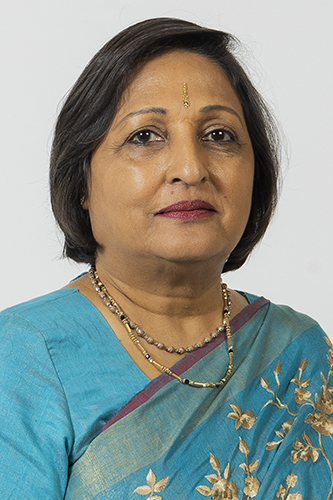
Parliament, Sunday, 9 August 2026 – The Presiding Officers of Parliament, led by the Speaker of the National Assembly, Ms Thoko Didiza, and the Chairperson of the National Council of Provinces, Ms Refilwe Mtshweni-Tsipane, join South Africans in commemorating National Women’s Day.
As South Africa marks National Women’s Day and the 70th anniversary of the historic 1956 Women’s March, Parliament pays tribute to the courage of the more than 20 000 women who marched to the Union Buildings in protest against apartheid pass laws.
Led by activists, including Lilian Ngoyi, Helen Joseph, Rahima Moosa and Sophia Williams-De Bruyn, the Women’s March of 1956 is still considered a defining act of peaceful resistance that changed the course of the country’s history. Seventy years later, the bravery of these women continues to inspire Parliament in its resolve to advance the constitutional promise of dignity, equality and freedom for women and girls.
This year, Women’s Month is observed under the theme: “Empowered Women Empower the Nation.” While South Africa has achieved substantial progress in furthering women’s rights since 1994, including through progressive legislation, gender-based violence and femicide (GBVF), persistent inequality, poverty and economic exclusion continue to prevent many women from fully enjoying these freedoms.
Parliament reaffirms its commitment to using its mandate of law-making, oversight and public participation to promote gender equality and hold the executive accountable for the implementation of laws, budgets and programmes affecting women. The national legislature is currently in the process to resume its Women’s Parliament programme in the Northern Cape province from 13 to 14 August 2026 to be held under the theme, "Wathint' Abafazi, Wathint' Imbokodo: 70 Years of Resistance, 72 Years of Vision - Advancing Gender Justice, Equality and Resilient Economies for All." The programme is aimed at enforcing gender equality and to hold the executive accountable.
The 2026 program celebrates 30 years of South Africa's constitutional democracy, the 72nd anniversary of the 1954 Women's Charter, and the 70th anniversary of the historic 1956 Women's March. It serves as the national platform that brings together women from civil society, traditional leadership, faith-based groups, labor, academia, and youth organizations.
Rather than just a commemoration, the parliament programme plays a crucial role to promote public participation and accountability by evaluating how well the Women’s Charter has been fulfilled. Parliament and government representatives will attend throughout the respective provinces to listen to women's lived experiences and take direct accountability.
The core objectives of the programme include providing the necessary required guidance for focused discussions on practical solutions to critical issues affecting women and girls such as combatting gender-based violence; overcoming economic exclusion and unequal opportunities; addressing climate vulnerability and digital exclusion; building intergenerational dialogue between veteran struggle heroes and young women leaders and advancing women’s economic empowerment, social inclusion, and decision-making roles.
Parliamentary committees will continue to scrutinize government’s response to gender-based violence and femicide and the implementation of measures intended to expand women’s economic opportunities and financial independence. In February 2026, the Portfolio Committee on Cooperative Governance and Traditional Affairs and the Portfolio Committee on Women, Youth and Persons with Disabilities jointly scrutinized the funding, implementation timelines and measurable indicators for government’s response following the classification of GBVF as a national disaster. The Multi-Party Women’s Caucus also provides a cross-party platform for promoting gender equality and keeping women’s experiences and priorities central to the country’s legislative agenda.
“It's been 70 years since the historic Women's March, but we still have a long way to go. Equality cannot just be something we talk about but must become a reality for every woman and girl,” said the Presiding Officers. “This must be reflected in the way women are treated with dignity, have opportunities and are free to make their own choices. Parliament must match commemoration with action through responsive law-making, rigorous oversight of government’s response to gender-based violence and femicide and meaningful public participation.”
Beyond South Africa’s borders, Parliament will continue to work with regional, continental and international parliamentary bodies to promote gender equality, strengthen women’s leadership and share solutions to common challenges facing women across the world.
The 69th Commonwealth Parliamentary Conference, which Parliament will host in Cape Town from 13 to 18 September 2026, will include the 10th Commonwealth Women Parliamentarians Conference. This will provide a platform to promote women’s leadership, gender-responsive legislation and parliamentary action against gender-based violence.
The Presiding Officers call on all South Africans to honour the legacy of the women of 1956 not only through commemoration but also through collective action to prevent gender-based violence, support survivors and challenge discrimination.
Parliament wishes all South Africans a meaningful and peaceful National Women’s Day.
ISSUED BY THE PARLIAMENT OF THE REPUBLIC OF SOUTH AFRICA
Enquiries: Moloto Mothapo, Parliament Spokesperson
 Arrange a tour