Parliament, Thursday, 7 May 2026 – The Standing Committee on Appropriations has said citizens contribute to the national revenue through their taxes to fund public transport, such as trains, however, when they are unavailable, they are forced to spend even more on alternative transport.
The Chairperson of the committee, Dr Mamane noted: “In effect, citizens end up paying taxes twice.”
The Standing Committee on Appropriations today received briefings from the Passenger Rail Agency of South Africa (PRASA) on its spending of allocated funds and progress on the rehabilitation of signalling services. The committee also received a briefing from the Department of Transport on the 2026 Appropriation Bill and South African Airways (SAA).
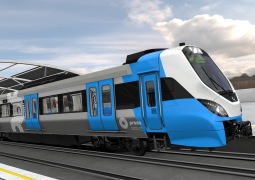
PRASA told the committee that its New Rolling Stock Fleet Renewal Programme remains a key strategic initiative aimed at transforming public transport services in South Africa. Committee members, however, stressed that the programme must result in measurable job creation and economic opportunities for South Africans.
Dr Maimane said lack of accountability within public entities, particularly regarding performance-linked remuneration, was a pandemic eating away the public purse. “Whether trains are on track or not, it seems board members still receive bonuses irrespective of whether they have performed their roles. This appears to be an entrenched culture in the public service, where outcomes are not always linked to performance remuneration,” said Dr Maimane.
Dr Maimane also expressed his grave concerns over PRASA’s admission that signalling challenges persist in Gauteng and KwaZulu-Natal. “If this is true, it means we are moving dangerously close to a potential train crash disaster,” he said. He further noted that citizens continue to carry the financial burden of failing public services.
According to the Department of Transport, it has allocated R31,7 billion over the medium term for train signalling purposes.
The committee also noted with concern PRASA’s admission that fewer railway lines, measured in kilometres, have been built over the past 30 years.
The committee also engaged with SAA on efforts to recover approximately R1 billion in ticket sales owed by Zimbabwe. Members noted that this remains a long-standing matter, which the 7th administration of Parliament is committed to resolving. SAA further briefed the committee on its revenue collection strategy, operational and governance challenges, and its turnaround strategy to address audit findings raised by the Office of the Auditor-General.
“We recognise transport as a key economic enabler, and in the medium term much of the spending is directed towards infrastructure,” said Dr Maimane.
The committee emphasised the need for affordable and accessible public transport to enable people to travel to work and access economic opportunities. The Department of Transport further informed the committee that, through its public entities, it intends to focus over the medium term on maintaining, rehabilitating, upgrading, revitalising and expanding rail, road and port infrastructure.
,
On SAA, Dr Maimane said the airline still has strong potential despite its challenges. “SAA still has value and requires improvement. It continues to have good airport infrastructure and needs to reclaim some of its routes, particularly domestic routes. Compared to what we have, SAA remains a good airline,” he said.
Meanwhile, committee members also noted recent flight cancellations by SAA that prompted Parliament to issue a public information alert to affected members and staff.
ISSUED BY THE PARLIAMENTARY COMMUNICATION SERVICES ON BEHALF OF THE CHAIRPERSON OF THE STANDING COMMITTEE ON APPROPRIATIONS, DR MMUSI MAIMANE.
For media enquiries or interviews with the committee Chairperson, please contact:
Name: Jabulani Majozi (Mr)
Parliamentary Communication Services
Cell: 083 358 5224
E-mail: jamajozi@parliament.gov.za
 Arrange a tour