FOR SOUNDBITE OF THE NA SPEAKER, MS THOKO DIDIZA, PLEASE CLICK: https://iono.fm/c/4704
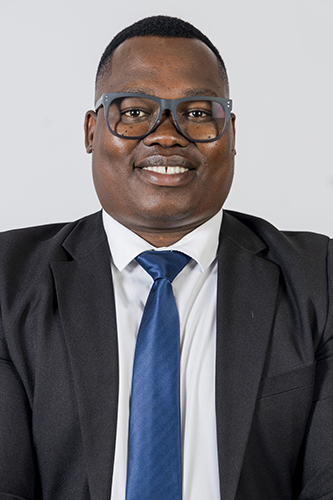
Istanbul, Türkiye, Thursday, 16 April 2026 – Speaker of the National Assembly, Ms Thoko Didiza, today reaffirmed Parliament’s commitment to work with the global parliamentary community to advance peace and justice.
Speaker Didiza delivered an address at the 152nd Assembly of the Inter-Parliamentary Union (IPU) currently underway in Istanbul, Türkiye, where she is leading a multi-party parliamentary delegation. “The Parliament of South Africa remains ready to partner with fellow legislatures in building a future anchored in justice, peace, and shared prosperity,” she said.
The Speaker called on parliaments worldwide to work towards restoring trust in democratic institutions, advancing justice and safeguarding peace under rising global instability. She said the Assembly is convening at a key moment when conflicts are escalating worldwide and when the world is deeply polarised. “Peace is an essential pillar for sustaining democratic stability,” she said. She noted that, as widening social divides and deepening political tensions continue to weaken trust and institutions across regions, the role that parliaments can play becomes vital.
The Speaker emphasised that parliaments could do more than only legislate. She said parliaments can serve as constitutional spaces “where differing views are addressed through debate rather than confrontation and where the collective will of a nation is shaped through engagement”. “When Parliaments function well, they absorb tension that might otherwise spill into instability,” she said. The Speaker noted that public confidence in democratic institutions has weakened worldwide, and South Africa is no exception. “Parliament has taken deliberate and concrete steps to rebuild public confidence and strengthen democratic legitimacy.”
Ms Didiza also highlighted the important roles of judicial independence, equitable access to justice and robust parliamentary oversight in sustaining democracy. “Parliamentary processes must ensure that citizens are part and parcel of decision-making processes, be it law-making, statutory appointments and/ or critical questions that affect our society,” she told delegates. “Protecting the independence of Parliament and safeguarding robust debate are key elements for meaningful oversight, she said, adding that parliaments should put in place mechanisms to ensure that they can hold to account those in government without fear or favour.
The Speaker told delegates that South Africa’s democratic transition in 1994 is a powerful example of confronting historical injustice through dialogue and institutional reform. She singled out the Truth and Reconciliation Commission and the 1996 Constitution as important steps toward peacefully addressing historical and systemic inequality, such as land dispossession and gender exclusion that were rooted in laws such as the Native Land Act of 1913. “Cognisant of this reality, our 1996 Constitution ensured that land reform would be undertaken to address land inequality in our country. Our constitution was also alive to gender inequality, which was addressed through the equality clause that focuses on tackling the systematic exclusion of women in politics, business and other aspects of society.”
In her address, Speaker Didiza also reaffirmed Parliament’s support for multilateral and diplomatic solutions. She commended the IPU for its role in the peaceful resolution of conflicts, particularly in the Russia-Ukraine conflict, where the IPU took concrete steps to intervene. “We must note with appreciation the current ceasefire on the war involving Iran, the United States and Israel. Should the situation warrant, the IPU may wish to consider an intervention similar to that in the Russia-Ukraine matter,” she said.
Ms Didiza emphasised that nurturing hope for future generations will require decisive action. She noted that the gap between commitments and resolutions on paper and action continues to undermine public confidence. To help remedy this, the Speaker called for the implementation of international human rights instruments and regional peace frameworks to be strengthened.
*The IPU is the global organisation of national parliaments that facilitates parliamentary diplomacy and empowers parliaments and parliamentarians to promote peace, democracy, human rights, gender equality, youth empowerment, climate action and sustainable development worldwide. Founded in 1889, the IPU brings together 183 Member Parliaments and 15 Associate Members, with its headquarters in Geneva, Switzerland.
The full programme for the 152 Assembly is available here.
ISSUED BY THE PARLIAMENT OF THE REPUBLIC OF SOUTH AFRICA
Enquiries: Moloto Mothapo
 Arrange a tour