



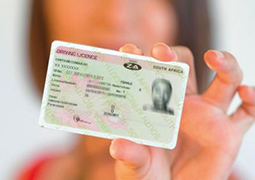
Parliament, Tuesday,6 October 2026 – The Select Committee on Public Infrastructure and the Minister in the Presidency was briefed by the Department of Transport on proposed amendments to the National Road Traffic Regulations that seek to extend the validity period of driving licence cards for light motor vehicle categories from five to ten years.
The committee heard that the proposed amendments apply to driving licence codes A1, A, B and EB, which cover motorcycles and light motor vehicles. The validity period for professional driving permits (PDPs) and heavy vehicle licence codes C1, C, EC1 and EC will remain unchanged, with PDPs remaining valid for two years and heavy vehicle licence cards remaining valid for five years.
The department explained that the proposal is informed by persistent card production delays resulting from the impact of the COVID-19 pandemic and recurring breakdowns of South Africa’s driving licence card printing machine. The amendments are intended to reduce pressure on driving licence testing centres, ease renewal backlogs, improve administrative efficiency, modernise licensing systems and align South Africa with international best practice.
Members of the committee welcomed the proposal but raised concerns regarding road safety, eyesight testing, operational capacity, fraud and corruption, the reliability of card production systems and the future digitisation of driving licences.
Responding to these concerns, the department explained that drivers of heavy vehicles and holders of PDPs would continue to undergo more frequent renewals, including medical, eyesight and criminal record checks where necessary, to ensure that public safety remains paramount. The department further confirmed that the Government Printing Works has been engaged as part of interim measures to strengthen card production capabilities and prevent future backlogs.
The department also informed the committee that Cabinet had approved the publication of the draft amendments for public comment and that the proposed regulations were subsequently gazetted for public participation.
As part of the proposed transitional arrangements, expired driving licence cards for codes A1, A, B and EB will remain valid for a period not exceeding three months after expiry, provided that a motorist has applied for a replacement card.
The future introduction of electronic and digital driving licences emerged as a key theme during the committee's engagement with the department.
Committee Chairperson Mr Rikus Badenhorst questioned why the government continues to rely on physical driving licence cards while other departments are rapidly advancing digital transformation initiatives. He said that extending the validity period of licence cards should be accompanied by a clear strategy to introduce secure electronic driving licences integrated with South Africa’s broader digital identity programme. Mr Badenhorst noted that the current card printing system remains costly and vulnerable to backlogs whenever the ageing production infrastructure experiences failures.
Mr Badenhorst stated it was not the first time he had called for the accelerated implementation of digital driving licences, saying that electronic licences stored on mobile devices could significantly reduce dependence on physical card printing machines and help eliminate licensing backlogs. He further stressed that government departments such as the South African Revenue Service and the Department of Home Affairs have successfully embraced digital platforms and that similar progress is needed within the transport sector.
Responding to the committee, the department confirmed that work is underway through an interdepartmental working group led by the Presidency, involving the Department of Transport, the Road Traffic Management Corporation, the Department of Home Affairs and other stakeholders. The initiative is exploring digital driving licences and their integration into the government’s broader digital identity framework.
Department officials indicated that the transition would need to consider issues of accessibility, particularly for South Africans who do not have access to smartphones or affordable data services.
The proposed amendments will continue to undergo parliamentary and public consultation processes before being finalised.
ISSUED BY THE PARLIAMENTARY COMMUNICATION SERVICES ON BEHALF OF THE CHAIRPERSON OF THE SELECT COMMITTEE ON PUBLIC INFRASTRUCTURE AND THE MINISTER IN THE PRESIDENCY, MR RIKUS BADENHORST.
For media inquiries or interviews with the Chairperson, please contact the committee’s Media Officer:
Ms Yoliswa Landu
Media Officer: Parliamentary Communication Services
Cell: 081 497 4694
Email: ylandu@parliament.gov.za
 Arrange a tour