


Parliament, Monday, 23 June 2025 – Today, we address an issue that affects nearly half of our population, the conditions imposed by National Treasury (NT) on SASSA’s 2025/26 budget, and the real-world impact these measures are having on the poor, the disabled, the elderly, and the vulnerable.
NT has attached strict new conditions to the allocation of funds to SASSA. These include quarterly reporting on suspended, cancelled or reviewed grants, income verification, including database cross-checks with South African Revenue Service (SARS), NSFAS, UIF and Home Affairs as well as biometric authentication for beneficiaries flagged as suspicious.
Treasury argues these steps are essential to combat fraud and ensure value for money and failure to comply by SASSA may result in grant funding being withheld, a deeply concerning possibility for millions who rely on this support.
The Portfolio Committee on Social Development is deeply concerned about these conditions, not because we oppose fraud prevention, but because the current implementation is causing delays, confusion, and deep distress among beneficiaries. Delays in grant payments are leaving many in limbo, unable to buy food or pay for transport.
The requirement for in-person verification is disproportionately disadvantaging rural communities and elderly caregivers who simply cannot afford to travel. Transport costs can reach up to R150 or more per trip, an unaffordable amount for some beneficiaries.
We are being flooded with WhatsApp messages, SMSs, calls and emails from desperate individuals and organisations that represent communities, who are unable to verify themselves. People are being excluded from the system and all of this, as far as we can see, is in the name of saving money.
SASSA has defended the verification process as necessary. They argue it prevents fraud and ensures accurate targeting. They have reminded beneficiaries of their duty to report changes in financial circumstances. That may be valid, but it cannot happen without balancing accessibility with fairness.
To ensure accountability, SASSA will now submit quarterly reports directly to the committee, in addition to NT. This will allow Parliament to play a proactive oversight role, especially after lessons learned during the card replacement crisis that took place recently.
The committee acknowledges the R1.6 billion increase in the 2025/26 grant allocation, intended to fund above-inflation increases. We also note SASSA’s intensifying efforts to fight fraud, such as the rollout of biometric systems, a new tender to assist with identity verification and digital upgrades, including office Wi-Fi, self-service kiosks, and action against fake SASSA websites.
As the committee, we are calling for accessible alternatives for rural and remote communities such as mobile units, remote verification, and community outreach must be prioritised. We believe that no cost-saving measure should come at the expense of basic dignity or leave the poor out in the cold. We are of the view, NT must balance fiscal prudence with social justice. We will continue to monitor implementation rigorously, to ensure that no beneficiary is punished for being poor or living far from a SASSA office.
The social grant system is not just a financial mechanism, it is a lifeline. Let us not forget the people behind the statistics, the grandmother raising orphans, the young person living with a disability, the unemployed breadwinner trying to survive. Yes, we must protect the integrity of the system, but never at the cost of humanity.
Another issue that is deeply troubling our society is substance and drug abuse. Our children are drinking alcohol, our schools are not safe, our rural communities are forgotten. And the institutions such as the Central Drug Authority (CDA), meant to fight this crisis are underfunded and unsupported. The CDA was established by the Prevention of and Treatment of Substance Abuse as a statutory body to monitor and oversee the implementation of the National Drug Master Plan.
It is thus gravely concerning to the committee that the CDA remains dependent on the Department of Social Development for finances, undermining its ability to operate independently across government. The lack of a dedicated budget line item makes the Authority unfit for purpose, especially in achieving the governance and oversight goals outlined in the National Drug Master Plan.
The CDA, tasked with coordinating the national response to drugs and substance abuse, was allocated just R7.1 million for 2023/24, a fraction of what’s needed. The Authority ended up overspending by R2.3 million, largely due to operational demands and lack of financial autonomy. Yet even more worrying is that its entire Annual Performance Plan was costed at R20 million, a figure completely ignored during the budgeting process.
How can the CDA fight a national war with no weapons? No money, no independence, no enforcement authority and still be expected to lead the charge?
It is also deeply concerning that eighteen years after the Substance Abuse Act was passed, more than half of South Africa’s municipalities still don’t have functioning Local Drug Action Committees.
We, as the committee are concerned over the rising substance and drug abuse across all corners of our society, from learners in classrooms to the communities struggling under the weight of addiction, poverty, and lawlessness.
Substance abuse must now be treated with the same urgency as gender-based violence, as both are destroying lives, families, and the nation’s social fabric. The state’s response to this growing crisis is marred by governance instability, chronic underfunding, and a complete breakdown in interdepartmental cooperation.
Rural areas are neglected, where treatment and prevention programmes are almost non-existent. The current approach continues to favour urban centres, leaving entire provinces underserved and vulnerable.
The Minister of Social Development must urgently implement the long standing recommendation of the committee that the Substance Abuse Act (2008) be amended to give the CDA stronger authority and independence so that it can be appropriated proper funding that meets its important mandate. Laws on alcohol sales to minors must be enforced, and corruption in liquor licensing must be rooted out. Targeted investment in rural infrastructure for treatment and prevention is non-negotiable. A coordinated monitoring and evaluation system must be implemented across departments.
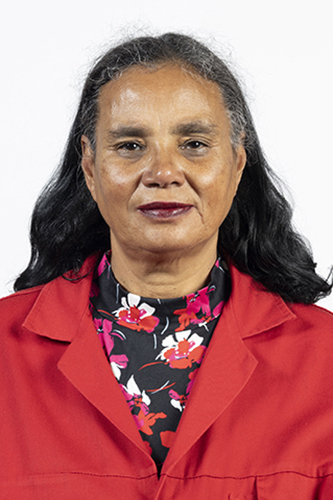
ISSUED BY THE PARLIAMENTARY COMMUNICATION SERVICES ON BEHALF OF THE CHAIRPERSON OF THE PORTFOLIO COMMITTEE ON SOCIAL DEVELOPMENT, MS BRIDGET MASANGO.
For media enquiries, please contact the committee’s Media Officer:
Name: Ms Faith Ndenze
Parliamentary Communication Services
Cell: 081 377 0686
Email: fndenze@parliament.gov.za
 Arrange a tour