


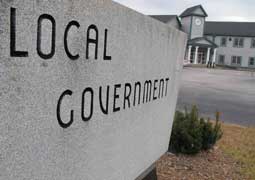
Parliament, Thursday, 8 October 2026 – The Portfolio Committee on Public Service and Administration on Tuesday heard that work is underway to expand lifestyle audits to local government as part of efforts to strengthen integrity management across the public administration.
The committee received a progress update from the Department of Public Service and Administration on its recommendations in the 2026/27 budget review and recommendation report. One recommendation was to prioritise lifestyle audits to strengthen integrity management systems, improve compliance with the Public Service Regulations and ensure effective detection and prevention of unethical conduct across the public service.
The committee was informed that there had been some inter-governmental collaboration on this since the report. According to the DPSA, it is working with the Department of Cooperative Governance and the South African Local Government Association as part of a joint task team established in June this year. The task team has a dedicated workstream focusing specifically on lifestyle audits, alongside workstreams for ethics and discipline management.
The Chairperson of the committee, Mr Jan de Villiers, welcomed this development. “The extension of lifestyle audits to municipalities is an important step towards strengthening integrity across the state,” he said. “Municipalities are where government is closest to the people. It is also here where corruption and weak controls have an immediate impact on services. Lifestyle audits must therefore become an effective accountability mechanism across all spheres of government, with proper follow-through where red flags are identified.”
The committee also heard that the department convened a workshop on 23 and 24 June 2026 where key stakeholders, including the Special Investigating Uni, the Financial Intelligence Centre, the South African Revenue Service, the Directorate for Priority Crime Investigation and the South African Police Service participated to align their respective mandates, roles and vetting processes within the lifestyle audit framework. The strategic objective of these engagements is to draft a standardised regulation under the Public Administration Management Act to roll out uniform lifestyle audit norms and standards to municipalities and to comprehensively review and update the existing Lifestyle Audit Guide.
Members were informed that the department has developed automated red flag alerts or triggers. These alerts will immediately notify the Public Administration Ethics, Integrity and Disciplinary Technical Assistance Unit if institutional ethics officers fail to respond to flagged cases, delay referrals for formal investigation or fail to adequately monitor ongoing investigations.
The committee was also informed that the department has completed a review of the incapacity-leave system and is engaging with organised labour on proposed changes. This was in response to another committee recommendation, advising the department to fast-track the review of incapacity leave due to reported abuse and the significant costs this leave incurs for the fiscus. The recommendation was to do this in consultation with organised labour. The committee recommended that the department must work with experts as well as the Government Employees Medical Scheme to develop measures to prevent abuse of the leave and medical aid.
In addition to the progress report on its recommendations, the committee also received briefings from the National School of Government and the Centre for Public Service Innovation on their performance.
ISSUED BY THE PARLIAMENTARY COMMUNICATION SERVICES ON BEHALF OF THE CHAIRPERSON OF THE PORTFOLIO COMMITTEE ON PUBLIC SERVICE AND ADMINISTRATION, MR JAN DE VILLIERS.
For media enquiries or interviews with the Chairperson, please contact:
Name: Alicestine October
Cell: 083 665 4345
E-mail: aoctober@parliament.gov.za
 Arrange a tour