Parliament, Wednesday, 1 April 2026 – The Portfolio Committee on Public Service and Administration today noted the practical challenges, including high costs and the administrative burden involved, in implementing lifestyle audits across the public sector.
The committee received briefings from several provincial governments, including KwaZulu-Natal. Gauteng, the Northern Cape, Western Cape and North West on their efforts to implement lifestyle audits. The meeting forms part of the committee’s ongoing oversight to hold departments accountable for implementing the lifestyle audit framework in the public service.
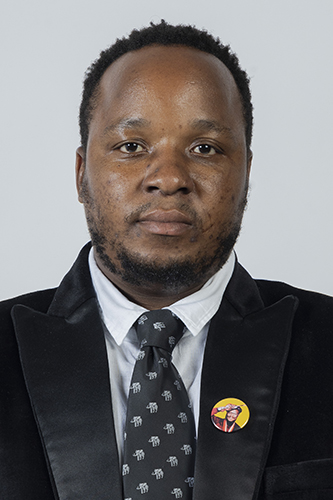
The Chairperson of the committee, Mr Jan de Villiers, noted that while progress has been made, lifestyle audits remain at an early stage of institutionalisation. “We are still working towards making lifestyle audits a standard and embedded practice within the public service,” he said. “There is not yet a uniform approach applied across provinces; however, I commend the progress that provinces have made in developing and using lifestyle audits.” He also said that there is a need to strengthen gaps identified in the Department of Public Service and Administration’s (DPSA) framework.
The committee further noted from the presentations that lifestyle audits appear more effective when conducted by independent bodies rather than by departments. “It seems more appropriate that independent bodies lead and implement these audits, whether the Special Investigating Unit (SIU) or external audit services,” said Mr de Villiers. He added that it is difficult for ethics officers or internal departmental officials to act as the “police” of their own institutions. The committee noted that the SIU is not properly empowered, where there is only a secondment, and that a presidential proclamation remains the most effective way to ensure that the SIU is fully empowered.
Regarding internal capacity and other administrative challenges, the committee noted difficulties officials faced in accessing the required financial records. The Chairperson said lifestyle audits often present a significant volume of work. “It is important to explore how this can be more effectively automated,” he said. “We must look at how technology can be used to streamline the auditing process. He noted that the technical processes between the South African Revenue Service, the Auditor-General, National Treasury and even the banks are still being developed. “There must be ways to make compliance easier for auditees, as obtaining the required documentation, such as bank statements, can be complex and costly.”
On the issue of costs, the committee noted that lifestyle audits are costly to implement and should be budgeted for accordingly. “There may be a need for legislative and budgeting reform through National Treasury regarding how provinces are expected to fund these audits,” the Chairperson said. “At the same time, there is an opportunity for these processes to recover misappropriated funds and return them to departments.”
The committee also reflected on difficulties in enforcing compliance. From provinces’ presentations, it noted that declarations by auditees are often not sufficient and may give rise to suspicion, particularly where legal correspondence is involved. Members also noted that in the absence of clear legislative provisions, especially provisions requiring family members to declare their interests, auditees and even their family members often refuse to comply or submit incomplete disclosures. “This,” the Chairperson said, “points to the need for legislative reform and stronger enforcement to clarify that family members form part of these audits and must comply accordingly.”
There were also calls to extend and enforce lifestyle audits across all spheres of government, including local government. “Many municipalities continue to struggle to achieve clean audits,” said Mr De Villiers. “The standards we are setting for national and provincial government must be extended and enforced at local level, so that corruption can be addressed where it directly affects service delivery and public trust can be restored.
“We have to get this right across all spheres of government if we are to restore integrity and ensure that public resources are used for their intended purpose,” the Chairperson said.
ISSUED BY THE PARLIAMENTARY COMMUNICATION SERVICES ON BEHALF OF THE CHAIRPERSON OF THE PORTFOLIO COMMITTEE ON PUBLIC SERVICE AND ADMINISTRATION, MR JAN DE VILLIERS.
For media enquiries or interviews with the Chairperson, please contact the committee’s media officer:
Name: Alicestine October (Ms)
Cell: 083 665 4345
E-mail: aoctober@parliament.gov.za
 Arrange a tour