



Parliament, Tuesday, 29 September 2026 – The Portfolio Committee on Correctional Services has expressed concern over persistent operational bottlenecks, high vacancy rates across several Correctional Supervision and Parole Boards (CSPBs), and historical gaps in victim participation during parole consideration processes.
The committee received a briefing from the Department of Correctional Services (DCS) on the overhaul of the national parole system and progress in filling vacancies across CSPBs.
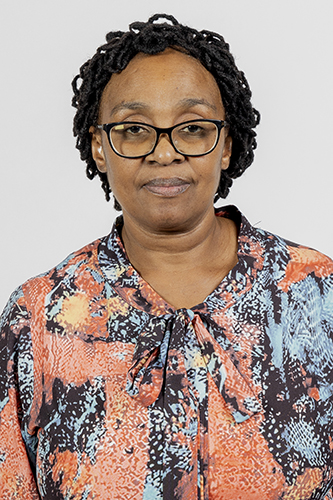
Committee Chairperson Ms Kgomotso Anthea Ramolobeng said while the committee welcomed progress in legislative reviews, policy alignment and system enablers, reforms must ultimately translate into a parole system that functions effectively on the ground.
“We need to see whether boards are able to sit, consider cases and make sound decisions in a timely and credible manner. These reforms must result in practical improvements in the functioning of the parole system,” she said.
The committee heard that, as of September 2026, 17 chairperson posts (32.7%), 15 vice-chairperson posts (28.8%) and 41 community member posts (46.6%) remain vacant across the 52 CSPBs established nationally under the Correctional Services Act.
The committee was particularly concerned about the 41 vacant community member positions, noting that community members bring the perspective of the communities to which parolees will return. Severe regional imbalances also persist, with the Western Cape having filled all chairperson and vice-chairperson posts, while Free State and Northern Cape and Limpopo, Mpumalanga and North-West continue to experience significant shortages.
The committee highlighted the Upington board, which has lacked a substantive chairperson since 2020. “DCS must ensure that positions are advertised timeously, particularly before existing contracts expire. These are not ordinary administrative positions. Where vacancies affect the functioning of boards, DCS must identify those boards and provide specific timelines for resolving the vacancies,” Ms Ramolobeng said.
The committee welcomed the finalisation of revised five-year independent contracts and a new code of conduct for CSPB members in July 2026. It also welcomed the Correctional Sentence Plan for offenders sentenced to less than 24 months, which will support rehabilitation programmes tailored to their offending needs, as well as DCS parole awareness campaigns and community imbizos aimed at supporting offender reintegration.
The committee also received an update on the first draft of the Correctional Services Amendment Bill, which proposes the inclusion of full-time professionals, including psychologists, social workers, criminologists and legal experts, in board structures.
“We welcome the progress on the Bill, but we need clarity on the remaining process and timelines, including when Parliament can expect to receive it. Legislation must not delay reforms that can already be implemented, including filling board vacancies and strengthening data collection,” she said.
The committee was particularly concerned about historical gaps in victim participation, with 1 396 victims not consulted in 2019/20, 2 033 in 2020/21 and 1 882 in 2021/22. “These are not just statistics. Behind every statistic is a victim or family that may have been excluded from a process that directly affects them,” Ms Ramolobeng said.
The committee welcomed the Online Victim Registration Form scheduled for piloting in quarter three, but stressed that it must not replace accessible non-digital options. It called for regular reporting on victims contacted, registered and participating in parole processes. The committee also noted provision for 128 auxiliary social worker posts within Community Corrections during the 2027 Medium-Term Economic Framework period to support victim tracing and counselling, while stressing that victims require support now.
Ms Ramolobeng cautioned that electronic monitoring must not be treated simply as a procurement exercise. “It requires trained officials, an operational control room, connectivity, bandwidth, maintenance, after-hours response capacity and clear coordination with SAPS when alerts are triggered,” she said.
The committee called for a full operational plan covering staffing, risk categories, response protocols and interim supervision arrangements, particularly for higher-risk parolees.
“Parole is not a right; it is a conditional placement option aimed at rehabilitation. Public safety and the rights of victims must remain paramount in every decision taken by a Parole Board.
“The department must fast-track the filling of outstanding board vacancies. These issues do not have to wait for legislation. The committee expects clear timelines, accountability and quarterly reporting as these reforms move forward,” Ms Ramolobeng said.
ISSUED BY THE PARLIAMENTARY COMMUNICATION SERVICES ON BEHALF OF THE CHAIRPERSON OF THE PORTFOLIO COMMITTEE ON CORRECTIONAL SERVICES, MS KGOMOTSO ANTHEA RAMOLOBENG.
For media enquiries or interviews with the Chairperson, please contact the committee’s Media Officer:
Name: Rajaa Azzakani (Ms)
Cell: 081 703 9542
E-mail: razzakani@parliament.gov.za
 Arrange a tour