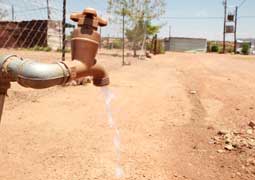
Parliament, Monday, 24 August 2026– The Portfolio Committee on Water and Sanitation has heard a strong call from residents of the greater Dr Kenneth Kaunda District Municipality for decisive action against corruption and poor accountability, amidst municipalities’ continued failure to provide reliable water services.
During the final North West public hearing on the Water Services Amendment Bill at the Klerksdorp Civic Centre, residents argued that corruption in the tendering system, particularly around water tanker contracts, must be confronted if government is to restore sustainable and dignified water services to communities.
While expressing overwhelming support for the Bill, participants said they hoped it would strengthen accountability and ensure that municipal officials implicated in corruption are held accountable.
Participants further emphasised that their daily struggles with water provision were often disregarded, while some municipal officials appeared more concerned with personal enrichment. Residents called for stronger enforcement of standards and consequences for water services licence holders and other service providers who fail to meet their obligations.
Participants also reiterated their dissatisfaction with the growing reliance on water tankers to provide communities with water. They argued that resources should instead be directed towards the development and maintenance of infrastructure that can provide long-term and sustainable access to water.
According to participants, water tankers provide an unreliable service and, in many instances, fail to reach all communities in need. They argued that the continued dependence on water tankering does not provide a sustainable solution to the country's water challenges.
Despite the overwhelming support for the Bill, participants stressed the importance of effective enforcement and continuous monitoring of the quality of services provided. They argued that communities had suffered for too long because of the failure to enforce existing laws and regulations.
Rural communities also raised concerns that their particular challenges were not adequately addressed in the Bill. They called for an inclusive legislative framework that considers the unique challenges affecting water provision in rural and underserved communities.
On sanitation, participants criticised the continued underdevelopment of adequate infrastructure to meet the demands of growing populations and expanding development. They argued that the Bill must contribute towards halting and reversing the persistent challenges in the provision of sanitation infrastructure.
Meanwhile, the Portfolio Committee on Water and Sanitation expressed concern at the lived realities of communities in the area. Members were particularly disturbed by reports that some elderly residents are forced to use their social grants to purchase water.
The committee said this was not only unacceptable but also reflected a serious failure to ensure that communities are treated with dignity and have access to basic services.
Following the conclusion of the North West leg of the public hearings, the committee will next travel to Limpopo, where public hearings on the Water Services Amendment Bill are scheduled to take place from 28 to 30 August 2026 in Tzaneen, Polokwane and Bela-Bela.
The committee encourages residents of Limpopo to come out in their numbers and make their voices heard on the Bill.
ISSUED BY THE PARLIAMENTARY COMMUNICATION SERVICES ON BEHALF OF THE CHAIRPERSON OF THE PORTFOLIO COMMITTEE ON WATER AND SANITATION, MR LEON BASSON
For media enquiries or interviews with the Chairperson, please contact the committee’s Media Officer:
Name: Malatswa Molepo (Mr)
Parliamentary Communication Services
Cell: 081 512 7920
E-mail: mmolepo@parliament.gov.za
 Arrange a tour