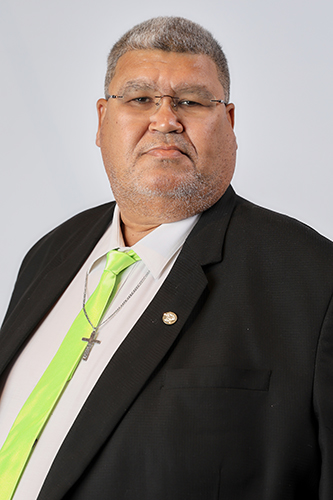
Parliament, Wednesday, 18 September 2024 – Gauteng’s Permanent Delegates to the National Council of Provinces (NCOP) held a successful briefing meeting yesterday at the Gauteng Provincial Legislature on the province’s provincial and municipal infrastructure.
The meeting marked the start of NCOP’s Provincial Week programme, held under the theme “Confronting the Challenges Facing the Timely Delivery of Viable Public Infrastructure to Communities”. The delegation received a briefing from the provincial executive, which was led by Premier Panyaza Lesufi and district mayors.
Mr Lesufi told the NCOP delegation that incomplete infrastructure in Gauteng is a pressing issue with social and financial consequences. “In this financial year, we have allocated R12.7 billion across departments to address infrastructure in its totality. The province faces an R1.1 billion shortfall to fund the identified incomplete infrastructure projects.”
He told the delegation that the provincial infrastructure projects were among the 132 projects nationally that the Auditor-General, Ms Tsakani Maluleke, visited in 2023. She flagged them as projects hampered by, among other things, poor contractor performance, mismanagement, and a lack of urgency from provincial departments.
Mr Lesufi said the backlog of delayed or abandoned projects includes schools, clinics and hospitals. Mr Lesufi also noted community disruptions, vandalism, and procurement inefficiencies as additional problems that caused stoppages for these projects.
He said these challenges indicate a need for better project readiness and stricter adherence to delivery timelines. “This context underscores the need for enhanced project management, improved contractor accountability and greater interdepartmental coordination to prevent further financial waste and ensure timely infrastructure delivery,” he said.
The NCOP delegation noted that the most affected departments regarding incomplete and abandoned infrastructure are the provincial departments of education, health, human settlements, social development, sports, arts and culture, and roads and transport. Mr Lesufi said over 40 stalled projects in Gauteng were stalled close to completion.
Mr Lesufi also attributed the delays in infrastructure projects to the lack of cooperation between the three spheres of government, competing priorities among them and poor planning. He told the delegation that delays in infrastructure projects have a far-reaching negative impact on the provincial economy and deepen inequality.
The delegation heard that construction mafias disguised as business forums hold Gauteng’s infrastructure projects worth billions hostage. It also heard that collusion and price gouging are among the challenges, and the government has limited influence in setting prices across the construction industry.
The NCOP delegation heard that a turnaround infrastructure programme strategy is in place for the completion of projects. The provincial executive committee has resolved that the Office of the Premier will lead the programme. In addition, a dedicated bulk infrastructure unit will be established in the province to drive integration between provincial and local government, migration and centralisation of the Gauteng Infrastructure Financing Agency to the Department of Infrastructure Development as well as the escalation of matters of the construction mafia to the Gauteng Essential Infrastructure Task Team, led by the South African Police Service.
Mr Lesufi assured the delegation that the province would strive to get the basics right, from planning to maintenance, by ensuring that all stages of infrastructure development adhered to core principles aimed at preventing costly delays and overruns.
He said that to address these systemic challenges, the province aims to reduce dependency on external contractors, improve the efficiency of internal teams, and ensure that all infrastructure projects are delivered on time and within budget.
The week’s programme includes visits to incomplete, delayed, and abandoned infrastructure projects. The delegation visited the Charlotte Maxeke Academic Hospital, Fleurhof Mega Projects, and the Duzenendlela Special School. The delegation expressed its dissatisfaction with the up-hauling conditions at Duzenendlela Special School and lack of infrastructure suitable for children with special needs.
All the challenges facing the school are contained in a report compiled by the South African Human Rights Commission and the delegation has requested to be furnished with the report as soon as possible.
ISSUED BY THE PARLIAMENTARY COMMUNICATION SERVICES ON BEHALF OF THE LEADER OF THE GAUTENG DELEGATION, MS JANE MANANISO
For media enquiries, please contact the committee’s Media Officer:
Name: Ms Malentsoe Magwagwa
Parliamentary Communication Services
Cell: 081 503 1840
Email: mmagwagwa@parliament.gov.za
 Arrange a tour