Parliament, Tuesday, 22 April 2025 – The Portfolio Committee on Water and Sanitation has cautioned the Department of Water and Sanitation and Water Services Authority, and Water Services Provider that what stands between the provision of quality water and sanitation services to the people, is ineffective planning, poor project management and corruption that negatively impacts delivery of projects.
The committee’s views were shared during a briefing from the Department of Water and Sanitation on its 2025/26 annual performance plan and budget.
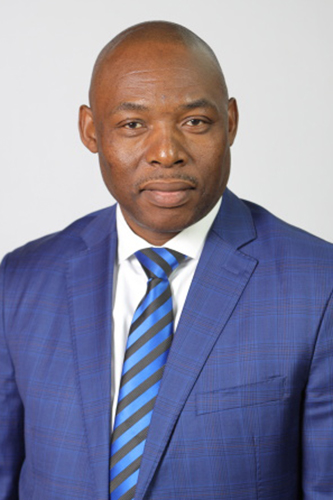
The committee Chairperson, Mr Leon Basson, said: “The impediments within the water value chain are man-made and require urgent corrective action. The entire sector is well aware of the challenges; what is needed now is concomitant action to save the sector and ensure the provision of quality water and sanitation for all.”
While the committee acknowledges that some of the surface water resource development projects, such as the Phase 2 of the Lesotho Highlands Water Projects and raising of the Clanwilliam Dam Wall are at implementation phase, the cost of delayed implementation of those projects was twofold. Firstly it undercut and delayed the access to economic spinoffs of the projects and secondly, the projected cost overruns attract a further burden to the state.
The committee has emphasised the need for effective planning, budgeting and implementation of programmes to avoid cost escalation and unjustified delays, for example, the Trans Caledon Tunnel Authority projections are that an additional funding for LHWP-2 will be raised due to the increase in construction cost estimates from R42 billion to R53 billion.
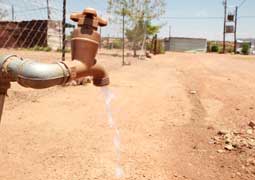
The continued challenges and underperformance by municipalities regarding water and sanitation provision cannot be ignored and unresolved if the budget is to be effective. It is unacceptable that the Blue Drop report found that the percentage of water supply systems with poor or bad microbiological water quality compliance (i.e. water that is not safe to drink) increased from 5% in 2014 to 46% in 2023.
The Green Drop report found that the percentage of municipal wastewater systems in a critical state of performance (i.e. discharging partially treated or untreated sewage into rivers) increased from 30% in 2013 to 39% in 2022. The No Drop report found that the national average for municipal non-revenue water increased from 37% in 2014 to 47% in 2023.
While the committee welcomed the formation of a nationally coordinated task team to review service delivery mechanisms for water and sanitation services, in an effort to address the decline of these services as outlined in Blue Drop, Green Drop and No Drop reports, it has called for tangible action as the development of another set of recommendations without action will not remedy the situation.
Over the medium term, the committee expects tangible action to address the escalating debt within the water value chain. One of the critical interventions that the committee advocates for, is the withholding of equitable share to ensure that municipalities pay water boards for services rendered. “The effectiveness of the water value chain is dependent on the payment of services. It is high time that defaulters are forced to pay to ensure that the system is self-sufficient and able to reinvest the resources on development of new infrastructure that caters for increased demand,” Mr Basson emphasised.
The committee has also called for the implementation of water conservation and demand management initiatives to ensure that the country is in line with international consumption levels. “The City of Cape Town has proven that effective and constant communication can greatly reduce demand to acceptable standards. All municipalities must adopt that model to ensure reduced consumption levels,” added Mr Basson.
Meanwhile, the committee has called for a short to medium plan on how the sector can overcome the skills shortages that negatively affect effective functioning. The committee is of the view that this challenge has been longstanding and requires a renewed collaboration with the Department of Higher Education on how the educational sector can contribute in producing the required skills set within the water value chain.
The committee welcomed the assurance that the department has reduced its under-expenditure against its budget in recent years from the R2.5 billion in 2021/22 (14.3% of the budget), in 2022/23 there was R860 million under-expenditure (5% of the budget), and in 2023/24 there was R44 million under-expenditure (0.2% of the budget).
In terms of the preliminary year-end report for the 2024/25 financial year, the under-expenditure was below 0.1% of the budget. While the reduction is welcomed, the committee emphasised that wastages must be eliminated and that procurement should always be above board.
The committee has committed itself to continuous monitoring of the implementation of the annual performance plan with a view to ensure speedy implementation of projects.
ISSUED BY THE PARLIAMENTARY COMMUNICATION SERVICES ON BEHALF OF THE CHAIRPERSON OF THE PORTFOLIO COMMITTEE ON WATER AND SANITATION, MR LEON BASSON
For media enquiries or interviews with the Chairperson, please contact the committee’s Media Officer:
Name: Malatswa Molepo (Mr)
Parliamentary Communication Services
Tel: 021 403 8438
Cell: 081 512 7920
E-mail: mmolepo@parliament.gov.za
 Arrange a tour