


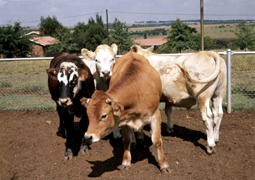
Parliament, Monday, 2 March 2026 – The national Select Committee on Agriculture, Land Reform and Mineral Resources as well committees from the nine legislatures have welcomed the arrival of 1.5 million doses of a foot-and-mouth disease (FMD) vaccine from the Türkiye-based manufacturer Dollvet, which arrived on Sunday, 1 March.
The committees met in Gauteng over the weekend to respond to the ongoing FMD outbreak. The Chairperson of the Select Committee on Agriculture, Land Reform and Mineral Resources, Mr Mpho Modise, co-hosted the two-day joint workshop with the Gauteng Provincial Legislature’s Portfolio Committee on Environment Agriculture and Rural Development chairperson, Mr Jaco Mulder, to strengthen cooperative governance on FMD.
The engagement brought together the select committees and chairpersons of agriculture portfolio committees from all provincial legislatures to deliberate on containment measures and enhance collaboration on FMD across spheres of government. The discussions focused on vaccination programmes and livestock movement controls, the economic impact on farmers and improved coordination and accountability.
The committees stated that the arrival of the vaccines represents a critical turning point, as we are now seeing a consistent supply of these vaccines in the fight against foot-and-mouth disease.
With the arrival of the vaccines, some provincial legislatures were concerned that preparedness for a vaccine rollout in their provinces had been scant. The committees emphasised that the meeting must recognise the importance of discussing the root causes of FMD and where the crisis originated. They warned that it would be a mistake to focus on containment efforts without first addressing the true source of the problem.
Members shared experiences and challenges from their provinces, agreeing that FMD is not just a provincial issue but a national crisis. Referring to a presentation delivered by the Department of Agriculture, the members of the provincial legislatures noted that outbreaks are concentrated in areas that border game reserves. The committees said if government and legislators do not engage honestly and fully with game-reserve owners, particularly those that have buffalo populations, which are known carriers, and resolve the issues surrounding how they contain the buffalo, along with the activities of communities living around those areas where fence are sometimes breached to gain grazing land, we will not win the fight against FMD. The committees said one of the biggest challenges in addressing FMD is with communal farmers, unlike commercial ones who are better organised and easy to quarantine.
The issue of law enforcement is critical because, in various areas cattle are being transported to auction over distances greater than 90 kilometres without any law enforcement present along the route. The committees proposed that all provinces need to activate their FMD joint stakeholder committees to address this issue and ensure that law enforcement is present daily to control the movement of cattle and avoid further spreading.
FMD is a state-controlled disease. Members of the provincial legislatures reported receiving a report stating that there is a 45% vacancy rate in the department’s veterinary section and asked about measures to fill these posts since FMD was declared a national disaster. Mr Modise said the department needs to report back with a plan on how the capacity issue will be addressed.
Legislators were concerned that the lack of veterinarians in their provinces will pose challenges for the rollout of vaccines. In response, the Department of Agriculture’s Director-General, Mr Mooketsa Ramasodi, acknowledged the capacity challenges. The department is open to bringing in private veterinarians, who can apply through state veterinarians. Some legislators suggested reaching out to retired veterinarians to assist with the outbreak.
Some members referred to a court case involving Onderstepoort Biological Products (OBP) and the Agricultural Research Council (ARC), in which the two entities were disputing intellectual property rights, reportedly in the context of a private vaccine manufacturer seeking to acquire aspects of their intellectual property. The committee expressed concern about the potential loss of intellectual property by OBP and ARC. It cautioned that privatisation should not occur indirectly through a failure to strengthen the state’s capacity to manage FMD, while at the same time allowing private entities that challenge state-owned vaccine manufacturers to assume a leading role in combating the disease.
Regarding accountability mechanisms, the committees stated that the National Council of Provinces (NCOP) can conduct a six-month follow-up review of provincial veterinary capacity to measure progress against commitments made during this workshop. The committee can ensure that oversight of provincial veterinary services remains continuous rather than just crisis driven.
In briefing the committees, Mr Ramasodi stated that the department's current strategy involves vaccinating nearly 40 million animals. This will mean that within a year, 38 million vaccines will be circulating in the country.
Mr Ramasodi mentioned that the department aims to have 80% of the herd vaccinated by December, which is expected to reduce outbreak incidents by 70%. This plan includes mass vaccination efforts. Another significant issue is laboratory testing. The department is collaborating with CSIR and other partners to develop a rapid diagnostic tool to avoid the need for frequent laboratory visits.
A recurring concern is why vaccines are not being distributed more freely. The department explained that regaining FMD-free status is a priority, and the World Organisation for Animal Health requires rigorous surveillance to report on vaccine use. The department is working to ensure that this authorisation occurs through state veterinarians.
Another question which the department frequently answers, was why these vaccines are not available for sale by those who are licenced to sell animal vaccines and other pharmaceuticals. The vaccines are currently not registered, which is why the department must seek exemptions from the Department of Health and SAHPRA before they can enter the country.
Currently, 2.5 million doses of vaccines are available in the country. During March, an additional 6 million doses from Dollvet and 5 million from Biogenesis/Biovenel are expected. By the end of March, the total is projected to reach 13.5 million doses, bringing us close to the target of 14 million, said Mr Ramasodi.
Mr Mulder said: “Today’s workshop marks a pivotal moment in our collective response to the ongoing foot-and-mouth disease outbreak. It has provided a valuable platform for collaboration among various stakeholders, including the select committees and chairpersons from all provincial legislatures. Our discussions have centred on critical containment measures and the importance of a coordinated approach across government spheres. Moving forward, it is imperative that we take decisive action to ensure the effective rollout of vaccination programmes and to maintain open lines of communication with all involved parties.”
“As we leave here today, it is our responsibility to implement the resolutions we’ve discussed and ensuring that we have a comprehensive strategy in place to safeguard our livestock and support our farmers,” added Mr Modise.
ISSUED BY THE PARLIAMENTARY COMMUNICATION SERVICES ON BEHALF OF THE CHAIRPERSON SELECT COMMITTEE ON AGRICULTURE, LAND REFORM AND MINERAL RESOURCES, MR MPHO BONES MODISE.
For media inquiries or interviews with the Chairperson, please contact the committee’s Media Officer:
Name: Yoliswa Landu (Ms)
Cell: 081 497 4694
E-mail: ylandu@parliament.gov.za
 Arrange a tour