Parliament, Tuesday, 17 March 2026– The Portfolio Committee on Water and Sanitation has welcomed signs of stability in governance and operations at Amatola Water but cautioned that significant work remains before the entity reaches an acceptable standard of performance.
The committee today engaged with Amatola Water, uMngeni-uThukela Water and Rand Water on their 2024/25 annual reports.
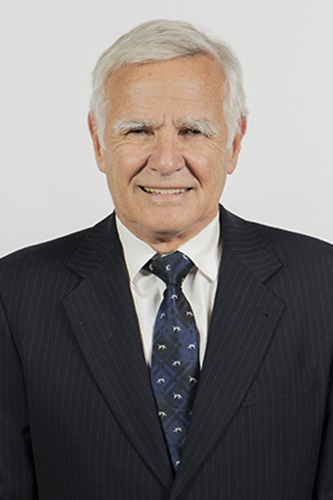
The committee Chairperson, Mr Leon Basson, said recent developments at Amatola Water signal improving stability, including the appointment of a new board, progress towards appointing a permanent CEO and a reduction in key risk indicators. However, this progress must translate into tangible outcomes.
“While there are clear signs of improvement, challenges relating to financial viability, ageing infrastructure and reliable access to quality water remain. Stability must now result in consistent water delivery to communities,” said Mr Basson.
The committee noted Amatola Water’s 73% achievement of performance targets but emphasised that performance on paper must be matched by real-world impact, particularly in ensuring that water reaches communities in the Eastern Cape. Serious concern was raised over water losses, which account for 19% of treated water. The committee warned that such losses point to failing infrastructure and place additional strain on already constrained financial resources. Amatola Water has been urged to urgently address infrastructure deficiencies, implement its financial recovery plan with discipline, and prioritise maintenance and investment to restore its financial position.
While audit outcomes have improved over the past two financial years, the committee expressed alarm at persistently high levels of unauthorised, irregular, fruitless and wasteful expenditure. Irregular expenditure stood at approximately R910 million in 2024/25, with fruitless and wasteful expenditure reaching R104 million. “These figures are unacceptable. There must be consequence management, internal investigations and recovery of funds,” the committee stressed.
Strong Performance but Underspending a Concern at uMngeni-uThukela Water
The committee commended uMngeni-uThukela Water for achieving 97.59% of its planned targets, reflecting strong operational performance. However, this performance was undermined by the entity’s failure to spend approximately R1.45 billion of its capital expenditure budget, a shortfall the committee said translates into delayed infrastructure projects and missed economic opportunities. “Capital expenditure drives infrastructure delivery, supports contractors and creates jobs. Underspending in this area has real economic and service delivery consequences,” Mr Basson said.
The committee called for improved project management and tighter monitoring to ensure infrastructure projects are completed on time.
Encouragingly, the entity reported R7.651 billion in sales revenue, marking an 11% year-on-year increase. However, rising input costs, particularly for chemicals and electricity, remain a concern. The committee pointed to municipalities as a key contributor to these rising costs, noting that the discharge of untreated wastewater into rivers increases the cost of purification. Municipalities have been urged to address their role in the water value chain to ensure system-wide sustainability.
Rand Water’s Investment Praised but Systemic Weaknesses Persist
The committee applauded Rand Water for its strong investment in infrastructure, noting that the entity spent 130% of its capital expenditure budget and 124.8% on repairs and maintenance. This level of investment, the committee said, should be replicated across the water value chain to reduce water losses and protect revenue.
However, the committee warned that these efforts are being undermined by weak municipal infrastructure, which prevents water from reaching end users. “There must be end-to-end collaboration across the value chain. Investment at bulk level alone is not sufficient if municipal systems are failing,” the committee emphasised.
The committee also welcomed Rand Water’s unqualified audit opinion and encouraged continued progress, particularly as the entity seeks to diversify its revenue streams.
Mounting Municipal Debt Threatens Sustainability
Across all engagements, the committee raised serious concerns about the escalating municipal debt owed to water boards, warning that it poses a systemic risk to the sector. Rand Water alone is owed approximately R5.32 billion by municipalities.
“This trend is unsustainable and weakens the entire water system. Urgent interventions are required to address municipal debt and ensure the long-term viability of water boards,” the committee concluded.
ISSUED BY THE PARLIAMENTARY COMMUNICATION SERVICES ON BEHALF OF THE CHAIRPERSON OF THE PORTFOLIO COMMITTEE ON WATER AND SANITATION, MR LEON BASSON.
For media enquiries or interviews with the Chairperson, please contact the committee’s Media Officer:
Name: Malatswa Molepo (Mr)
Tel: 021 403 8438
Cell: 081 512 7920
E-mail: mmolepo@parliament.gov.za
 Arrange a tour