


Parliament, Tuesday, 31 October 2023 – The Portfolio Committee on Basic Education has noted with concern the confusing and misleading information circulating on social media on the recently adopted Basic Education Laws Amendment (BELA) Bill.
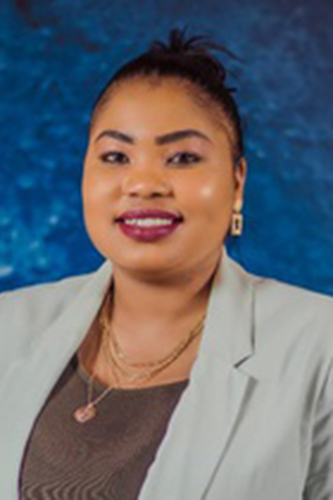
Committee Chairperson Ms Bongiwe Mbinqo-Gigaba said that, contrary to the social media posts, the Bill does not include any clause allowing alcohol to be sold on school premises. “The proposed amendment regarding the sale of alcohol on school premises after hours during functions was not supported by the committee and it was removed in its totality. Similarly, the amendment which proposed that members of a governing body must disclose their financial interests on an annual basis, along with the financial interests of their spouses, partners and immediate family members, was also not supported and was deemed too onerous a task.”
She further emphasised that the Bill is not an “abortion bill”, allowing learners to have abortions performed without the consent of guardian, as is being claimed in social media messages. “This is a completely incorrect statement and rides on the fears of especially religious or conservative parents. The Department of Basic Education (DBE) is responsible for education and educating. That is why comprehensive sexuality education (CSE) was introduced within Life Orientation in 2000, but this is very age specific.” She said CSE aims to ensure that learners do not get confusing and misleading messages on sex, sexuality, gender and relationships.
Ms Mbinqo-Gigaba said one of clauses agreed to in the committee after much debate is the clause regarding language policy – school governing bodies of public schools must submit their language policies and any amendment thereof to heads of departments for approval. The language policy must take into consideration the language needs of the broader community.
Another hotly debated clause related to the admissions policy was adopted by the committee. This clause stipulates that after consulting with the school governing body, heads of departments have the final authority to admit a learner to a public school.
“The committee was clear in its resolution that the final decision on both of the above will be with the heads of departments. Any statement contrary to this does an injustice to the work of the committee and the process that was followed in reaching the resolutions and is completely misleading,” said Ms Mbinqo-Gigaba.
Regarding the clause that refers to home education, Ms Mbinqo-Gigaba said it was partially agreed to. This amendment relates to applications for permission to home school a child and required the heads of departments to delegate an official to conduct a pre-registration site visit. The adopted amendment now provides that such learners must still be registered, but that site visits can happen at any place of choice, should the parents not agree to such visits at their homes. Furthermore, a report is required at the end of each education phase from a qualified educator or assessor to prove the learner’s competency in that phase.
“The committee is concerned about the misleading information being circulated. It is not in the interests of the South African public to feed them incorrect information, as this will only lead them to misunderstanding the outcomes of the process but also not being able to make informed choices because of this,” added Ms Mbinqo-Gigaba.
Some of the other proposals adopted by the committee include making Grade R the new compulsory school starting age, penalties for parents who do not ensure their children are in school and confirmation that corporal punishment is no longer allowed at schools, with penalties for those found guilty of such offences.
Ms Mbinqo-Gigaba said the proposed amendments are to align the legislation with developments in the education landscape and to ensure that systems of learning are put in place in a manner that gives effect to the right to basic education as enshrined in section 29(1) of the Constitution.
The committee extensively deliberated on all clauses in the Bill. Ms Mbinqo-Gigaba said: “In some instances all the members of the committee agreed that certain proposed amendments did not belong to the Bill and ensured that they were removed, whereas in other instances the committee vigorously debated clauses and retained them. This is all to ensure that we better the education landscape of the next generation.
“The committee held public hearings in all provinces, oral submissions were heard in Parliament from stakeholders and thousands of written submissions were considered when debating and drafting this piece of legislation. This speaks of a Parliament that engages and listens to the people,” Ms Mbinqo-Gigaba said.
The National Assembly adopted the Bill last week and it was then referred to the National Council of Provinces for concurrence.
ISSUED BY THE PARLIAMENTARY COMMUNICATION SERVICES ON BEHALF OF THE CHAIRPERSON OF THE PORTFOLIO COMMITTEE ON BASIC EDUCATION, MS BONGIWE MBINQO-GIGABA.
For media enquiries or interviews with the Chairperson, please contact the committee’s Media Officer:
Name: Rajaa Azzakani (Ms)
Tel: 021 403 8437
Cell: 081 703 9542
E-mail: razzakani@parliament.gov.za
 Arrange a tour