


Parliament, Thursday, 11 June 2026 – The Portfolio Committee on Higher Education and Training has expressed concerns about the accommodation shortfalls contributing to student debt at the University of Cape Town (UCT) during a briefing from the university on governance, administration, teaching and learning and related matters.
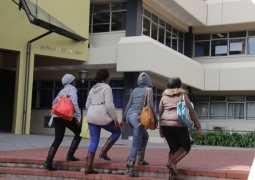
UCT indicated that student accommodation cap introduced by NSFAS was reducing the number of students able to access university accommodation. The university said when students live on campus, they gain more study time and better access to academic resources, including tutors. The university said on-campus accommodation also contributes to student wellbeing.
NAFAS introduced the cap in 2023 as a measure to prevent private accommodation providers from inflating prices.
The chairperson of the committee, Mr Tebogo Letsie said, “The argument that NSFAS cap is hindering students is ridiculous. The problem is that there are corrupt individuals and private property owners who charge ridiculous amounts for student accommodation.”
UCT Vice-Chancellor, Professor Mosa Moshabela told the committee that NSAFS owed the university R540 million and was refusing acknowledgement of debt. Prof Moshabela further told the committee that UCT does not have full control over private accommodation but tried to ensure that standards remain the same for students living in university-owned residences and those living in privately-owned residences. UCT further said in 2023 it absorbed the full shortfall on behalf of students.
Meanwhile, the UCT Student Representative Council accused NSFAS of delays in reporting private accommodation providers to the Competition Commission for possible collusion. The SRC said it wanted NSFAS to exempt all UCT-owned residences from the accommodation cap.
Committee members said the debt students incurred via accommodations shortfalls was based partly on negotiations and contracts the university entered into with private accommodation providers, even though the university does not derive any monetary value from student accommodation.
Mr Letsie cautioned that the committee was not seeking to defend NSFAS, but rather to ensure that students receive the best possible residential accommodation. He said the notion that the committee should not compare UCT with other universities is incorrect.
“We need to bring all stakeholders in the PSET sector together to address the rising cost of student accommodation. If we do not have proper regulations on how much students should be charged, this will create challenges, and those who will suffer are current grade ten learners who will enter university in the coming years. What could end up happening is that government may end up redirecting the funding it gives to universities to NSFAS instead. Let us work together to find solutions,” concluded Mr Letsie.
ISSUED BY THE PARLIAMENTARY COMMUNICATIONS SERVICES ON BEHALF OF THE CHAIRPERSON OF THE PORTFOLIO COMMITTEE ON HIGHER EDUCATION AND TRAINING, MR TEBOGO LETISE.
For media enquiries, please contact committee Media Officer:
Mr Jabulani Majozi
Cell: 083 358 5224
Email: jamajozi@parliament.gov.za
 Arrange a tour