



Parliament, Thursday, 26 February 2025 – The Portfolio Committee on Electricity and Energy heard on Wednesday that the National Energy Regulator of South Africa (NERSA) has appointed a forensic investigation firm to investigate how the R54 billion error in the multi-year price determination 6 (MYPD6) tariff application occurred. This appointment follows a miscalculation in the revenue calculation for the 2025/26 MYPD6. Late last year, the committee invited NERSA to explain the miscalculation regarding the second and third-year generation revenues, which resulted in an additional R54 billion allocated to Eskom.
The regulator appeared before the committee to brief members on the reasons for the increase in electricity tariffs following the January 2025 determination, as well as the factors that influenced this decision. NERSA Board Chairperson Mr Thembani Bukula stated, “It is a mistake that we never want to be associated with, but it’s a mistake we learn from.”
In January 2025, NERSA determined that Eskom’s MYPD6 decision was based on revenue calculations and the Regulatory Asset Base (RAB), particularly the generation RAB, where an alleged error had occurred. Eskom reviewed the application and identified a discrepancy of approximately R107 billion due to this error.
After receiving Eskom's application, NERSA applied the MYPD methodology and concluded that the revenue on the corrected RAB should have been an additional R76 billion. This figure was then adjusted downward to avoid excessive revenues and returns for Eskom, leading to the R54 billion figure. The additional revenue of R54 billion will be liquidated in phases: R12 billion in 2026/27, R23 billion in 2027/28, and R19.7 billion in the following years. The overall impact on tariffs will be a 3.4% increase in 2026/27 and 2.64% in 2027/28. Originally, the increase was determined to be 5.36% for 2026/27, which, when combined with the additional 3.4%, totals 8.76%. For 2027/28, it will rise from an original 6.19% to 8.83% with the added 2.64%.
NERSA emphasised the need to adhere to legal provisions during this determination process. After a court challenge to the R54 billion settlement between Eskom and NERSA, the court ordered NERSA to undertake public consultations regarding the redetermination of the generation RAB. During this consultation process, 99% of the comments received from various groups reflected similar sentiments expressed during the regional determination made in January 2025. The only differing comment came from the AfriForum, which noted the importance of considering the weighted average cost of capital (WACC) when determining the RAB. However, the consultation and court order specified that only the RAB should be considered, excluding other elements.
In discussing the figures, Mr Bukula stated that when assessing the determination, Eskom believed that if they applied their methodology based on the assumption that the first year of the RAB was calculated correctly, their application would amount to R107 billion. However, recognising that this figure would yield excessive revenues and returns, NERSA opted to present a more reasonable amount of R54 billion as the RAB portion to be returned to them.
Regarding the processes undertaken to address the miscalculation, the committee was informed that once the error came to the board’s attention, immediate action was taken. A forensic investigation firm was appointed to conduct a thorough investigation, focusing on the legal and policy frameworks that inform electricity tariff determination. The investigators reviewed various documents, including board minutes and decisions, and interviewed key role players involved in the electricity determination process.
The investigation concluded, revealing several key findings and root causes for the error, including a breakdown in controls, failure to review or verify information and a lack of efficient communication among key players. The pressurised working environment also contributed to the error, and the report also indicated potential negligence on the part of individual officials. NERSA stated that the board has adopted and approved the forensic investigation report, which has been handed over to management for implementing consequence management. Formal disciplinary processes are currently underway, and due to the magnitude of the error, the organisation is appointing a law firm to assist in these internal disciplinary processes.
The committee was informed that the board is actively involved in overseeing consequence management and is receiving regular updates on progress. During the questions and answer session it was revealed that NERSA has initiated processes to enhance internal capacity to fulfill its mandate. Representatives from NERSA said for some time there has been no full-time regulator member nor an executive manager for the electricity regulation division.
Committee members pressed NERSA on the formal disciplinary actions underway for implicated employees, inquiring whether any executive management or board members were included in the report. NERSA responded that the nature of disciplinary processes requires diligence regarding procedural and substantive fairness, hence they requested not to disclose names.
The committee pointed out that by NERSA's own admission, they mishandled the R54 billion, as well as other tariff-related issues, resulting in taxpayers and electricity consumers bearing the burden. Over the past few years, from 2008 to 2024, tariffs have increased by approximately 937%, far exceeding inflation. Members questioned why the regulator is only now considering inflation-linked increases for Eskom in the next three years. Mr Bukula explained that Eskom has consistently indicated that between 1994 and 2006, their increases were below inflation, effectively subsidising consumers. He suggested that the best explanation for their current tariff applications would come from Eskom and reiterated that pricing and policy allow for some of these dynamics.
Regarding consequence management, the committee expressed concern that junior officials should not be the only ones held accountable. They stressed that senior officials should also be responsible for oversight of junior staff. NERSA assured the committee that consequence management would be applied equally, following the forensic report’s recommendations. The investigation has examined the entire value chain in determining returns, identifying specific roles and errors, NERSA said.
The committee acknowledged that while they are politicians, the department and regulator are not exempt from policy issues. Members highlighted that the unaffordability of electricity tariffs is a direct result of current energy pricing policies. The committee expressed frustration that NERSA cannot act until the policy is changed. Members inquired about the status of the energy pricing policy review being undertaken by the Department of Electricity and Energy emphasising the urgency of addressing the unaffordability of tariffs. Acting Director General Mr Subesh Pillay confirmed that the policy is under review and that a draft will be published for public comment by the end of March. He noted the need to examine asset evaluation methodologies, considering the complexity of the asset generation portfolio.
On the matter of investigation accountability measures, the committee sought clarity on the number of implicated officials, the charges against them, and the timeline for finalising consequence management. NERSA indicated that eight officials have been identified, with charges related to the errors made, and the specifics will be solidified with the service provider.
The committee recognised that the miscalculation reflects unacceptable negligence and highlights a significant capacity issue, underscoring the importance of understanding the situation. The committee was informed that the forensic report detailing findings would be forwarded to the committee by the end of February, and Mr Bukula indicated that elements of negligence and insubordination would likely be present in this report.
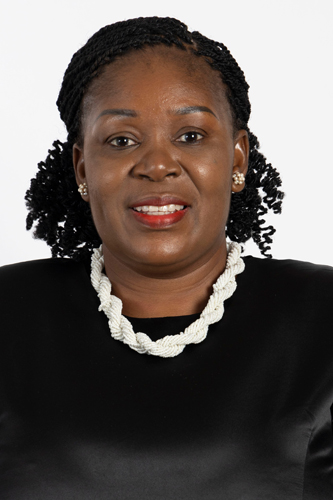
ISSUED BY THE PARLIAMENTARY COMMUNICATION SERVICES ON BEHALF OF THE CHAIRPERSON OF THE PORTFOLIO COMMITTEE ON ELECTRICITY AND ENERGY, MS NONKOSI MVANA.
For media inquiries or interviews with the Chairperson, please contact the committee’s Media Officer:
Name: Yoliswa Landu (Ms)
Cell: 081 4974694
E-mail: ylandu@parliament.gov.za
 Arrange a tour