



Parliament, Wednesday, 30 September 2026 – The Portfolio Committee on Women, Youth and Persons with Disabilities has expressed concern about persistent underspending in the implementation of the Sanitary Dignity Programme (SDP).
The committee said failures in the delivery and implementation of sanitary products undermine learners’ dignity, contribute to absenteeism and disrupt access to education. The committee was briefed by national and provincial departments on the implementation of the SDP on Tuesday.
National Treasury informed the committee that the programme has a budget of R268.7 million for the 2026/27 financial year. Approximately R125.7 million allocated to the programme was returned to provincial treasuries over the past three years. The Eastern Cape, Free State, Northern Cape and North West accounted for most of the unspent funds, with procurement delays and capacity constraints cited as the principal causes.
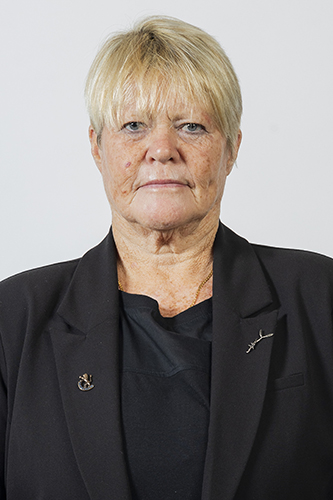
Committee Chairperson Ms Liezl van der Merwe said every rand allocated to the programme must result in sanitary products reaching learners who need them.“Underspending is unacceptable. If funds are not spent, learners do not receive the services to which they are entitled. The programme must enable learners to remain in school, access opportunities and pursue a better future,” she said.
Ms van der Merwe said the R125.7 million returned over three years represented millions of sanitary packs that could have reached learners. “The time for excuses about failing to deliver and returning funds is over. Returning funds is unacceptable and unforgivable, considering the importance of this programme in the lives of those in need. Many young women rely on it to stay in school and achieve their dreams and goals. Procurement delays, capacity constraints and the inability to spend on this crucial programme must come to an end.”
Responding to questions about oversight, National Treasury said the SDP is a concurrent function in which institutions have distinct but complementary responsibilities. It explained that the Department of Women, Youth and Persons with Disabilities provides policy guidance, develops the implementation framework, promotes standardisation, identifies intended beneficiaries and submits sector budget bids where coverage is inadequate.
National Treasury manages the budget process, assesses funding requests, allocates resources and monitors provincial budgets in terms of its statutory mandate. National Treasury said it uses provincial medium-term expenditure hearings, annual provincial benchmark meetings and allocation letters to assess whether provincial budgets make adequate provision for the programme.
On unspent funds, National Treasury clarified that implementing departments must apply to their provincial treasuries for rollovers and demonstrate that the funds have been committed. Applications may be declined where a department is not ready to procure, lacks capacity or cannot provide proof of commitments. National Treasury further indicated that funds should ordinarily remain within the programme, while accounting officers in implementing provincial departments remain responsible for delivery, target setting, procurement and expenditure.
The committee said the current arrangement requires stronger, enforceable coordination and a clear accountability matrix. Committee members requested a review of the Sanitary Dignity Framework to determine whether implementation should be assigned to a single authority, funded through a conditional grant or supported through another coherent mechanism.
National Treasury noted that a conditional grant would require a single national department to administer it, while implementation currently spans the education and social development sectors across different provinces.
Procurement under the SDP came under scrutiny. The reported cost of sanitary towel packs ranged from approximately R5 to R223 per pack. The committee heard that distribution cycles and packaging arrangements differ across provinces. Members requested full disclosure of service providers as well as transparent breakdowns of product, transport, storage and related costs.
The committee called for standardised specifications and procurement measures. Members urged provincial departments to expand opportunities for local suppliers, including businesses owned by persons with disabilities, to maximise the number of learners reached. Committee members said the substantial variation in costs highlighted the need for a national framework. The committee was of the view that a standardised procurement framework governing costs and product specifications is necessary because there is currently no uniformity in procurement arrangements across provinces and the reasons for these differences remain unclear.
The committee noted that learners in the Eastern Cape reportedly receive 12 packs in a single annual consignment, while supplies are distributed quarterly in some other provinces. Members said the absence of uniform distribution standards, together with unclear per learner allocations makes it difficult to compare performance and determine whether provinces are reaching all eligible beneficiaries.
The committee further expressed concern that a provincial department had spent the first five months of the financial year planning, without implementing the programme.
Members noted that this was the second engagement the committee has held on the issue of sanitary dignity packs. During the first engagement, concerns were also raised about funds that remained unspent and were subsequently returned to Treasury. Members requested National Treasury to indicate which provinces have implemented recommendations aimed at improving expenditure and which have failed to do so.
The committee said repeated underspending due to poor planning is indicative of serious shortcomings in implementation. It cannot be acceptable for planning challenges to persist for three consecutive financial years, committee members said.
They also expressed concern that although the policy provides for beneficiaries in quintile 1 to quintile 3 schools, at least one province has chosen not to extend the programme to quintile 2 and quintile 3 schools. The committee said a proper explanation is required regarding the failure to implement the programme in eligible schools.
Members strongly criticised the approach taken by Mpumalanga and highlighted that school quintiles exist precisely because of varying levels of poverty and need among learners. Excluding quintile 2 and quintile 3 learners from the programme means that many deserving young people are denied access to support intended for them.
They said committee will intensify its oversight of the SDP, including during planned oversight visits to Limpopo and Mpumalanga. The committee expects National Treasury, national departments, provincial treasuries and implementing departments to act on the recommendation to improve planning and procurement and ensure that every rand earmarked for sanitary dignity is used for its intended purpose.
ISSUED BY THE PARLIAMENTARY COMMUNICATION SERVICES ON BEHALF OF THE CHAIRPERSON OF THE PORTFOLIO COMMITTEE ON WOMEN, YOUTH AND PERSONS WITH DISABILITIES, MS LIEZL VAN DER MERWE.
For media enquiries or interviews with the Chairperson, please contact the committee’s Media Officer:
Name: Yoliswa Landu (Ms)
Cell: 081 497 4694
Email: ylandu@parliament.gov.za
 Arrange a tour