



Parliament, Wednesday, 11 September 2024 – The Portfolio Committee on Agriculture received briefings yesterday from the Department of Agriculture, Land Reform and Rural Development, Land Bank South Africa and the Industrial Development Corporation (IDC) on progress achieved in the implementation of the Blended Finance Scheme (BFS) and the commercialisation of black producers.
The scheme’s task is to provide emerging and small-scale black farmers with access to blended finance as way for them to expand their traction in agricultural markets, which are currently dominated by white commercial farmers, and benefit from the value chain. According to the Department of Agriculture’s Chief Director: Comprehensive Agricultural Support Programme, Ms Elder Mtshiza, the BFS has been repurposed because there was a realisation that efforts to transfer ownership of productive assets to black farmers have not yet yielded the desired results.
She said a bolder approach and clearer targets are required to meet the objectives of the National Development Plan. The committee heard that enlisted access to affordable finance, land, infrastructure, lack of collateral, inadequate skills and networks are some of the factors constraining black producers from participating in mainstream agricultural markets and benefiting from the value chain. To remedy this anomaly, the department approved the Blended Finance Scheme in 2018 through the Land Bank which, in turn, approved seven transactions.
The committee heard that lessons learnt thereafter from these seven transactions led to a review and improvement of the BFS. The improved scheme was relaunched by former Minister of Agriculture, Ms Thoko Didiza, in March 2021 in partnership with the IDC to ensure that the scheme is devoid of any financial and technical deficiencies. So far, 225 black producers have been supported by this initiative and they have, in turn, created 3 936 jobs.
The IDC reported that it has conceptualised the agricultural support and finance ecosystem to provide black farmers with comprehensive support to enable them to acquire infrastructure that allows them to maximise market expansion and trade facilitation, among other things. The IDC has thus far approved R21.45 billion to assist emerging and small-scale black farmers.
The committee wanted to know during the engagement how the scheme balances the risks and the set criteria for access for emerging black farmers given their disadvantaged financial and historical background. The response was that the department has created a financial pot to respond to such unique challenges. The committee also asked why the department does not inject money and capacity into the Land Bank to improve its efficiency in dealing with the transformation and developmental issues of the sector.
The CEO of the Land Bank, Mr Themba Rikhotso, urged the committee to assist the bank in repurposing its mandate to assume its responsibility and realise its full potential. Mr Rikhotso spoke of the challenges arising from the fact that the bank’s mandate remains unfunded. This is a break from the past, when the bank did receive state funding. Some committee members said the problem for emerging farmers is technical support and skills development in the post-funding and post-approval phase.
When asked what role the Land Bank and other entities play in changing the pattern of land ownership, communal land and land owned by tribal authorities, Mr Rikhotso pointed out that the Land Bank is currently lobbying for an amendment of policy to allow the conversion of the leases held by black farmers on government farms into title deeds where applicable. Such an acquisition could contribute to changing the racially skewed ownership of fertile land.
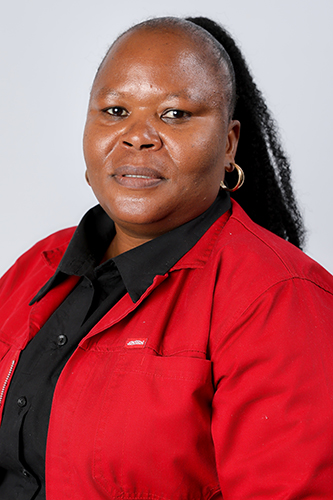
The Chairperson of the committee, Ms Dina Pule, urged the funding entities to review their funding criteria on an ongoing basis to take into consideration the history and material conditions of black emerging farmers. She said: “Because it could take time for emerging black farmers to satisfy the stringent due diligence stipulated by these entities as the criteria to access BFS, we need to put mechanism in place to fast-track these processes to ensure that deserving farmers who have the ability and potential to be profitable in their business ventures are granted access to BFS.”
She thanked the Land Bank for coming out of its default financial status. She added: “We should welcome that for it would have a positive contribution to the objectives of BFS and our economy. Most of all, we need to see progress from time to time and for you to update us to see to what extent can we intervene legislatively in helping you to achieve your set targets in 2028.”
ISSUED BY THE PARLIAMENTARY COMMUNICATION SERVICES ON BEHALF OF THE CHAIRPERSON OF THE PORTFOLIO COMMITTEE ON AGRICULTURE, MS DINA PULE.
For media inquiries or interviews with the Chairperson, please contact the committee’s Media Officer:
Name: Abel Mputing (Mr)
Cell: 081 503 1840
E-mail: amputing@parliament.gov.za
 Arrange a tour