Parliament, Tuesday, 21 April 2026 – The Portfolio Committee on Water and Sanitation has expressed grave concern over imminent budget cuts to the Department of Water and Sanitation, warning that the reductions come at a time when South Africa is grappling with worsening water shortages. The committee today received briefings on the Annual Performance Plans of the Department, the Trans-Caledon Tunnel Authority (TCTA) and the Water Research Commission (WRC).
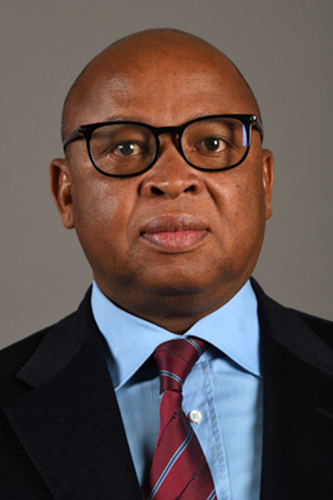
Committee Chairperson, Mr Leon Basson, said the decision to reduce the department’s budget from R23 billion to R21 billion is fundamentally at odds with the country’s water reality. “The drastic budget cuts stand in direct contrast to the acknowledgement that South Africa is facing a serious water crisis. This decision is incongruent with the scale of the challenge and will only deepen the crisis, with severe socio-economic consequences,” said Mr Basson.
While the committee welcomed the establishment of the National Water Crisis Committee as an interim measure, it stressed that addressing systemic water challenges requires sustained funding, long-term planning and the accelerated rollout of major infrastructure projects.
The committee warned that reduced funding undermines these critical pillars and risks derailing efforts to stabilise water provision across the country. Of particular concern is the impact on infrastructure investment. The committee noted that cuts to grants such as the Regional Bulk Infrastructure Grant will further weaken municipalities’ capacity to build and maintain essential water and sanitation infrastructure.
“Municipalities like the City of Johannesburg are already grappling with high levels of non-revenue water. Addressing this, requires sustained investment in maintenance and infrastructure upgrades. Budget cuts directly undermine this effort and threaten reliable access to water,” Mr Basson emphasised.
The committee further noted that South Africa’s growing water demand requires diversification of the water mix, including desalination and water reuse. However, these interventions are capital-intensive and depend on adequate and sustained funding. While acknowledging the fiscal constraints facing the country, the committee cautioned that reducing investment in the water sector is counterproductive.
“Cutting investment does not resolve the crisis, it exacerbates it,” Mr Basson said.
Slow progress on Water and Sanitation Indaba commitments
The committee also raised concerns about the Department’s inability to provide independently verifiable data on progress made in implementing recommendations from the 2025 Water and Sanitation Indaba. This lack of accountability, the committee warned, risks reinforcing public perceptions of government inaction in the face of daily service delivery challenges.
In addition, the committee criticised municipalities for delays in ringfencing water revenue and implementing the utility model, key reforms intended to improve sustainability, efficiency and revenue collection.
The committee has urged the Department, through the National Water Crisis Committee, to drive urgency and accountability in implementing these reforms.
Concerns over project delays and cost escalation
The committee reiterated the need for stronger planning, project management and oversight to prevent costly delays in major infrastructure projects.
While welcoming progress on strategic projects such as the uMkhomazi Water Project Phase 1 and Phase 2 of the Lesotho Highlands Water Project, the committee warned that continued delays could expose the fiscus to escalating costs and increased financial risk.
The committee also called for a smooth and well-managed transition towards the establishment of the National Water Resources Infrastructure Agency.
Limited uptake of water innovation
The committee remains concerned about the low uptake of innovations developed by the Water Research Commission, particularly given the country’s pressing water challenges.
It emphasised that many of the issues within the water -value chain could be addressed through existing technologies and innovations and called for stronger efforts to translate research into practical implementation.
ISSUED BY THE PARLIAMENTARY COMMUNICATION SERVICES ON BEHALF OF THE CHAIRPERSON OF THE PORTFOLIO COMMITTEE ON WATER AND SANITATION, MR LEON BASSON
For media enquiries or interviews with the Chairperson, please contact the committee’s Media Officer:
Name: Malatswa Molepo (Mr)
Parliamentary Communication Services
Tel: 021 403 8438
Cell: 081 512 7920
E-mail: mmolepo@parliament.gov.za
 Arrange a tour