


Parliament, Thursday, 14 November 2024 – The Portfolio Committee on Land Reform and Rural Development yesterday received a briefing from the Department of Land Reform and Rural Development on progress with regard to the release of the state land, including the adjudication of land rights at Gwatyu farms, the transfer of state land acquired in terms of the Proactive Land Acquisition Strategy (PLAS) and a status report on the municipal commonage programme to promote access to productive land.
Section 25(5) of the Constitution places an obligation on the state to take legislative and other measures to foster conditions that enable equitable access to land. The President, in his 2020 State of the Nation Address, announced that the state would release approximately 700 000 hectares (ha) of agricultural state land, i.e. 1 538 farms, for redistribution.
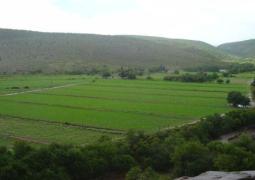
The committee heard that at the end of the project, 659 602 ha were approved for allocation, while 24 660 ha (36 farms – Gwatyu farms in the Eastern Cape and the Rakgase matter in Limpopo) were withdrawn due to contestations from Gwatyu and legal challenges from Rakgase.
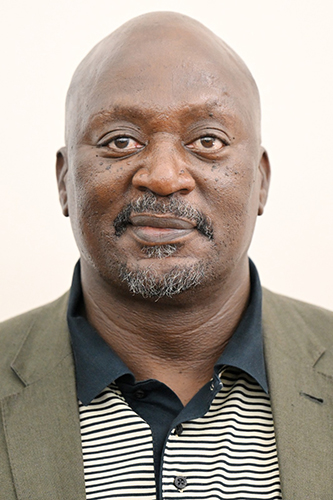
The Chairperson of the committee, Mr Mangaqa Mncwango, welcomed the report but emphasised the importance of presenting detailed reports. This is to allow the committee to draw its own conclusions with regard to whether the programme is advancing the case of land reform, as articulated in the White Paper on South Africa’s Land Policy, i.e. redressing the injustices of apartheid; fostering national reconciliation and stability; underpinning economic growth; and improving household welfare and alleviating poverty. Unfortunately, the report did not present details about the beneficiaries of the State Land Release Programme.
The committee also heard that the transfer of PLAS state land was well underway to ensure that farmers have full tenure security and are able to secure capital and invest in their businesses. It involves beneficiaries of PLAS and those under rent-to-buy arrangements, known as Financial Assistance Land (FALA).
Since March 2024, 209 projects have been approved for transfer and 11 of those have been transferred. The remainder are at advanced stages of conveyancing and registration. The department reported that the delays in transferring the properties is as a result of difficulties in obtaining rate clearance certificates from municipalities and beneficiaries’ failure to settle outstanding lease fees prior to the lodgement at the Deeds Office.
The committee has learnt that the state land transfer programme is facing a number of challenges, including lessee non-compliance with the terms of the lease – in some cases they over-stock the farms or under-utilise farms. There is also insufficient capacity in the Office of the State Attorney to process the transfers. In addition, some lessees still owe rent, electricity and water-use charges, and were unable to provide evidence to conclude reconciliation for the recapitalisation and development funds.
The department indicated that it is working on solutions to address its challenges with the transfer of state land. Among the solutions proposed is engaging with the Department of Cooperative Governance and Traditional Affairs and the South African Local Government Association on the delays in issuing rates and rate clearance certificates.
The committee indicated that it would have been useful if the department had presented information about the 209 approved cases and the 11 transferred farms (indicating which ones were PLAS and FALA), so the committee could hear socio-economic data about beneficiaries and their land use. The committee also sought to understand the extent to which the project results in economic upliftment for the beneficiaries.
The committee also expressed concerns about administrative capacity to administer leases and the tenure insecurity that results in a lack of capital investments on farms. It welcomed the transfer of farms but cautioned the department about incidences in which farms were sold. When the beneficiaries want to sell, the government should have the right of first refusal so that the land can be redistributed to the landless, the committee said.
The committee also asked the department to provide more detail on the 209 approved farms in line with the beneficiary selection policy. They indicated that the presentation should have provided detail about the leases: demographic information, gender, age, scale of production.
ISSUED BY THE PARLIAMENTARY COMMUNICATION SERVICES ON BEHALF OF THE CHAIRPERSON OF THE PORTFOLIO COMMITTEES ON LAND REFORM AND RURAL DEVELOPMENT, MR MANGAQA ALBERT MNCWANGO.
For media enquiries or interviews with the Chairperson, please contact the committee’s Media Officer:
Name: Malentsoe Magwagwa (Ms)
Cell: 081 716 5824
Email: mmagwagwa@parliament.gov.za
 Arrange a tour