



Parliament, Thursday, 13 August 2026 – The Portfolio Committees on Trade, Industry and Competition and on Transport welcome the steps taken by the Minister of Transport to address transformation concerns raised regarding the S79 directive for the Island View Precinct (IVP).
The committees view this as a progressive step in transforming the fuel industry given the strategic nature of the IVP to the sector.
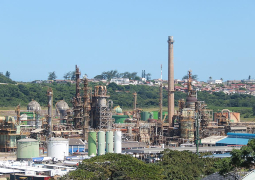
The IVP, located in the Port of Durban, has been operational since 1960 as a liquid-bulk and petroleum storage complex for mainly international oil majors. It was historically linked to the South African Petroleum Refineries (SAPREF), formerly owned by BP Southern Africa and Shell Downstream South Africa, and subsequently sold to the Central Energy Fund in 2024. The land in the IVP is owned by the Transnet National Ports Authority (TNPA), which provided multi-decade leases of land to Sasol, Engen, Total Energies and Astron Energy, among others, to operate storage tanks and infrastructure to import crude oil, fuel and other liquid-bulk products with access to 10 berths in the Port.
Most of the long-term leases expired between 2010 and 2011. Subsequently, most terminal operators operated on a month-to-month basis. In September 2025, the Minister of Transport, Ms Barbara Creecy, issued a S79 directive to the TNPA to renew the leases of existing tenants’ rights to operate liquid bulk terminals and manufacturing sites with access to existing terminal Infrastructure within the port limits in the IVP for a period of 25 years, as well as guaranteed access to the Central Energy Fund (CEF) of 15 per cent incremental capacity up to 30 per cent of the IVP’s total capacity. The CEF’s access would include the right to build and operate a new Single Buoy Mooring within the port limits and to act as a third-party access point for emerging black industry players.
Upon receipt of complaints from black traders regarding the lack of transformation and national security concerns related to the S79 directive, the committee held extensive engagements with the Department of Transport, the TNPA, the Department of Mineral and Petroleum Resources, the National Energy Regulator of South Africa (NERSA), the CEF, the Department of Defence and Military Veterans, the Broad-based Black Economic Empowerment (B-BBEE) Commission, and industry players, among others. The focus of the engagements was to assess whether the outcome of the directive would achieve or undermine national transformation objectives and ensure the national security of fuel supplies.
The committees acknowledged the strategic importance of the IVP given that the majority of South Africa’s fuel is imported through this facility. However, the committees had been of the view that the initial directive entrenched oil majors’ rights without effectively enabling transformation.
Subsequently, in a letter to the committees, the Minister of Transport has reported that a supplementary directive was issued in May 2026 providing for a 10 per cent allocation of total IVP capacity to new market participants based on the broad-based black economic empowerment policy. Nevertheless, terminal operators had reportedly committed approximately 13 per cent of their capacity, which is embedded in their terminal operator agreements. This forms part of the first phase of infrastructure access for new market participants.
As part of the second and third phase of infrastructure access for new market participants, she indicated that some of the incumbent terminal operators have handed back land parcels, which are being ringfenced for the financing, development, operation and maintenance of new liquid-bulk terminals for new black entrants. This should increase black participation to approximately 27,8 per cent of the total IVP capacity.
In this regard, the TNPA, NERSA and the B-BBEE Commission has been jointly tasked to assess that new entrants were qualified to participate in the IVP in line with B-BBEE and other requirements.
Infrastructure access for new market participants will be managed through a special purpose vehicle, which will be owned by new entrants. The committees encouraged black traders to actively engage with the Department of Transport and the TNPA to ensure their full participation in line with the supplementary directive, as well as the second and third phase of the envisaged infrastructure access.
The committees consider these provisions to be a breakthrough for black traders.
The committees support the amendments made by the Minister. They also welcome the progress by the TNPA in resolving the economic transformation concerns of black traders and ensuring that black traders have access to the IVP capacity. As part of this package, the committees urged the TNPA to ensure that this includes timely shipping access and berth allocation, as well as access to distribution networks, such as its fuel pipeline.
The committees would continue to oversee the implementation of this arrangement to ensure that deeper economic transformation is advanced in the fuel sector.
ISSUED BY THE PARLIAMENTARY COMMUNICATION SERVICES ON BEHALF OF THE CHAIRPERSON OF THE PORTFOLIO COMMITTEE ON TRADE, INDUSTRY AND COMPETITION, MR MZWANDILE MASINA, AND THE CHAIRPERSON OF THE PORTFOLIO COMMITTEE ON TRANSPORT, MR DONALD SELAMOLELA.
For media enquiries, please contact the committee’s Media Officer:
Name: Mava Lukani (Mr)
Parliamentary Communication Services
Cell: 081 503 1840
Email: mlukani@parliament.gov.za
 Arrange a tour