



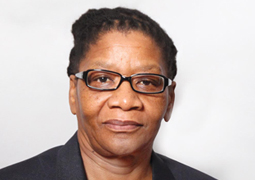
Deputy Chairperson of the NCOP;
Deputy President of the Republic of South Africa;
Premier of the Free State;
Speaker of the Free State;
Speaker of the Eastern Cape;
Members of the Provincial Executive;
Members of the NCOP;
Members of the other Provincial Legislatures;
Mayor, Councillors;
We take this moment to thank you for the opportunity to speak, to meet, to deliberate, to go around the Free State inspecting institutions and facilities of health.
The Constitution says that the NCOP is the platform for provincial interest at the national level. It says the NCOP represents the provinces and we must read that as saying the NCOP represent the people who live in the provinces. It says that Parliament must ensure public participation to ensure a truly educated participatory democratic South Africa.
The Constitution let simply, it might mean to some of us that provinces have a third bite at putting Members at a national Parliament. We put them through the province to province, province to national and into the NCOP. If one really want to read the Constitution it actually says that those Members that come out of your provinces honourable Members are the representatives and therefore the NCOP is equal to the House of Representatives. In order words our responsibilities are not just that of guarding, party political or provincial interest. It is that of truly following up on the issues which are inter-governmental because we are the only House also that represents all spheres and all arms. We therefore want to say that we take this responsibility as mediators of inter-governmental relations, as educators of the public to make sure that participatory democracy happens, as overseers on behalf of our people very seriously.
Taking Parliament to the people was started in 2002. We are in our fifteen years. We then decided to begin to have a newer approach and that is why last year we went to the Eastern Cape and focused on education.
This year we are focusing on health. Our research informs us that in the Free State the issues of health needed attention. We cannot therefore close your eyes as public representatives to the challenges that face the people on the ground.
We went to Xhariep District, issues of understaffing and facilities were highlighted as major concerns. Some of the facilities started as four bedroom houses which were built by the apartheid government then converted to clinics and for some reason we forgot to upgrade or to equip properly.
Issue of water in Xhariep were an issue which affected not the health facilities but also the schools. Unemployment rate is high close to 68%. The inability of people to pay rates therefore for the municipality to pay for water and therefore for the local government in Xhariep to be unable to deliver on the promise government has made to the ordinary people on basic water, and electricity supply.
The issues of young people were sharply brought up. They finish matric and there is no opportunities for them including training. Crime has taken over because of lack of opportunities.
Deputy President
We have arrived on Sunday and we have been all over. We have been warmly received in Mangaung. We have spent the whole week as the NCOP visiting the sites and running the public hearings.
The public hearings which started on Monday through to yesterday actually confirmed that the issues of Xhariep, were also the issues of Bloemfontein, Botshabelo and Thaba Nchu.
We learned here about shortage of staff which actually exacerbates bad attitude of the nurses towards the patients. We have heard of people queuing from five in the morning till four in the afternoon untreated and unseen. We have heard from people with disability the problems they encounter especially the people who are deaf who have nobody to interpret for them, who usually misdiagnosed, who are given wrong medications and who sometimes simply get ignored.
We do know that Parliament is ready to accept and to adopt sign language as 12th official language of South Africa. We hope this can be hurried because the plight of deaf people in South Africa can no longer be snubbed.
We have seen so many people in the province uses wheelchairs. We no longer have people who used to help repair the wheelchairs in the facilities. We are very happy that we saw starting with the minister of Social Development, the MEC’s we have been giving out wheelchairs but they are not enough as some people require specialised wheelchairs. We need to do is look at ways which will creates work whilst we better the lives of people.
We need to find ways that will ensure that the elderly are better taken care of. We have seen our elderly begging during the public hearings crying tears because they need help.
They want help regarding their RDP house, because they can’t maintain and fix as elders. So how do we help them? We need to look at maintenance as South Africa in general. Maintenance of state institutions, houses and institutions that we are putting in the disposal of our people.
Deputy President
We spoke about unemployment of our youth and the challenges that they face. We also heard the public saying they need attention as far as the baking sector is concerned. They want business opportunity. The NDYA was here to address some of their challenges. We encouraged the NYDA to come back and have special engagement with young people and business people.
Parliament must reconsider amendments of the NYDA legislations as quickly as possible to enable the structure to function.
Deputy President
We have heard about grandmothers who are looking after orphans. Orphans who do not have papers. We have heard of fathers who are abandoning their kids and even refuse to assist with getting them certificates so that they can access grants.
We have heard about scholar transport challenges especially for young children who are still in lower primary schools who have to walk about 12 kilometres to school.
We have heard about people who have used government facilities to frustrate other citizens. We have heard complains about the attitude of our staff. We want to say that we have been interested in patient transportation since our pre-visit in Xhariep. We are happy that the contract has elapsed and now runs on month to month. We want to say it time where they are concurrent responsibility between the national minister and the province that we need to relook. We need to come and stream line responsibility to hold the person who is responsible to account.
We are encouraging the Municipality to go back to take serious on issues of building more RDP houses in the Metro. We encourage that fraud of RDP’s houses must be stopped.
We have heard what the people are saying here. We have seen the tears, we have heard the appeals, but what is important is that we have heard from MMC’s, Councillor, Ministers we have heard what they have said. The commitment they have kept in this podium. We are taking it very seriously. We are going to follow up on all commitments. Members of the Executive must not come and make promises that they can’t keep because we will follow them up.
Honourable Premier and through you and the leader of government business we need assistance in getting the responses as we will be back in 2018. We will scrutinise the responses and check if they are changes in the communities where our people are staying.
We want to encourage the Municipality to address the issue of sewer so that it is not spilling in the streets.
Ke a leboga.
back to our respective provinces today. We have bore together this chilled cold weather all of us as three spheres of government and our people under the theme: “Celebrating 20 years of the Constitution and the establishment of the NCOP - deepening parliamentary oversight for quality services to our people”.
The fifth Parliament made sure that the programme continues to make a meaningful and sustainable interventions in the communities that we visit. So we will continue to create opportunities for direct engagement between our constituencies and the public representatives as part of public involvement.
The reason we are all here is because we are guided by this Constitution to create a space for a system of governance that is democratic and that is both representative and participatory in nature. It also entrenches a society that is based on values that are democratic, social justice and fundamental rights.
Parliament is therefore, here to ensure that government is by the people. That why we call it the voice of the people.
Premier,
We said as fifth Parliament that the TPTTP will be thematic in nature based on the challenges that the provinces faces. We were in the Eastern Cape last year, we are here in the Free State now and we will be in Gauteng next year, so we are taking the provinces alphabetically and also doing the report back session to go back to the communities to relay the commitments made whether positive or negative.
We will be in Eastern Cape again in November for report back session undertaken by the Executives and we are coming back next year here in the province to report to the communities.
Deputy President
The main event of TPTTP is preceded by the Pre-visit which was successfully held in the Xhariep District Municipality in May. We came together as Members Parliament consisting of both Houses to take note on issues of health. We were not limited only to health but we broaden our scope to other issues.
Hon Members,
We assessed the state of health facilities and we had public meeting and we also did the site visits. We found that most of the time the issues that were raised was around the aging infrastructure of the health facilities, staffing, the patient transport, the services of the ambulances, were a major concern to the communities.
Other issues that was also critical in Xhariep was water. The water restrictions by the water authorities (Bloem water) due to none payment of the municipality infringes the rights of the communities. We noticed that there was no access to water in the clinics and hospitals, and this was odd for the community especially children and the elderly. We heard the elderly lamenting as they have to buy water.
We picked up crime, unemployment, issues of land, and recreation among others. We undertook as the NCOP that we will engage the treasury in the province, Premier’s office, the minister of water and sanitation, department of health and the municipality to address immediate. We held the consultative meeting with all this stakeholders and paved a way forward to address the issues.
Ladies and gentlemen
During this week; we again met in Mangaung metro as Parliament, Provincial Legislatures, Local government, and the departments both national and provincial.
We identified that majority of the health facilities across the Mangaung Metro reported defects and maintenance backlogs, which include dilapidated infrastructure, poor plumbing (and deficient ablution facilities), inadequate physical space, decrepit furniture, malfunctioning boilers, air-conditioning and backup generators.
We also found that services delivery (or the lack of it) provided by sector departments, as well as the municipality impact significantly on the ability of clinics to operate.
We heard the people of Thaba Nchu complain about being treated unfairly as service delivery is a dream to them. They raised the issue of roads as a major challenge. It’s a challenge because during the rainy season the gravel roads becomes slippery and the ambulance and buses cannot travel and as a result close to forty villages that have 12 clinic and 32 surrounding farms cannot have access to health care.
During the public hearing the issue of the EMS was raised as a concern from the community. They fill that the delays are too much and they have a stinking attitude towards the people especially in the call centres. The delays cause harm to the patients. The matter was also raised in all the clinics and it remains a major concern.
In general, in the province we discovered that inadequate staffing is a challenge across the board. We saw that in the facilities as well as in the public hearing it was raised sharply by the communities.
We had the pronouncement that the department of health has undertaken to employ 123 medical student doctors from Cuba, who will be deployed to various rural areas. We hope and believe that this will alleviated the challenges that our people face daily.
We also found the discrepancies in visits by the doctors in the facilities as other facilities are visited one’s a month, others twice a week and others weekly. We want our people to receive basic health care regardless of where they leave. Access to health is our constitutional right.
Deputy President
During the public hearings, we heard about the plight of our people living with disability. We learned how they are not employed by the state. We heard how the elderly who live with disability suffers most.
We also learned about how our youth, young men and young women faces unemployment. We heard how substance abuse is prevalence in the communities. Water is life, we therefore request that municipality in assistance with the department resolve this issue speeding. Housing remains a challenge as there is a great demand for RDP houses in the Metro. We heard also that there are allegations of acts of corruption on the waiting list processes.
Hon. Members
We will come back as stated and come and check all the commitments made, we will take the issues to the relevant committees in the NCOP so that they play oversight on them. We are serious when we say we want to make a meaningful contributions to our people. We must be accountable.
Premier, we want to thank that you availed your members of executive committee to be with us, the whole week to address issues that deals with their portfolios.
We want to say thank you to the Mayor of Mangaung together with the Council for hosting us. We also say thank you for availing the councillors in the municipality both in the public hearings and in the sites visits.
We say to you Mme Mamikie, thank you very much for support of the programme by sending out the Members of legislature and the support staff from the preparations till to finish. Special delegates from the provinces re a leboga.
We also want to thank the community of Mangaung for the warm welcome. In conclusion, I would like to take this opportunity to thank the NCOP office bearers, the staff for making sure that the arrangements for Taking Parliament to the People run smooth.
Ke a leboga.
 Arrange a tour