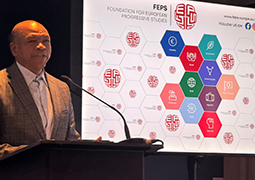
Following on from the African Union–European Union 7th Summit, held on 24–25 November 2025 in Luanda, Angola, the EU–Africa consultative meeting takes place in a global milieu characterised by more uncertainties in geo-politics, said the Chairperson of the Portfolio Committee on International Relations and Cooperation, Mr Supra Mahumapelo.
It is our collective responsibility not to look the other way but to confront these challenges. And the collective wisdom of humanity that cares can overcome such challenges, be they ravaging conflicts or the disregard of global institutions of governance.
The keynote address by Mr Mahumapelo at the Consultative Meeting is important for ordinary South Africans because it centres on aligning South Africa’s domestic economic needs with major international investment opportunities. The EU–AU partnership focuses on restructuring the relationship to provide tangible benefits in employment, trade and economic empowerment for South African citizens, rather than just high-level policy dialogue.
The AU–EU partnership is supported by four pillars: planet, people, peace and prosperity. It is a people-centred approach and must be intensified to include people at grassroots level for they are the people for the large part who contribute to the economy of any country.
The relationship’s focus is on trade development opportunities, reinforcing strategic partnerships and the evaluation of progress on the joint vision for 2030, which is based on sustainable energy, infrastructure development on the Global Gateway Initiative, and strengthening co-operation on the blue economy, food security and migration.
The European Peace Facility is a critical component of this, as it focuses on equipment and infrastructure for peace. In this regard the EU provided the AU with funding worth €1,5 billion for conflict prevention, peace and security. The theme for conflict prevention, peace and security is “Advancing peace and prosperity through effective multilateralism”.
So, what is new in this partnership are:
- industrialisation through critical and rare earth minerals
- South Africa’s strategic partnership with the EU
- South Africa’s special position as a guide for the EU in understanding towards a possible resolution of what is perceived to be growing anti-Western sentiment in Africa, especially in West African countries. We must engage more, build more trust and actions must demystify.
South Africa called for a shift from a technical, bureaucratic approach to a more development-driven agenda and the elevation of the relationship to a more strategic level focusing on socio-economic development projects, trade and investment.
The envisaged future outcomes are:
- Increased technology transfer and skilling
- Local sourcing of materials for development
- Local recruitment
- Economic diversification for development
- Human resource development (human capital)
- Eradication of poverty and inequality
Here is why this is important for ordinary South Africans:
- Economic Empowerment and Job Creation: The post-summit focus highlights the urgent need for foreign investment to translate into local jobs, with a specific focus on ensuring black South Africans have improved access to these investment opportunities. The partnership emphasises creating sustainable jobs for young people, specifically in sectors like manufacturing and agriculture.
- Industrialisation and “Made in Africa” focus: Discussions aim to move beyond just exporting raw materials to the EU, focusing on building local industries, manufacturing and diversification, which boosts the value-addition of South African products.
- Energy Transition and Utility Improvement: The partnership involves the “Team Europe” initiative, which supports the Southern African Development Community (SADC) with technical assistance and investments in clean energy technology, aiming to assist in South Africa’s Just Energy Transition and improve energy security.
- Youth and Skills Development: The EU–Africa Partnership commits to educational opportunities, digital skills training, and research partnerships, including Erasmus exchanges. In other words, European Union-funded programmes supporting education, training, youth and sport, which are intended to empower South African youth.
- Trade and Market Access: The implementation of the EU–SADC Economic Partnership Agreement (EPA) is designed to make it easier for South African exporters – including small businesses – to access European markets.
- Sovereignty and Independent Foreign Policy: Mr Mahumapelo has emphasised the importance of maintaining South African sovereignty, ensuring that international engagements serve the national interest and help address domestic issues of poverty and inequality.
In essence, these consultations aim to translate high-level international partnership pledges into localised benefits – more jobs, better infrastructure and enhanced market access for South African businesses and citizens.
 Arrange a tour