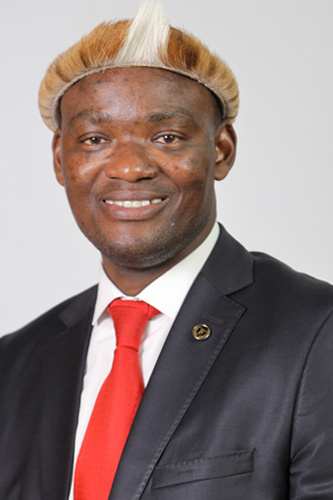




In the wake of various scandals that have engulfed Eskom in recent years, the members of the Standing Committee on Public Accounts (SCOPA) are determined to unearth the root causes of the rot at the power utility.
The committee is in Gauteng on a week-long oversight visit to Eskom following its engagement with former Group CEO Mr Andre de Ruyter, who appeared before the committee to discuss allegations of corruption, theft, maladministration, sabotage and lack of consequence management at Eskom. Some of the allegations he made were new to the committee, while others had been previously revealed during prior engagements and oversight visits to Eskom, and at the Zondo Commission’s State Capture Inquiry.
Of particular concern to the committee is the decision-making undertaken by Eskom’s former board members and executives that resulted in breaches of the Public Finance Management Act, which sets out regulations for effective financial management and use of public funds. In performing its parliamentary oversight work, the committee is committed to getting to the bottom of the allegations made by the former Eskom CEO and holding all those responsible to account.
The committee is of the view that a site visit to Eskom will give more insight into why the problems persist, thereby placing SCOPA in a better position to make appropriate recommendations on how these problems can be addressed. The committee further believes that interaction with the Eskom Board and management is crucial if any improvement is to be seen in areas of concern raised by the Auditor-General.
Explaining the committee’s intention of conducting the oversight visit to Eskom this week, SCOPA Chairperson, Mr Mkhuleko Hlengwa, the committee wants to verify Mr de Ruyter’s allegations. “The overarching intent of this visit is to improve the public trust and transparency at Eskom, to root out corruption and malfeasance, and to ensure that those responsible for these acts account, to enable Eskom to fulfil its commercial and developmental mandate of supplying sustainable energy.”
The head of legal risk and audit at Eskom, Ms Mel Govender, answered some of the committee’s questions about a privately funded intelligence report into Eskom’s business. The committee also wanted to know about the possible breach of confidential information, any legal action that Eskom sought in this regard and Mr de Ruyter’s sudden departure from the power utility.
The committee’s Mr Bheki Hadebe asked whether the intelligence report was conducted in accordance with Eskom protocols or within the parameters of the former CEO’s job description. Ms Govender replied: “We were told that the conducting of this investigation was brought to the previous Chairperson of the Board and the Minister. To my view, there was nothing untoward about it because it was meant to benefit Eskom to avert its exposure to risks.” She further stated: “My advice was to spend less time on what the former group CEO of Eskom did but focus more on what lessons can be learnt from it and improve Eskom’s future exposure to risks.
Mr Hadebe then asked if Ms Govender was aware, before the publication of the report, of law enforcement’s lack of action in tackling the alleged fraud and corruption. She replied saying that she may have been aware of incidents of corruption, many of which were under investigation, but she was not aware of any organised cartels operating there.
She was then asked if there was anything untoward in a CEO disclosing information without the consent of the Board, to which she replied “… there’s something unusual about a CEO who makes political statements and personal remarks which could expose him to civil litigations.”
Mr Hlengwa then asked if, as head of risk at Eskom, she was not herself at risk by the formation of an intelligence report based on sensitive information from Eskom. Ms Govender then said that Mr de Ruyter claimed that the Board Chairperson and the Minister of Public Enterprises were aware of the investigation and thought it was authorised. Mr Hlengwa then asked what she thought about the Board firing Mr de Ruyter for commissioning an unauthorised report. Ms Govender claimed that she had qualms about the immediate termination of his employment. “The Board should have allowed a proper handover or perhaps it would now have the said report at its disposal.”
The committee also heard a first-hand account of the widescale of sabotage, fraud, theft and corruption at Tutuka Power Station from its former General Manager, Mr Sello Mametja, who worked at this plant wearing a bullet-proof vest and was forced to employ armed guards to protect his family due to his efforts to thwart criminality at the plant.
Mr Mametja described the plant as bedevilled by sabotage, corruption and theft of copper, petrol and spares. He also described the criminality he encountered there and the way it affected his family life. “I went to Tutuka knowing that it had mechanical challenges and went there despite that because I wanted to make a change. But I didn’t expect the extent of criminality I encountered. What I encountered there is hell that continues to affect my personal and family life to this day.”
Although he has since left the station, he feels that the threat of harm remains. To his utter dismay, however, his security detail has been terminated, after the head of security at Eskom told him that he was no longer exposed to any risk according to an assessment report.
Mr Hlengwa asked Lieutenant-General Peter Jacobs, Chairperson of Energy Security Priority Committee at the South African Police Service, to follow up on the termination of Mr Mametja’s security to determine if a necessary risk assessment was undertaken before the withdrawal of his security.
Abel Mputing
21 June 2023
 Arrange a tour