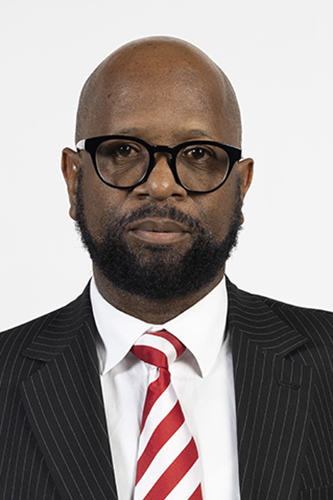
When the Minister of Finance, Mr Enoch Godongwana, delivered his R3.3 trillion budget vote in Parliament, he promised to reduce government deficit, stabilise debt and grow the economy through infrastructure investment initiatives. The 2023/24 financial outcomes indicate that the National Treasury is on course to achieve these milestones, he said.
National Treasury budget vote 2024/25
To meet government revenue requirements, the National Treasury will enhance and enforce credible tax systems. “This will entail having to balance declining tax revenue with increasing government expenditure priorities. At the same time, we will publish draft taxation legislation to improve the economic fairness and effectiveness of the tax system,” Mr Godongwana said.
Meanwhile, government investment in infrastructure will enhance economic growth overall. “One of the pillars of the macro-fiscal strategy is to improve the efficacy of public infrastructure investments,” he continued. “The department will continue to enhance the ability of cities and metros to make sustainable contributions to economic development and generate tax revenue by implementing the catalytic infrastructure.”
Mr Godongwana announced that over the medium term, the Catalytic Infrastructure and Development Support Programme is allocated R94.9 million with an expenditure of R44.5 million in the first quarter.
In addition, National Treasury commits to continue to provide cities with support for spatialised, integrated and participatory economic development planning. “This is expected to result in 35 catalytic projects over the medium term in strategically targeted areas within metropolitan cities, intermediate cities and rural towns,” Mr Godongwana explained.
To address financial distress of municipalities, the minster said that the municipal finance improvement programme will continue to support the financial management reform agenda in local government.
Of the department’s R3.3 trillion budget over the medium term, 57.9% (R1.9 trillion) is for transfers to provincial governments for the provincial equitable share. This is an increase, attributed to the Cabinet’s approval of budget increases to the provincial equitable share amounting to R101.5 billion over the MTEF period, as well as adjustments related to compensation of employees in the education and health sectors.
One billion will be allocated to the South African Revenue Service for 2024/25 and 2025/26 to improve its tax collection capacity.
Debt-service costs account for an estimated 37.3% (R1.2 billion) of National Treasury’s budget.
The debate on the budget vote
The Chairperson of the Standing Committee on Finance, Mr Joe Maswanganyi, enquired if the National Treasury will be ready to roll out the two-pot system, in light of the fact that the bill related to this matter is not yet signed and promulgated by the President. “We are asking this question because our constituencies would be affected if it’s not going to be rolled out,” he explained.
He also enquired when the Public Procurement Bill would be signed into law. In the 6th Parliament, the committee worked hard to ensure that the bill was ratified, as it aims to transform the procurement regime in favour of the previously disadvantaged. He further suggested that, in the light of current economic challenges, the National Treasury should foster inclusive economic growth to address fiscal vulnerability and stabilise public finances.
Mr Maswanganyi also raised his concern about high government debt in relation to gross domestic product and called upon the National Treasury to create a space for discussion on its debt management strategy.
Mr Andrew Bateman of the Democratic Alliance was concerned about South Africa’s tax rate, which the DA believes is one of the highest in the world and which has a detrimental effect on unemployment. Currently, 33% of South Africans are unemployed. “This is a national tragedy that needs to be addressed. But the most affected are the youth and our high tax rate is to blame,” he said.
This is because tax rates reduce savings, which means there is less money in the economy for investing. Reduced investment means the economy does not grow as much, he explained. For businesses, high tax rates cause businesses to have less money to invest in growing their businesses to create employment, he said.
Also participating in the debate, Mr Des van Rooyen, of Mkhonto Wesizwe Party, asked why, after 30 years, South Africa’s economic indicators are “pointing south”. In his view, the budget is laden with meaningless jargon articulated by an elite that is insensitive to the needs of the people who are faced with unending hopelessness, hunger and inequality.
Mr Floyd Shivambu of the Economic Freedom Fighters also participated in the debate. He said the National Treasury has a legislative and constitutional obligation to coordinate South Africa’s macroeconomic policies to achieve the objectives of its Medium-Term Strategic Framework, while strengthening municipal financial systems. However, 173 out of 257 municipalities countrywide are in financial difficulties and “their budgets have collapsed”.
In addition, Mr Shivambu pointed out, National Treasury has an obligation to reduce fruitless and wasteful expenditure, and to localise and industrialise the economy through its procurement power, but currently no such regulation exists to that effect.
In addition, he said, National Treasury has an obligation to stabilise the country’s debt ratio to GDP, but currently South African spends R380 billion on debt service costs. “Debt has become the biggest expenditure item of the state,” Mr Shivambu said.
Abel Mputing
18 February 2024
 Arrange a tour