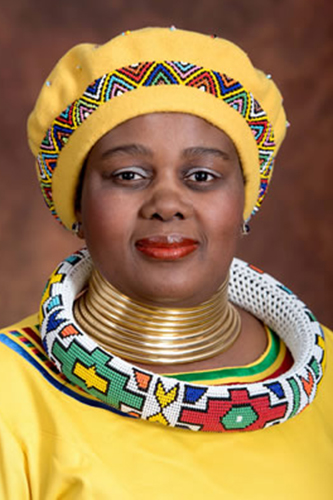



Tabling her department’s Budget Vote for debate in a mini-plenary session of the National Assembly, the Minister of Transport Ms Barbara Creecy announced plans to introduce reforms to revitalise the transport and logistics sector.
The Minister said the effective implementation of reforms was essential for boosting growth and employment creation. She announced six targets that will guide the department for the next four years as part of efforts to improve passenger, freight and logistics systems:
- 250 million tons of freight will be carried on the Transnet network by 2029
- Improve the speed of loading and unloading ships to international benchmark of 30 gross crane moves per hour
- Ensure the rail system provides safe, reliable and affordable transport to workers and families
- 600 million passenger journeys by 2030
- To boost the contribution of aviation to tourism economic development and job creation, we expect 42 million passengers and 1,2 million tons of air freight to move to the Airports Company South Africa network by the end of this policy term
- Improve road safety and reduce the devastating toll roads accidents have on lives and livelihoods, we aim to reduce road fatalities by 40% by 2029, so we reach the UN target of halving road accidents by 2030
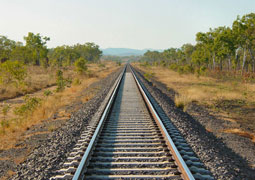
“Fundamental” Ms Creecy said, “to our rail reform programme is our intention to reestablish rail as the backbone of transport for people and goods. Since we embarked on the journey to restore passenger rail services nationwide I am proud to share that the Passenger Rail Agency of South Africa (PRASA) had, by the end of May 2025, successfully revived 35 of 40 corridors and sections of service lines and we continue to deliver at peak with the agency achieving an unaudited figure of 77 million passenger journeys for the last financial year and aiming at 116 million passenger journeys for the current financial year,” the Minister reported.
She announced that total transfers to PRASA amount to an estimated R66,1 billion over the medium term, which will go towards maintaining, recovering and reviewing rail infrastructure, rebuilding the signaling system and rolling out new train sets to priority corridors so that we can increase passenger numbers.
Addressing the plans to invite private-sector participation in the rail and logistics industry, the Minister assured members of the National Assembly that strategic infrastructure such as ports and rail will remain in public ownership as assets belonging to the South African people. However, she also said: “We need to enhance the involvement of additional operators to increase freight rail capacity beyond what the public sector alone can accomplish. The limited availability of state resources to fund infrastructure development makes public-sector investment critical, to guide private-sector investment,” said Minister Creecy.
African National Congress MP, Mr Donald Selamolela, who is also the Chairperson of the Portfolio Committee on Transport, said his party supported this budget vote as they believe it provides the foundation to further the agenda of enhancing inclusive growth through an efficient and effective transport system.
“The budget vote inspires confidence, as it is in alignment with the department’s medium-term goals, which are to maintain South Africa’s road network, support a road-based transport network and invest in infrastructure to revitalise passenger rail services, freight and logistics infrastructure. It is our conviction that this will enable favorable grounds for expansion and employment development via service availability, inclusive economic activity,” said Mr Selamolela.
Umkhonto weSizwe Party rejected the budget vote, through its MP Mr Lucky Montana, who said the party cannot associate itself with the policy direction of the department. “We also reject the 40% increase in fuel levy, which will bring more suffering to citizens, impose huge transport costs and cause serious damage more than the proposed (and reversed) VAT would have done,” he said.
On planned private-sector participation in the transport sector, Mr Montana said his party did not oppose this move in principle, but believes that the current policy reforms and the specific private-sector model the Minister is pursuing will undermine the capacity of the state and the sustainability of the transport sector, along with its ability to meet South Africa’s development needs in the long term. He also criticised the budget for what his party sees as its failure to champion public transport transformation.
Mr Thamsanqa Mabhena of the Democratic Alliance welcomed private-sector participation in the rail and logistics industry. “We believe the participation of the private sector will assist with injecting the much-needed capital and expertise to provide relief to a strained fiscus. We also support the vertical separation of Transnet and the proposal to create a fully-fledged subsidiary in the form of the National Ports Authority,” he said.
Mr Mabhena then turned his attention to the Road Accident Fund and the suspension of the entity’s CEO and urged the Minister to urgently address the systematic erosion of corporate governance at RAF. The DA also wants the Minister to remove the entire RAF board and appoint a new board and fill all vacant positions.
Another party that rejected the budget vote was the Economic Freedom Fighters, calling it an indictment on the department’s failures. EFF MP Mr Mazwikayise Blose accused the department of lacking a transformative vision and being unable to deliver for the working class and poor.
“How can we support a budget that fails to resolve chronic failures and collapse of national, provincial and municipal roads? Our people are dying daily on the roads yet this department is obsessed with celebrating minor victories such as reduction in road fatalities over the Easter weekend, while a weekend later over 20 people die in a single road accident,” Mr Blose said.
Mr Blose urged the department to revive Transnet and get as many trucks as possible off the roads.
Mr Nhlanhla Hadebe of the Inkatha Freedom Party said: “We note and welcome an essential budget that lies at the very heart of South Africa’s recovery, spatial justice and community safety and aligned with the IFP vision of connecting people to opportunities through safety, affordable and equitable mobility.”
He also commended the department for its commitment to revitalising the country's transport infrastructure in line with the President’s 2025 State of the Nation priorities – repair the roads and bridges, modernise the ports and aid the recovery of commuter rail services, among other things.
Sakhile Mokoena
3 July 2025
 Arrange a tour