



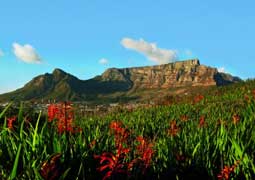
The Portfolio Committees on Tourism and on Police jointly hosted a consultative workshop at Parliament on tourist safety and security. The workshop, attended by a host of tourism experts and practitioners, was called in an attempt to mitigate the negative perceptions caused by recent incidents of tourists who were subjected to violent crime and murder in some of the tourists’ hotpots, such as Cape Town and Kruger National Park in Mpumalanga. As a result of these incidents, pre-bookings by international tourism companies in Europe were cancelled and some tourists are currently wary of coming to South Africa.
In her opening remarks, the Chairperson of the Portfolio Committee on Police, Ms Tina Joemat-Pettersson, stated the need for a swift intervention because of the positive effect that the tourism industry has on our economy. “We believe that tourism is a catalyst for economic growth. As such, crime constitutes a threat to our country’s endeavour to resuscitate economic growth.”
Given the significance of tourism in our economy “due diligence should be taken when media report about crime on tourists to ensure that such reportages don’t have adverse effect on the South African tourism industry as a whole”, she said.
Emphasising the significance of the workshop, the Chairperson of the Portfolio Committee on Tourism, Mr Supra Mahumapelo, emphasised the need for joint action. “If the tourism stakeholders don’t take a join action to fight crime, we are not going to succeed.”
Nor we would not achieve the 20 million tourist mark envisaged by the National Development Plan (NDP), he said. “Our response to tourist crime requires better planning. If not, we won’t realise the goals set in the NDP and this will have an adverse effect on our country’s economic growth, which will lead to anxiety.”
South Africans should pull together and as such “some tourist crimes should not be over exaggerated by the media. It should report them case by case, as isolated incidents. We can do that only when we pull together.”
In his presentation, Dr Guy Lamb, Director of Safety and Violence Initiative at the University of Cape Town said tourist crime is not only a South African phenomenon. It is “a prevalent occurrence in many tourist’s destinations, such as Thailand, Brazil and Canada. It should not be treated as an exception.”
He believes that the long-term strategy to combat tourist crime is to ensure that tourism benefits the communities that live near the tourist’s hotspots. “This could reduce crime in these areas significantly.”
The Statistician General, Mr Resinga Maluleke, gave a broad over view of the significance of this industry to our economy and the need to have a coordinated approach in combat tourist crimes.
A South African Tourism delegation is currently in Europe to assure the tourism industry there that despite recent incidents, South Africa remains a favourable destination, with plans in place to deal with crime. This was the view of Mr Blacky Komani, Chairperson of Tourism Business Council of South Africa. “If we don’t tell our stories, someone will on our behalf. And in the minds of international tourists if Table Mountain and Kruger National Park is not safe, South Africa is not safe.”
A safety app is in the offing to mitigate this perception and to ensure that the sector responds to crime on tourists more swiftly, he added: “Very soon when tourists are in distress they will have someone to immediately come to their rescue.”
A representative from the South African Police Service (Saps), Lieutenant-General Sharon Jephta, confirmed that there is now a Memorandum of Understanding between the police and the tourism industry to quell crime on tourists. This to “ensure that there is a joint implementation of an optimised policing and safety strategy in the tourism environment. And to create a platform for information sharing between Saps and the National Tourism Safety Forum,” he said.
This will include “the identification of hotspots areas, data collection, the establishment of Provincial Tourist Safety Committees and a dedicated hotline for tourists.”
Mr Rachid Toefy, the Deputy Director-General of Economic Operations, Western Cape Department of Economic Development and Tourism, said the province is now discussing a dedicated tourist police. “If Rio can do it, why not Cape Town. We looking at a budget model to implement this plan.”
Part of the province’s plan going forward include “an ecosystem of technological responses which include drones, social media apps, one telephone line that provide tourists with a basket of safety services that will be linked to armed responses and to neighbourhood watch groupings,” Mr Toefy explained.
According to Mr Tim Harris, CEO of Wesgro, the Official Tourism, Trade & Investment Promotion Agency for Cape Town and the Western Cape, Cape Town is in the 53th spot in the international safety tourist index while Chicago is at 49. “There is much to be learnt from Chicago, which also has a gang problem like Cape Town. But ironically Chicago has managed its tourists’ perception because it is still a leisure and business destination despite its rating.”
If Cape Town were to emerge from its current negative perception, “we need to explain gang crime in our city as Chicago does. As such, Chicago remains a best practice in managing perception,” he said.
The Deputy Director-General in the Department of Tourism, Ms Morongoe Ramphele, said a strategy has been developed to “foster public and private sector partnership in addressing issues of tourism safety in a more coordinated manner in order to provide an enhanced visitor experience.”
In addition, the object of the strategy is to “identify effective joint preventative approaches aimed at reducing opportunities for crime on tourist facilities and operations and to facilitate an integrated implementation and support of safety programmes,” Ms Ramphele said.
This will be supported by a communication protocol that will determine “how the industry is communicating among itself when an incident occurs. And who is monitoring and who is in the WhatsApp group for incident report, among others,” she said.
This will be supplemented by “a low- and high-level response protocol, which will include positive communication campaigns that we are open for business,” she stated.
 Arrange a tour