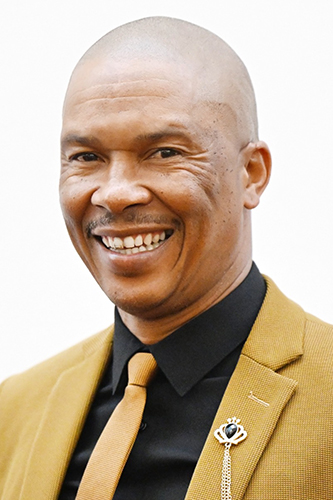



The Speaker of the National Assembly, Ms Thoko Didiza, joined women chairpersons of various parliamentary committees and other distinguished guests at a National Women’s Day reception hosted by the Consul General of the People’s Republic of China in Cape Town, Mr Ren Faqiang, and Madame Ma Ning, on Friday, 7 August 2026.
The reception, held in Newlands, Cape Town, commemorated the 70th anniversary of the historic 1956 Women’s March, while celebrating the achievements and leadership of South African women and highlighting the enduring friendship between South Africa and the People’s Republic of China.
Delivering the keynote address, Speaker Didiza reflected on the significance of the 1956 Women’s March and the broader history of women’s mobilisation in South Africa, noting that the struggle for women’s rights and equality had been advanced through successive generations of women across political, racial, religious and class divisions.
She highlighted the formation of the Federation of South African Women in 1954 and its adoption of the Women’s Charter, which articulated a vision for an inclusive society and subsequently influenced the Freedom Charter of 1955. Speaker Didiza also reflected on the role of women in shaping democratic South Africa, including the establishment of the Women’s Coalition in 1992 and the development of the Women’s Charter for Effective Equality ahead of the country’s first democratic elections in 1994.
“These women were trailblazers in the struggle for liberation and gender equality in our country,” Speaker Didiza said, emphasising the responsibility of present generations to ensure that the aspirations of women who fought for freedom become a lived reality. She said Parliament has an important responsibility to ensure that gender equality is reflected not only in legislation, but also in the implementation of laws and the allocation of public resources.
Speaker Didiza called for a gender lens to be applied to legislation and budgets, particularly in assessing whether these interventions are meaningfully improving the lives of women and girls.
She reflected on the transformation of Parliament since 1994, when women’s representation was significantly lower and parliamentary infrastructure itself had not been adequately designed to accommodate women.
The Speaker noted that women’s increased participation in public leadership had contributed to important legislative and policy advances, including measures relating to maternity and paternity leave, access to education and support for young people pursuing higher education.
Turning to relations between South Africa and China, Speaker Didiza highlighted the importance of continued cooperation in advancing women’s rights and opportunities. She referred to the 1995 Fourth World Conference on Women in Beijing and the resulting Beijing Declaration and Platform for Action as an important milestone in the global advancement of gender equality. Speaker Didiza welcomed the prospect of further exchanges between women from South Africa and China to reflect on progress made in implementing the Beijing Platform for Action and to identify areas for strengthened cooperation.
She also highlighted the continuing challenge of gender-based violence and welcomed the establishment of mechanisms aimed at strengthening the national response.
In his address, Consul General Ren Faqiang said the reception provided an opportunity to honour the courage and resilience of South African women and to recognise the progress made in advancing gender equality over the past seven decades. He highlighted the growing participation of women across South African society, including in Parliament, the judiciary and other sectors.
Drawing on the Chinese saying that “women hold up half the sky”, the Consul General outlined China’s efforts to advance women’s empowerment, including initiatives relating to education, health, skills development and economic participation. He said China and South Africa continue to pursue practical cooperation in areas including women’s empowerment, skills and employment, education and cultural exchanges.
The Consul General also highlighted China’s support for skills development initiatives for African women, including programmes aimed at empowering vulnerable women to secure independent employment.
Despite the progress achieved globally, he noted that women continue to face challenges including poverty, gender-based violence and the digital divide. He called for stronger international cooperation to create an enabling environment for women’s development and to strengthen mechanisms protecting women’s rights and interests.
The reception provided an opportunity for women leaders and representatives from different sectors to reflect on the legacy of the 1956 Women’s March while considering the unfinished work of advancing substantive equality for women and girls.
As South Africa marks 70 years since the historic march, the occasion served as a reminder that the legacy of the women who marched to the Union Buildings continues to place a responsibility on current generations to advance the gains made and address the challenges that remain.
Speaker Didiza encouraged women to use their respective positions and spaces to contribute towards improving the lives of women and girls. “Remember that in your little corner you still have a responsibility to do something as you contribute to changing the lives of women for the better,” she said.
Temba Gubula
12 August 2026
 Arrange a tour