


The Standing Committee on Public Accounts (Scopa) today received a briefing from the Auditor-General (AG) on Eskom’s annual report and financial statements for the 2020/21 financial year.
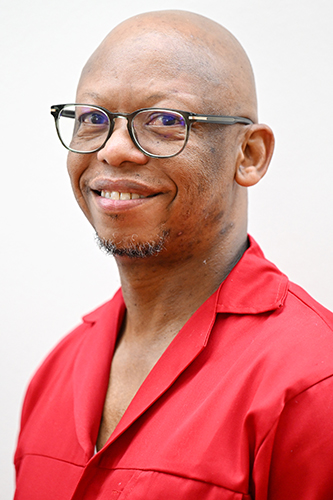
Mr Siyakhula Vilakazi, a partner SNG Grant Thornton, delivered the briefing. SNG Grant Thornton was appointed to conduct the audit, with the AG overseeing the audit and reviewing the high-risk areas.
Mr Vilakazi told Scopa that Eskom has received a qualified audit opinion with findings for the fifth consecutive year. “Eskom has incurred irregular expenditure to the value of R1 251 million, as well as fruitless and wasteful expenditure to the value of R1 280 billion,” he said.
Mr Vilakazi told the committee that among the irregularities reported as of March 2021 is a contract awarded by the board to Econ Oil & Energy on the recommendation of the former chief procurement officer, after irregularities in a previous contract with the supplier were discovered. “Eskom also failed to effect corrective action for identified non-compliance to the National Environmental Management Act, thereby breaching fiduciary duties,” he said.
Scopa also heard that Eskom’s accounting authority failed to exercise adequate oversight regarding compliance with applicable legislation and related internal controls. This resulted in a lack of proper procurement, contract management and consequence management practices.
Members of Scopa indicated that they were satisfied with the presentation and most of their questions will be directed to Eskom when they meet with the power utility. Mr Alf Lees asked the AG whether the approval process that forces Eskom to get approval from National Treasury causes unnecessary delays, which then results in irregular expenditure. “The audit indicated particularly on procurement that there is considerable irregular expenditure. There are also media reports that indicate that when you are running a big operation like Eskom, you need to be able to make decisions fast and at the moment it is taking an average of 77 days to get permission through National Treasury. Are these delays resulting in irregular expenditure?” he asked.
Mr Vilakazi confirmed that the delays in approvals cause irregular expenditure. “We did not spend time investigating why National Treasury is not approving some of the requests from Eskom. My view is that Eskom does not have proper record keeping to explain to an auditor that there was that regularity in a certain aspect with clear evidence that can prove the necessity of the irregularity,” he said. Mr Vilakazi said it is difficult to approve irregular expenditure when there are no records and leads to delays.
Mr Somyo raised a concern on the performance-related audit area, where there is an unwritten rider from the auditors on the effects of the core of a company like Eskom when the country experiences load shedding. The impact is derived from Eskom’s key performance area of providing electricity. The audit indicates good performance that shows Eskom is meeting their standards in the area of performance.
Mr Vilakazi clarified that the performance-related area shows that Eskom has provided accurate information regarding their performance. “We are indicating that the performance information that has been disclosed in the annual report, whether it is negative or positive, is reliable and is accurate,” he said.
The committee will meet again with the auditors in its next meeting with Eskom.
Faith Ndenze
10 November 2021
 Arrange a tour