



The Select Committee on Security and Justice this week engaged with the management of the South African Police Service (SAPS) on escapes from police custody, raising serious concerns about consequence management and the slow rate of finalising disciplinary matters.
The committee also received a briefing from the Minister of Home Affairs, Dr Leon Schreiber, on the One Stop Border Post Bill. The committee resolved to advertise the Bill for public comment.
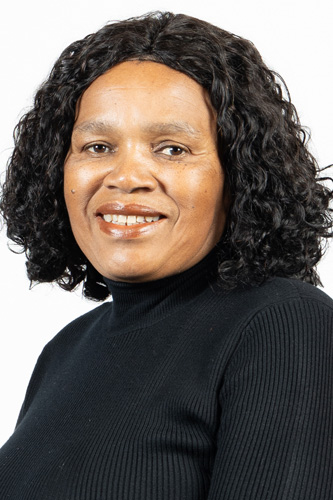
Committee Chairperson Ms Jane Seboletswe Mananiso said the meeting with SAPS was convened in light of several recent escapes from custody across the country, which continue to pose a serious challenge to the criminal justice system.
“Escapes from lawful custody undermine public confidence in law enforcement and pose a direct threat to community safety,” said Ms Mananiso. She noted that the Criminal Procedure Act, 1977 (Act 51 of 1977), criminalises escape from lawful custody, and that SAPS has established policies, national instructions and standard operating procedures to strengthen preventative measures.
The committee was informed that, in a national comparison for the period 1 April to 31 December 2024 and 1 April to 31 December 2025, the total number of escape incidents decreased by 9.29%, from 226 in 2024 to 205 in 2025. However, the total number of escapees increased by 7.74%, from 262 in 2024 to 284 in 2025. The number of escapees who were re-arrested also increased by 7.89%, from 76 in 2024 to 82 in 2025.
Deputy Minister of Police Mr Cassel Mathale attributed escapes to crumbling infrastructure at police stations and negligence. “On the issue of infrastructure, which has to do with the upgrading of police stations that was spoken to, we have come to the conclusion that if we continue the way we have been continuing, we will not resolve this problem. We will come back here next year, talk about the same problem, and come the year after, talk about the same problem,” he said.
Committee Member Mr Nicholas Gotsell questioned the reliability of the SAPS data presented to the committee. “I questioned the actual numbers in our committee meeting yesterday. I asked again because I was given completely different numbers,” he said, referring to a previous response to a parliamentary question.
Regarding consequence management for the period 1 April to 31 December 2025, the committee was told that the finalisation rate of disciplinary matters stood at 27.96%. A total of 224 SAPS members were charged, with only 33 disciplinary hearings concluded.
Committee Member Mr Virgil Gericke raised concerns about the low finalisation rate of disciplinary matters, while Adv Inkosi Mwelo Nonkonyana said the impression is created that there is reluctance within SAPS to discipline peers. Committee Member Mr Phiroane Phala raised concerns about escapees re-offending and the risks posed to communities.
SAPS indicated that preventing escapes requires strict discipline, constant vigilance, effective supervision, full compliance with prescribed procedures and clear accountability across all levels of command. However, SAPS said these efforts are constrained by ageing infrastructure and shortages of critical resources, which place additional pressure on operational effectiveness. SAPS further indicated that disciplinary processes must be expedited through streamlined investigations, strict adherence to timelines, strengthened case management and decisive consequence management, with plans underway to establish dedicated disciplinary units.
Ms Mananiso expressed concern about shortcomings in consequence management, particularly regarding unaccounted cases. “We need to intervene if human error is the issue, possibly through automation. It also appears that SAPS lacks a clear strategy for consequence management. If cases are not accounted for, there is no plan to address officials who default within the system,” she said.
She added that the committee will continue to exercise its oversight mandate by closely monitoring SAPS’s response to these challenges.
Rajaa Azzakani
20 February 2026
 Arrange a tour