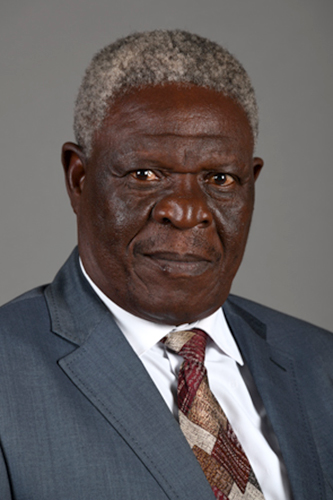
Delivering his keynote address during the Local Government Week oversight programme, the president of South African Local Government Association (SALGA), Mr Bheke Stofile, commented that the National Council of Provinces (NCOP) exists to ensure that the intergovernmental issues of the three spheres of governance – national, provincial and local – find expression in local government.
He added: “Governance must strive to uplift the lives of ordinary citizens.” He said nowhere is this commitment conveniently placed than in the local sphere of governance. “A level of governance that brings water and electricity to households, ensures roads are paved, and which is entrusted with responsibility to ensure that cities are clean and are in a position to attract investments,” Mr Stofile said.
Highlighting the skew population distribution caused by skewed service delivery, he pointed out that the majority of South African population disproportionately reside in seventeen municipalities, which results in disproportionate pressure on their infrastructure. To mitigate this, he said a meeting of all metro mayors was convened to reflect on this reality which necessitated the revaluation of governmental planning strategies guided by the Corporative Governance and Intergovernmental Relations Framework Act.
Despite these disproportionate service delivery burden, municipalities are obligated to absorb these costs. This situation underscores the imperative for more equitable planning practices.
In his view, this should be understood within the context of section 139 and section 154 of the Constitution that directs all spheres of government to work collaboratively. Furthermore, he said, the Constitution provides mechanism for protecting municipalities in distress. These provisions were established not to undermine municipalities, but to ensure that in times of difficulties appropriate mechanism are in place to assist municipalities in their recoveries and to fulfill their constitutional obligations.
However, he interjected that it’s imperative that these tools are applied equitably and transparently in accordance with the principles of strengthening local democracy rather than for political gain.
However, he noted that too often these interventions do not yield good results. As an example, he cited the Northwest Province’s case of 2018, when the majority of its municipalities were placed under administration, but service delivery barely improved. Corruption and underlying factors of poor revenue collection persisted. As well as unqualified and politically appointed staff issues remained unresolved.
In his opinion, using section 139 of the Constitution has become a ritual rather than a remedy to challenges facing municipalities and is often used as an afterthought. “Instead of them using the merits of municipalities’ reports as a warning system to identify weaknesses and challenges and to deploy the requisite support needed by municipalities, often these reports are neglected” even though the give a thorough assessment of the status of municipalities across, he suggested.
He called for a paradigm shift and for interventions to be accompanied by sustained and well-coordinated support. He also urged that section 139 should be used as a last resort when all else has failed.
He also stated there is often much focus on what municipalities owe to creditors, but not what is owed to them by government departments and their entities. He claimed that municipalities are owed more than R400 billion by households, government departments and entities, and businesses. This imbalance creates a vicious downward spiral of service delivery when Eskom cuts electricity and municipalities fail to meet their service delivery obligations to communities.
He said it is this downward trajectory that deepened the culture of non-payment and the dwindling of the social compact of our democracy. Ironically, he pointed out “the same citizens who march and protest over service delivery, they must likewise pay for the services they demand. But also, the state and its entities must lead by paying their dues in full and on time rather than being the debt collector of others. It must, instead, collect for everybody.”
Given the above, local government is a matter of collective concern. This requires that financial institutions, insurances, companies and South African Revenue Services must collaborate with municipalities to enhance their revenue collection for they operate and rely on municipal systems, he said.
Moreover, he said, a national forum comprising of labour, business and communities must be convened to deliberate a robust and collaborative municipal system.
On the whole, municipal realities serve as a stark warning for those who defend regulators, such the National Energy Regulator of South Africa and the water boards, which disregard the plight and constitutional obligations of municipalities when they set tariffs on services deemed to be citizens’ constitutional rights.
Mr Stofile called for a review of the regulatory architecture governing municipalities to take into account the interests and constitutional rights of the populace. Most fundamentally, however, municipalities must reclaim their constitutional authority of setting tariffs for services within the framework that affords affordability and sustainability, he said.
He also suggested that the regulation of critical services must be accountable to Parliament rather than left to technocrats, while the outdated Fiscal and Governance Framework of Local Government and its White Paper on Local Government of 1998 needs to be reviewed because it was premised on assumptions that no longer hold true. This review will afford an opportunity to reconstruct the architecture of local government and to revitalise this sector as a catalyst for transformation and hubs for economic development.
Abel Mputing
17 September 2025
 Arrange a tour