



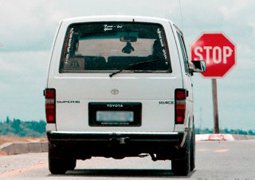
In a briefing to the Portfolio Committee on Transport yesterday, the Minister of Transport, Ms Barbara Creecy, said the department plans to introduce empowerment projects in an attempt to improve the taxi industry. These projects include formalising the industry, piloting cashless fare collection and the review of the taxi recapitalisation programme. The review is necessary, she said, as the department is not getting the desired outcomes from the current programme.
“If one goes back to when the programme started, the objective was to support one of the only majority black-owned industries in the country [and] promote road safety by taking unroadworthy vehicles off the road, while resolving issues related to compliance of the industry and also promoting affordability of the vehicle,” Minister Creecy explained.
“The new vehicles are unaffordable. If we still regard these policy objectives as valid and if one had the pool of money, how can one use the money differently to achieve a different outcome?” Ms Creecy asked. The Minister also noted that while minibus taxis bought in 2007 need to be replaced, new minibus taxis are unaffordable.
Members of the portfolio committee asked why this programme is being targeted first, when there is a need to shift the department’s funds to other programmes. They also asked for more detail on the review of the taxi recapitalisation programme and its sustainability, funding of the National Taxi Alliance, the cost of a new Toyota Quantum, enforcement of road regulations, and regulation of e-hailing services.
Committee members also asked about the interest rates charged to taxi owners. Mr Ntando Maduna suggested that considering the taxi industry is largely black-owned, there is unfair bias in how the industry is financed by the banks. “I understand this is the way the system is designed, but the financial industry needs to come and assist,” he said.
The Chairperson of the committee, Mr Donald Selamolela, noted that when the taxi recapitalisation programme started in 2007, there was excitement that the taxi fleet would be renewed. “We envisaged a country with almost new cars. The programme has not done well and has not achieved the things it sought,” he observed.
Mr Selamolela noted also that funds have been shifted from the programme with noticeable effects. “Year in year out, if there are shifting of funds, this is the programme that will be affected.” This is shocking, considering this is an industry that helps the poor, he said. He also agreed with other committee members that the rules of the road need to be enforced more stringently to avert accidents and increase road safety for everyone.
Another committee member, Mr Mazwi Blose, said he failed to understand why the call to scrap old taxis is voluntary and asked about the consequences for operators who do not comply. He wanted to know whether it is up to the taxi operator to decide when their vehicle is unroadworthy.
The Deputy Director-General for Public Transport, Mr Mathabatha Mokonyane, said the department has a challenge with the cost of the vehicles, which is around R700 000, when the subsidy has only been increasing by consumer price index value.
“We support the entire taxi industry, not SANTACO only,” he noted. “The issue is that SANTACO was supported by government in the beginning. Both associations support the programme but individuals can decide otherwise. We are still working to have taxi industry united and hope it will happen soon. E-hailing is now in the amendment act that is being approved,” he said.
The committee had earlier been briefed on the Vala Zonke, a government initiative to fix potholes. Mr Selamolela said the committee fully supports this programme.
Sibongile Maputi
30 October 2024
 Arrange a tour