


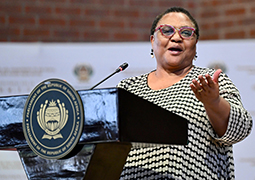
The courage of generations of South African women who resisted injustice was placed at the centre of the 2026 Women’s Parliament in Kimberley today, as Speaker of the National Assembly, Hon Thoko Didiza, reflected on the country’s gains in gender equality and the work that remains to build an equal and inclusive society.
Addressing the 2026 Women’s Parliament at Sol Plaatje University under the theme, “Wathint’ Abafazi, Wathint’ Imbokodo: 70 Years of Resistance, 72 Years of Vision – Advancing Gender Justice, Equality and Resilient Economies for All,” Speaker Didiza said the theme was both a tribute to the past and a call to draw on the courage and resilience of women to address the challenges facing society today.
“Selecting the theme of Wathint’ Abafazi Wathint’ Imbokodo is a direct clarion call to women to dip into their fountain of courage and resilience to champion solutions needed to tackle the societal challenges we face today.”
The choice of Kimberley carries particular historical significance. Seventy years ago, thousands of mine workers were mobilised by Francis Baard and others to protest against the ill-treatment of workers. Baard later faced treason charges for her role in the resistance against apartheid and her mobilisation of women in the struggle.
Reflecting on this history, the Speaker said the courage of women such as Baard and others who fought for equality and justice helped lay the foundation for South Africa’s constitutional democracy.
The gains since 1994, she said, are reflected in women’s growing participation in politics, Parliament, the judiciary, business, academia and leadership.
“Ubani owayazi ukuthi one day we would have women heading the two arms of the state in our country?” she asked.
She also highlighted that women now make up 43% of lawmakers in Parliament and 45% of Cabinet members, while women lead several key constitutional institutions.
These achievements, however, do not mean that the journey towards gender equality is complete.
“The journey of gender equality has been long, and we remain far from the desired destination.”
The Speaker identified unemployment and limited economic participation as among the challenges that continue to affect women and young people. She also stressed the importance of ethical leadership and good governance in strengthening the institutions established during South Africa’s 30 years of constitutional democracy.
Women’s Parliament also recognised the contribution of Parliament, provincial legislatures, the judiciary, government institutions, academia and civil society in advancing gender equality. The Speaker pointed to judicial developments that have strengthened women’s rights, including judgments relating to inheritance and traditional leadership.
Looking ahead, she said efforts to empower girls and young women must also be accompanied by attention to the boy child.
“Empowering girls and young women should not leave the boy child behind, so that we can attain true gender justice and equality.”
Drawing on the wisdom of women of the 1950s, she recalled their vision that “Women shall walk side-by-side with their countrymen to build an equal society.”
As Women’s Parliament begins its programme, the Speaker said South Africa must continue advancing gender equality, expanding economic opportunities for women and investing in the education and empowerment of girls.
“Together, let us ensure that every woman has the equal opportunity not only to participate in society, but to lead it.”
The Women’s Parliament continues at Sol Plaatje University in Kimberley as part of Parliament’s Women’s Month programme.
 Arrange a tour