


The impact of the Judicial Commission of Inquiry into Criminality, Political Interference and Corruption in the Criminal Justice System, colloquially known as the Madlanga Commission, has prompted residents of the Greater Dr Ruth Segomotsi Mompati District Municipality to call for the commission to consider extending its mandate to investigate alleged corruption and maladministration linked to persistent water-service challenges in their communities.
These views were expressed during the first of three public hearings being conducted by the Portfolio Committee on Water and Sanitation in the North West Province. The hearings are aimed at obtaining communities’ views on the Water Services Amendment Bill (B24-2025) and were held at the Depot Hall in Taung.
Mr Gasebone Jasoni welcomed the Bill, saying that its proposed measures offered hope of addressing the longstanding challenges faced by communities in accessing reliable water services. “We have been informed that government appropriated money for the development of a reservoir and pipelines, but that project has never seen the light of day. We urge Madlanga to come to conduct an investigation on what happened to the money. Madlanga must get rid of corrupt officials from the municipality,” Mr Jasoni said.
Mr Jasoni’s concerns reflect broader calls from participants for stronger accountability in the management of public resources intended for water infrastructure and service delivery.
Echoing the call for accountability, Ms Ellie Keameditse said communities had raised concerns about the lack of water for many years without seeing meaningful solutions.
Ms Keameditse supported the Bill, particularly its provisions aimed at strengthening accountability among water service providers. “We call for improved communication channels to enable communities to report water services providers that fail to provide quality water services. This will ensure speedy response and punitive measures against water service providers and will ensure accountability,” she said.
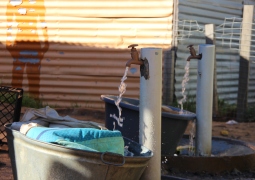
Participants also strongly called for municipalities to reduce their reliance on water tankers as a mechanism for providing water to communities. They argued that tanker-based water provision is costly, unreliable and potentially vulnerable to corruption, particularly where communities receive water irregularly.
Concerns were also raised about municipalities purchasing their own water tankers. Participants argued that resources used for such temporary interventions could instead be directed towards sustainable infrastructure and long-term solutions to water shortages.
Residents further questioned why communities in Taung continue to experience water shortages despite the area’s proximity to a dam. Participants expressed concern that local communities are not adequately benefiting from the available water resources and called for the Bill to assist in addressing such systemic challenges.
The committee noted the concerns raised by residents and the strong emphasis placed on accountability, consequence management, effective enforcement and sustainable water infrastructure.
The public hearing also demonstrated the importance of ensuring that the legislative process takes account of the lived experiences of communities. While participants broadly supported the Bill, they emphasised that legislation must be accompanied by effective implementation, monitoring and enforcement if it is to translate into improved water services.
The Portfolio Committee on Water and Sanitation will continue with its programme of public hearings in the North West Province, with similar hearings to be held in Mahikeng and Klerksdorp to provide communities with further opportunities to make submissions on the Bill and raise issues affecting water and sanitation services in their areas.
The Water Services Amendment Bill seeks to respond to persistent challenges affecting South Africa’s water sector, including unreliable water and sanitation services, inadequate management and maintenance of water infrastructure, declining water quality, gaps in accountability and weak enforcement mechanisms.
Among the key proposals contained in the Bill are the introduction of a mandatory licensing system for all water service providers, minimum competency standards for water services professionals, clearer separation of responsibilities between water services authorities and water services providers, stronger penalties for non-compliance and enhanced enforcement powers for the Minister in instances of persistent service-delivery failures.
Malatswa Molepo
26 August 2026
 Arrange a tour