



The Select Committee on Cooperative Governance and Public Administration (Traditional Affairs, Human Settlements and Water and Sanitation) has made it clear that corruption and self-interest must be decisively addressed to restore effective governance and service delivery in Masilonyana Local Municipality.
During its oversight visit to the municipality, the committee engaged with stakeholders at Theunissen Town Hall as part of its consideration of the Free State Provincial Executive’s invocation of Section 139(1)(b) of the Constitution. The engagement confirmed persistent governance failures, weak accountability and non-compliance with legislative obligations.
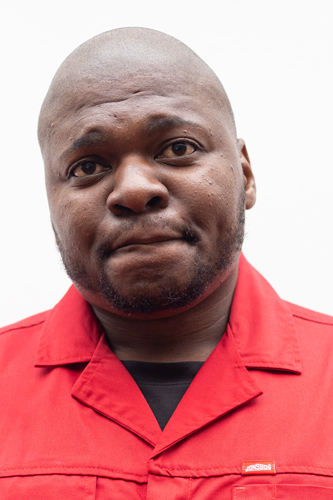
The Chairperson of the committee, Mr Mxolisi Kaunda, stated that the continued deterioration of municipal governance reflects a failure on the part of councillors to execute their constitutional and statutory responsibilities.
“The assessment presented to the committee confirms that municipalities in the Free State continue to perform poorly in audit outcomes. This trend will not be reversed without firm action to address corruption, enforce accountability and restore institutional discipline,” said Mr Kaunda. Masilonyana has received a disclaimer audit opinion (the lowest-possible opinion) for the past 10 years.
The committee found that councillors are not exercising effective oversight. This includes failure to support investigations into irregular expenditure, inadequate scrutiny of appointments and the ineffective functioning of critical oversight structures such as the Municipal Public Accounts Committee and Section 79 committees.
“Council must function as an oversight authority. Where it fails to act on credible allegations or to enforce consequence management, it contributes directly to governance decline,” Mr Kaunda said.
The municipality’s financial position remains unsustainable. Revenue collection is approximately 20%, significantly limiting the municipality’s ability to fund operations and deliver services. The failure of some government departments to settle their accounts further exacerbates the situation.
As a result, the municipality has defaulted on key financial obligations, including statutory payments to the South African Receiver of Revenue and employee pension funds. This has led to the attachment of municipal bank accounts and further constrained service delivery operations.
The committee also noted that the municipality’s wage bill, at approximately R15 million per month, is not aligned with service delivery performance. The use of equitable share allocations to fund salaries instead of core services reflects poor financial management and weak expenditure controls.
“Public funds must be directed towards service delivery priorities. Misalignment between expenditure and outcomes is not acceptable and must be corrected,” Mr Kaunda emphasised.
The ongoing dispute between the Provincial Department of Cooperative Governance and Traditional Affairs and the municipal council regarding the appointment of the chief financial officer was also highlighted. The committee noted that continued litigation places additional strain on already limited financial resources.
In addition, the municipality has received disclaimer audit opinions for 10 consecutive years, despite reliance on consultants to prepare financial statements. While there has been a reduction in audit findings, this has not translated into improved audit outcomes, indicating persistent weaknesses in financial governance and internal capacity.
The committee will consider all stakeholder inputs and submit its report to the National Council of Provinces, which will determine whether the intervention in terms of Section 139(1)(b) should be upheld.
“The priority is to ensure that the municipality restores its ability to deliver basic services, including water, sanitation, refuse removal and infrastructure maintenance. This requires immediate corrective action, strengthened oversight and strict adherence to governance and financial management frameworks,” Mr Kaunda concluded.
Malatswa Molepo
15 April 2026
 Arrange a tour