



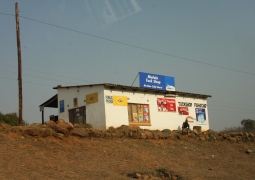
The Portfolio Committee on Small Business Development says the R500 million allocated for spaza shop funding should be shielded from corruption and be used to uplift South Africans from poverty and unemployment. Today the committee received an update from the Department of Small Business Development on the distribution of the R500 million to spaza shops across the country, mostly located in townships and rural areas.
The department’s delegation was led by the Acting Minister Ms Pammy Majodina, accompanied by the Deputy Director-General, Ms Qinisile Delwa, the acting CEO of the Small Enterprise Development and Finance Agency, Mr Nkosikhona Mbatha, and other departmental officials.
Ms Majodina said the work to reach every spaza shop across the country is not an easy task. “When people heard the announcement about the R500 million funding for spaza shops, they flooded the department’s offices to apply, not knowing that this process goes together with the spaza shops registration with municipalities. Now we had to embark on a roadshow to explain the process and what documents were required when applying for funding,” she told the committee.
The committee heard that to date the department has received over 3 260 applications for funding and only 387 were successfully processed. Thousands more spaza shops are still expected to submit applications for funding.
Ms Delwa, meanwhile, told the committee that the spaza shop sector has various challenges, including limited access to capital, high operating costs and a lack of bulk purchasing options. In addition, significant food safety concerns undermine consumer trust and create conflict in communities. “In response to these challenges the department collaborated with the Department of Trade, Industry and Competition to launch the Spaza Shop Support Fund with a budget of R500 million. The fund seeks to enhance food safety, improve competitiveness and strengthen locally owned spaza shops by addressing challenges like poor hygiene, competition from retail chains and limited access to capital,” said Ms Delwa.
The funding can be used for business refurbishments and wholesale aggregation and also includes non-financial support such as skills, regulatory compliance and capacity building training. It also aims to achieve economies of scale by linking spaza shops and food handling outlets to bulk purchasing groups.
The department also noted that a delivery channel partner (DCP) approach has been adopted to ensure fund are distributed equitably to the targeted spaza shops. The DCPs also act as intermediaries in the efficient provision of stock and enable technology that is backed by traceable profiles and an auditable delivery trail.
The approach also provides bulk buying opportunities that will propel the spaza shops to exploit economies of scale and enjoy competitive pricing and packaging. “Some of the advantages of this approach include the ease of onboarding new spazas to the DCP platform as they have experience of recruiting spazas, access to a ready cohort of spazas that the partners already have been working with. The partners already have access to a network of suppliers including stock supplies of groceries, value added services (VAS) and technology,” Ms Delwa said.
However, some members of the Portfolio Committee on Small Business Development had reservations about the use of intermediaries and questioned why the department could not do direct distribution. Committee member Ms Nkhensani Bilankulu asked how the department was going to ensure that fund beneficiaries were not exploited through using intermediaries. “Intermediaries can be a problem; they can exploit our people. Why can’t the department do business directly with the spaza shops and not through intermediaries?” she asked.
She also questioned the department on how the fund will benefit South Africans when currently a majority of spaza shops are owned by foreign nationals and, in some cases, South Africans fronting for foreign nationals.
Responding to the MPs questions, the Acting Minister Ms Majodina said the department is moving slowly to ensure that all spaza shops have access to the fund. In addition, the department will be guided by the law in how it disburses the fund. She noted that is not clear if funding can be denied to spaza shops owned by foreign nationals once they have been granted permission to operate by the Department of Cooperative Government and Traditional Affairs and municipalities.
Committee Chairperson Ms Masefako Dikgale said the committee will continue to monitor the implementation of the funding to ensure it achieves the desired objectives. “The issue of spaza shops is very serious. It has the potential to uplift our people from poverty and create employment in the villages and townships. We want to see our spaza shops growing from this funding to become self-sustainable,” the Chairperson said.
Sakhile Mokoena
21 May 2021
 Arrange a tour