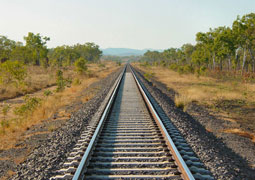
Debating the roadmap to stabilise Transnet’s performance and reform South Africa’s logistic systems to address inefficiencies and improve port and rail transport systems in the National Council of Provinces, the Deputy Minister of Transport, Mr Mkhuleko Hlengwa, declared that the transport and logistic sectors should the catalyst for economic growth and prosperity.
Following the seventh administration’s cabinet lekgotla, there was broad consensus that government’s apex priority will be inclusive and sustainable economic growth, he said. This is underpinned by reforms that seek to encourage private-sector participation in rail networks and port operations. Meanwhile, an increase in investment in science and technology will increase capacity for innovation in these sectors.
However, Mr Hlengwa pointed out, in the past decade inefficiencies in our ports and rail systems have stifled progress and diminished Transnet’s global competitiveness. This was exacerbated by recurring debt and unstable finances, which has meant that there has been no expansion of ports and rail infrastructure.
In response, the government introduced a series of reforms to revitalize the ports and rail systems through the strategic freight, rail and logistic roadmap. In addition, Transnet has focused on the recovery of freight volumes and ensuring financial sustainability. The government has also investigated creating a legislative environment that will allow for cooperation between public and private sector operators.
In response to this statement, Ms Seeng Mokoena (uMkhonto weSizwe Party) said that mismanagement, corruption and weak leadership at Transnet has created ports that are slow, expensive and outdated. While other countries are upgrading theirs through modern technology, we are stuck with delays in this regard that cost us billions. “Instead of them being the gateway to trade, our have become bottlenecks to trade.
“We now hear of private sector involvement in revitalising Transnet infrastructure. We are against that because it would make goods expensive for the poor,” she noted. The MK Party calls instead for, “proper public investment in technology, upskills of its work force and accountable management. We can’t hand over our assets to profit driven companies,” Ms Seeng concluded.
Mr Khaya Ceza (Economic Freedom Fighters) also rejected the idea of privatization. “Instead, we should embrace a people-centred recovery model that rejects privatisation as a solution to Transnet’s woes.”
Mr Bino Farmer (Patriotic Alliance) reminded the House that South Africa’s port in Durban has been ranked 341 out of 348 world ports by the World Bank. Conditions there pose a huge threat to South Africa’s trade. This is coupled with the decline in rail networks, which is critical for the movement of coal and iron ore. This has led to the overuse of road transport to compensate for the inefficiencies of our rail network. All of this is a result of misalignment between design and capacity of our logistic systems.
Decentralisation and public-private-sector partnerships to encourage investment and efficiency are the answer to the problem, said Mr Frederik Badenhorst (Democratic Alliance). We also insist on the implementation of accountability measures to prevent corruption and maladministration, he added.
Closing the debate, Mr Mxolisi Kaunda (African National Congress) said his party welcomes reforms aimed at stabilising Transnet’s performance and logistic systems. The recovery of rail corridors will help transport and freight operations reduce the transportation of goods on the roads, significantly reducing road accidents, which he said are caused by the overpopulation of trucks on the road.
Meanwhile, the involvement of the private sector will optimise state assets and bring about a more efficient logistic sector, he suggested.
Abel Mputing
28 November 2024
 Arrange a tour