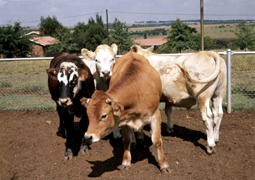
Members of the provincial legislatures said collaboration is of outmost importance in addressing the national disaster of the foot-and-mouth disease (FMD) outbreak. These sentiments were shared by members of the Select Committee on Agriculture Land Reform and Mineral Resources and the nine provincial legislatures during a workshop hosted by the Gauteng Legislature to address the outbreak.
The Mpumalanga legislature said the province needs to improve communication around addressing the problem, particularly in educating communal farmers. Other provincial legislatures supported this suggestion.
Mpumalanga legislature said commercial farmers are often more organised. They take the initiative on things like vaccinations, sometimes even before the government. In contrast, subsistence farmers depend entirely on government support. Even when vaccinations occur, many subsistence farmers, particularly those in townships, struggle to quarantine affected animals. This presents a significant challenge that the province must address and provide the necessary assistance.
The Free State said it struggles with illegal animal movements at border entry points. Regional roadblocks are conducted, but the shortage of law enforcement personnel is a challenge and also incurs additional costs for things like overtime which is an additional burden for the department. The Free State said the integrated multitask roadblocks will also require more resources from various agencies.
Currently, the province is addressing reported and confirmed cases. Sometimes, famers do not report outbreaks and then the province is not properly aware of all cases.
Legislatures also reported a shortage of veterinarians, although the Gauteng Department Agriculture said private veterinarians could assist through an application through the state vet.
An input from the Free State said currently there is only one institution producing veterinarians, which accepts fewer than 400 first-year students annually. This shortage raises concerns about the agricultural sector’s preparedness. The FS called for retired veterinarians and those with basic qualifications to come forward and pre-register to assist with vaccinations.
The Eastern Cape legislature said financial support from the provincial government has been commendable, with an allocation of R25 million for control and vaccination efforts. However, it is surprising and concerning that after 30 years of democracy there is still no vaccine available and developed in the country.
Members of the legislatures expressed dissatisfaction over the poor vaccine availability. In response, the Agricultural Research Council (ARC) said South Africa does have a vaccine, but the issue lies in the inability to provide it in the quantities required. However, researchers are actively working on this issue.
Yoliswa Landu
2 March 2026
 Arrange a tour