


The National Assembly has passed the Eskom Debt Relief Amendment Bill, as part of ongoing interventions to rescue the power utility from years of operational challenges and financial crisis.
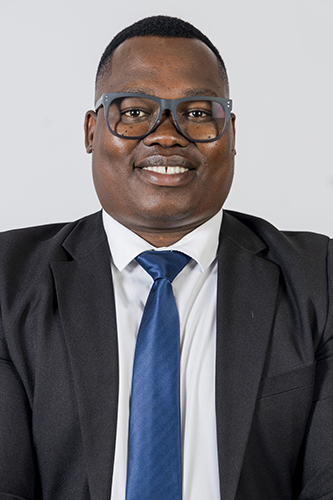
During a debate on the bill in the National Assembly, the Chairperson of the Standing Committee on Appropriations, Dr Mmusi Maimane, tabled the committee’s report on the bill, which aims to adjust the allocation that was done for the 2025/26 financial year from R40 billion to R80,2 billion and introduce an additional R10 billion in 2028/29.
He said the bill was more than just a financial instrument, but a commitment to recovery, structured oversight and irreversible reforms. “We want to continue to act as a constitutional guardian of public money, ensuring that no cent is spent without consequences or no intervention is made without reform.”
Dr Maimane also noted the progress achieved at Eskom since 2023 when the act was first proposed, which he attributed to improved management, among other things. Revenue has increased by 16%, diesel spending has decreased and profit before tax has reached R34 billion, while debt is starting to decline.
However, he cautioned that municipal debt still poses a significant risk. “The municipal debt has now moved to R94,6 billion, with cities like Johannesburg and Tshwane failing to fulfil their financial obligations. We need to ensure that Eskom financial viability is not crippled by municipalities,” he said.
Dr Maimane also called for the unbundling of Eskom into three entities to be accelerated, and that this process must be transparent so that South Africans get a clear and enforceable unbundling timeline and understanding on how the assets will be split.
The ANC’s Mr Michael Segede supported the bill, saying it will ensure that Eskom provides a reliable supply of electricity, bring an end to load shedding and improve generation capacity to ensure inclusive economic development and job creation. He also noted that the bill is an attempt by government to resolve the risk posed by debt and the crisis of inadequate electricity supply. It is not a bailout, he said, but rather a grant based on strict accountability and conditions. This, in turn, will improve Eskom’s liquidity, thereby freeing up money for maintenance, Mr Segede said.
The uMkhonto weSizwe (MK) Party expressed dissatisfaction with the bill and accused government of trying to provide cover for the billions of rands municipalities owe to Eskom. Mr Sanele Mwali for MK said, “The Bill represents a continuation of failed policies that reward non-performance. Eskom does not need another bailout; it must be empowered to collect what is owed by municipalities … Instead of holding defaulting municipalities accountable, the GNU now proposes to subsidise their debt through Eskom, effectively rewarding failure,” he said.
He argued that the intervention sends a wrong message that responsible governance is irrelevant, and instead encourages fiscal delinquency at the expense of discipline and accountability.
Debating in support of the bill, Democratic Alliance Member of Parliament Mr Kingsley Wakelin welcomed the point that the support provided in the bill will gradually allow government ownership of Eskom, as conditions are met.
“In summary,” Mr Wakelin said, “this means that Eskom receives less government money, which helps reduce the country’s debt and interest costs. But this requires Eskom to improve its performance and governance to fully benefit from this support to become a sustainable and reliable utility. While Eskom financial crisis is not yet over, recent efforts to restructure the debt aimed to reduce not only the debt service costs but also the capital amount that is owed by Eskom.”
The Economic Freedom Fighters’ Mr Mogamad Paulsen objected to the original act and the proposed amendments. “When the initial act was passed, the EFF raised concerns about the way National Treasury was approaching Eskom’s problems. We rejected the so-called strict conditions by government on Eskom, because they prioritised the interests of those who loan money to Eskom over the needs of our people.
“Eskom was instructed to use the money for capital and operating expenditure even when it was clear that load shedding was caused by poor maintenance. There were individuals who worked day and night to ensure Eskom collapsed. They wanted Eskom to fail so that their private companies could benefit,” Mr Paulsen said.
Mr Nhlanhla Hadebe (IFP) questioned whether the financial intervention will result in real reforms or just delay the total collapse of Eskom. “While we understand the gravity of Eskom’s debt and its implications on the national economy, we remain concerned about whether this financial support is buying reform or merely postponing collapse. Bailouts cannot be a substitute for governance. Eskom’s operational inefficiencies, governance failures and historical mismanagement must be addressed decisively,” said Mr Hadebe.
He was also concerned that the bill repeals Section 2(3) of the original relief act, the clause which previously tied disbursements to strict conditions of reform and accountability. “Its removal raises questions about transparency and Eskom’s commitment to meeting the necessary performance targets,” he said.
This concern was shared by Mr Ernest Hendricks of the Patriotic Alliance, who argued that the clause be reinstated in the amendment bill. “The removal of subsection 3 weakens the accountability framework. We urge its reinstatement with added provisions for independent audits and public transparency.”
The Patriotic Alliance supports the fact that the debt relief is tied to reform, accountability and transparency. “As a partner in the GNU, we make the following commitments: equity conversion must come with enforceable performance targets. Relief must translate into improved service delivery not executive excess, and we call for quarterly reporting to Parliament and community oversight mechanism,” Mr Hendricks proposed.
Mr Wouter Wessels of the Freedom Front Plus blamed Eskom’s troubles on what he said were many years of incorrect priorities, incompetence, inefficiency, bad governance, looting and corruption. “The FFPlus remains concerned and conscious about the inefficiencies at Eskom and the slow pace at which the unbundling is occurring, and at which the necessary reforms are taking place. The bill is a step in a direction to save money in the long term if conditions are met and necessary reforms take place. We must be cautious and vigilant against continuing corruption and efficiencies and Eskom; we can’t allow to ever again have our national electricity supplier completely looted and being unable to supply the needs of the people,” said Mr Wessels.
Closing the debate, the Deputy Minister of Finance, Dr David Masondo, told members of Parliament that the relief has saved Eskom and the economy from a possible deterioration. “What this debate shows is that had we not provided the debt relief two years ago to Eskom, the rolling blackouts would have possibly continued, our economy would have significantly deteriorated, not only due to the power cuts but also because of the rise in sovereign risk premium. Because of this debt relief and other interventions, today load shedding is lower than it has been in the recent past,” he said.
The Deputy Minister added that the debt relief programme has provided Eskom with an enabling balance sheet to spend more money in improving its capacity to supply electricity.
Sakhile Mokoena
28 July 2025
 Arrange a tour