


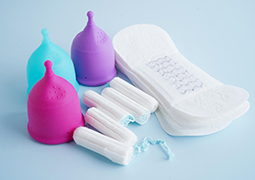
Civil society organisations have challenged Parliament and its committees to take bold, practical steps to end period poverty, calling on lawmakers to champion the rights of girls and women to access safe, affordable menstrual hygiene products.
The Portfolio Committee on Higher Education hosted a colloquium on access to menstrual hygiene products in South Africa. The engagement brought together key stakeholders, including the departments of Higher Education and Training; Basic Education; Women, Youth and Persons with Disabilities; Team Free Sanitary Pads; and I Menstruate.
Menstrual health is an essential component of public health, gender equality and human rights. Yet millions of girls and women globally and in South Africa continue to face barriers to accessing menstrual hygiene products, safe sanitation and accurate menstrual health education.
Despite progressive policy developments, such as the removal of VAT on menstrual products and the development of the Sanitary Dignity Implementation Framework, many women and girls still cannot afford or access menstrual products, safe sanitation and reliable menstrual health education, despite growing awareness of the problem.
Participants highlighted the need to consider menstrual leave policies, noting that severe period pain can affect productivity and, in some cases, prevent women from working or attending school.
The Chairperson of the Portfolio Committee on Higher Education and Training, Mr Tebogo Letsie, cautioned that funding allocated to provide sanitary products must deliver clear results. He stressed the need for accountability, warning against situations where companies receive government funding fail to supply products.
Ms Nokuzola Ndwandwe, founder of Team Free Sanitary Pads, shared her personal experience of working through severe period pain in a male-dominated workplace. She was later diagnosed with endometriosis. She said period poverty goes beyond missed school days and has serious implications for women’s health and career progression. She added that expecting women to carry both the cost of menstrual products and the health consequences is a failure of economic justice.
Ms Ndwandwe called for stronger legislation, aligned with countries such as Scotland, Kenya and New Zealand, to ensure universal access to menstrual products. She acknowledged progress in South Africa, particularly the removal of VAT on sanitary pads.
The colloquium also heard that 83% of girl learners in South Africa lack consistent access to menstrual hygiene products at home and at school. As a result, one in four girls misses school every month due to a lack of safe and accessible products.
Concerns were also raised about the safety of some sanitary products. Some studies have found harmful chemicals in certain pads and tampons, with reports linking these to reproductive health risks. Stakeholders warned that the absence of mandatory testing allows unsafe products to remain on the market.
However, in another meeting in Parliament in March this year, the University of the Free State (which conducted a study on the presence of endocrine-disrupting chemicals in sanitary pads and panty liners) and the South African Bureau of Standards briefed the Portfolio Committee on Women, Youth and Persons with Disabilities on the results of the study and the safety concerns. While the study detected EDCs across tested products, the committee was advised there is no evidence of an immediate health risk.
Meanwhile, in yesterday’s colloquium, Team Free Sanitary Pads further highlighted the proposed Menstrual Health Rights Bill, which calls for universal, free access to sanitary products in public institutions similar to the national condom distribution programme.
The message from stakeholders was clear, ending period poverty requires urgent legislative action, stronger oversight and a commitment to protecting the dignity, health and future of women and girls.
Ms Nonkululo Malawana, the founder and executive director of I Menstruate, said her organisation is calling upon government and Parliament to introduce the Menstrual Health Equity Bill to ensure equity, access and safety. She told the colloquium that they are seeking support for the bill as their research has found that 17 percent of girls in South Africa do not have access to adequate sanitation facilities. Ms Malawana said: “Girls felt stressed, afraid, hurt, embarrassed, lonely and helpless when they go on their first period because they didn’t know what was happening.”
In their respective bills, both Team Free Sanitary Pads and I Menstruate propose that the state must provide free, safe menstrual products to all menstruators in public institutions and other public spaces, including public and private spaces.
The committee noted that in their presentation, the Department of Women, Youth and Persons with Disabilities say they are delivering sanitary towels to schools, while learners say they have not received any.
Ms Fisani Shabangu, a member of the Portfolio Committee on Women, Youth and Persons with Disabilities, urged organisations advocating for free sanitary pads not to give up, and to continue fighting for the poor and vulnerable.
Mr Sihle Ngubane, a Member of the Portfolio Committee on Higher Education and Training, said it was concerning that South Africa has one of the world’s most progressive constitutions, yet many still lack access to basic necessities like sanitary pads. He argued that introducing a bill may be unnecessary, as access to such essentials should already be guaranteed.
Prof Ramneek Ahluwalia, CEO of Higher Health, said a pilot project at Coastal TVET College trained students to manufacture sanitary pads. The aim is to reduce reliance on large companies and empower local production. He called on Parliament to lead the process through legislation and support for small businesses.
Mr Ngubane added that civil society must decide which parliamentary committee should process the proposed bills from Team Free Sanitary Pads and I Menstruate. Committee Chairperson Mr Tebogo Letsie suggested the proposals be directed to the Minister of Women, Youth and Persons with Disabilities, and that the Speaker of the National Assembly be informed.
In his closing remarks, Mr Letsie cautioned that in future, the rollout of free sanitary pads must be safeguarded against abuse. He warned that, if not properly managed, the system could be exploited, as seen in past incidents involving the illegal movement of South African goods across borders.
“We will continue to stand with you in the fight to ensure free and safe sanitary pads for all,” he said.
Jabulani Majozi
2 April 2026
 Arrange a tour