


The National Assembly’s House Chairperson for Committees, Oversight and Public Participation, Mr Cedric Frolick, assured participants of the Youth Parliament that took place in Johannesburg’s City Hall on 15 June that the issues raised there will not be ignored. They will inform Parliament’s ongoing work to improve the lives of young South Africans.
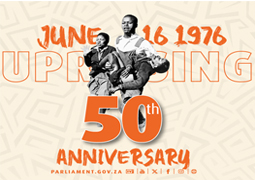
Addressing delegates at the conclusion of the Youth Parliament held on the eve of Youth Day, Mr Frolick reflected on the legacy of the 1976 generation, noting that while the spirit of youth activism remains as relevant today as it was nearly five decades ago, the challenges confronting young people have evolved and require practical, responsive solutions.
“We honour the legacy of the youth of 1976, but the challenges facing young people today are different. They require practical interventions and meaningful responses from government and society,” he said.
A key announcement during his address was the proposed establishment of a Multi-Party Youth Caucus (MPYC) in Parliament, an initiative Mr Frolick said he has long championed. “This is a vision I have had for some time. I mentioned it to the Speaker (Ms Thoko Didiza) who said it must be implemented. The proposal will be submitted to the Rules Committee. Similar to the successful Multi-Party Women’s Caucus, the MPYC will create a dedicated platform within Parliament to advance youth issues and ensure that the voices of young people are heard,” he assured delegates.
Mr Frolick emphasised that the caucus should be interactive and accessible to young people across the country. He proposed that Parliament’s website be used as a platform through which young people can submit questions, engage with Members of Parliament and receive responses timeously on matters affecting them.
He emphasised that Parliament must continue opening its spaces to young people and ensure that their participation leads to meaningful outcomes. “This Parliament has the largest proportion of young Members of Parliament under the age of 35. We must build on this progress and open these spaces even further. Our response to the concerns raised by young people must be such that it changes the course of where many young people find themselves today,” he said.
Mr Frolick highlighted concerns raised during the Youth Parliament about challenges facing students, particularly those relating to the National Student Financial Aid Scheme (NSFAS). He said the Portfolio Committee on Higher Education has been visiting universities, putting particular emphasis on NSFAS. He advised the committee to consider converting these concerns into public hearings to ensure that affected students and stakeholders are able to contribute directly to finding solutions.
While commending the work being done by the National Youth Development Agency (NYDA), he stressed that more remains to be done. “A lot of work has been done by the NYDA, but there is still much that needs to be done. What young people want to see is progress and tangible improvements in their lives,” he said.
Mr Frolick also called on provincial legislatures to ensure that concerns raised through youth forums and youth structures receive prompt attention and feedback. “When issues are raised through youth forums in provincial legislatures, there should be timely responses. Young people must know that their participation leads to action,” said the House Chairperson.
Drawing on his experience as a former educator, Mr Frolick also highlighted the importance of early childhood development (ECD) and parental involvement in children’s education. He noted that many learners arrive at school insufficiently prepared for formal learning due to inadequate support during their early developmental years. This, he said, is a challenge that can have lasting consequences throughout their education.
“This is why the President continues to emphasise the importance of ECD programmes. However, we must also evaluate whether these interventions are delivering the intended benefits and whether implementation is occurring effectively,” he stressed.
Mr Frolick suggested that these matters should continue to receive attention through Parliament’s Portfolio Committee on Basic Education to ensure that commitments made by government translate into measurable outcomes.
Concluding the Youth Parliament, Mr Frolick assured participants that their contributions would inform Parliament’s future work. “I want to assure you that the issues raised today have not been raised in vain. When Parliament deals with matters affecting young people, we will focus on issues that advance the interests of our youth and improve their future prospects.”
He encouraged young people to remain actively engaged in democratic processes and continue using platforms such as Youth Parliament to shape the country’s future.
Rajaa Azzakani
17 June 2026
 Arrange a tour