From the Classrooms of Soweto to the Algorithms of the Digital Age
In 1976, young people in Soweto challenged more than a language policy. They challenged a system that had deliberately structured education, opportunity and economic participation along racial lines. The Soweto Uprising exposed the political nature of education: education was never simply about learning; it was also about who was prepared for which future, who was granted access to opportunity, and whose knowledge and aspirations were considered valuable.
Fifty years later, the architecture of exclusion has changed, but the question remains remarkably familiar. Today, young people encounter a labour market shaped by digitalisation, artificial intelligence, automation, globalisation and rapidly changing patterns of production. The language has shifted from apartheid education to skills shortages, employability, digital literacy and future-ready skills. Yet beneath these new terms lies an enduring question: Who gets to participate in the future, and who is positioned outside it?
This question sits at the heart of the Colloquium on Youth Skills and Employment, which will be held under the theme “The Opportunity Equation: Skills, Innovation and Youth Employment”. The colloquium is therefore not simply a conversation about whether young people possess the right skills. It is an opportunity to interrogate the structures that determine which skills are valued, who has access to them, how opportunities are distributed, who benefits from technological change, and what kind of economy South Africa is seeking to build.
Beyond the Skills Gap
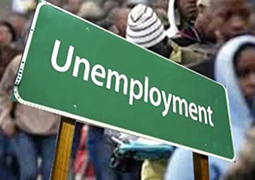
Youth unemployment is frequently presented as a problem of inadequate skills. This framing, while important, can obscure the structural dimensions of unemployment. If the problem is defined primarily as a deficit within young people, the solution becomes equally individualised: acquire more skills, become more employable, adapt to the labour market.
But what happens when young people acquire qualifications and still cannot find work? What happens when the quality of education available to one young person is fundamentally different from that available to another? What happens when access to data, devices, connectivity, transport, professional networks, finance and work experience determines whether skills can actually be converted into economic opportunity? And what happens when the economy does not generate sufficient decent work for the number of young people seeking employment?
These questions require us to move beyond a deficit model of youth and towards an understanding of structural inequality. Young people do not enter the labour market from the same starting point. Class, geography, the quality of schooling, household income, access to technology, social networks and proximity to economic centres continue to influence the opportunities available to them. The issue is therefore not simply whether young people are “job ready”. It is also whether the economy is opportunity ready.
The Political Economy of Skills
Skills do not have value in isolation. Their value is determined by economic structures, labour-market demand and systems of production. The rapid expansion of artificial intelligence and automation illustrates this tension. Technology can increase productivity, create new industries and generate new forms of work. At the same time, it can displace certain occupations, intensify existing inequalities and concentrate economic power in organisations and individuals with access to capital, data and advanced technologies.
The critical question is therefore not whether young people should learn AI. The deeper question is: Who owns the technologies that will shape the future of work, who controls the data, who designs the algorithms, who benefits from increased productivity, and who bears the costs of technological disruption?
A future-ready skills agenda cannot be separated from questions of economic power. If digital transformation occurs without addressing unequal access to infrastructure, education, finance and markets, technological progress may reproduce historical inequalities in digital form. The danger is that the digital divide becomes more than a divide between those who have connectivity and those who do not. It becomes a divide between those who can produce, own and shape technology and those who can only consume it.
From 1976 to 2026: New Technologies, Persistent Questions
The significance of the 50-year anniversary of the Soweto Uprising lies precisely in this tension between transformation and continuity. The young people of 1976 confronted a system that sought to determine their educational and economic futures. Young people today confront a more complex system in which opportunity is shaped by education, markets, technology, geography, capital and networks. The structures are not identical, and South Africa has undergone profound democratic and social transformation over the past 30 years. Yet the persistence of inequality means that the distribution of opportunity remains uneven.
This invites a critical reflection on the meaning of 30 years of democracy. Democracy expanded political rights and opened spaces for participation. But political equality does not automatically produce economic equality.
A young person may possess the formal right to participate in the economy while lacking the material resources required to do so. The right to education does not guarantee equal educational outcomes. The availability of digital technology does not guarantee meaningful digital participation. And possessing a qualification does not guarantee access to decent work. The challenge is therefore to move from formal access to substantive opportunity.
Who Defines the Future?
There is another critical question at the centre of the skills debate: who defines what counts as a valuable skill? Education systems are increasingly being asked to respond to the needs of industry and the labour market. Alignment between education and employment is important. But education cannot be reduced entirely to producing workers for existing economic structures. Education should also develop citizens who can question those structures, imagine alternatives and participate in shaping them.
This is particularly important in an era of artificial intelligence. If education merely teaches young people how to use technologies designed elsewhere, it risks producing consumers of the digital economy rather than creators and critical participants within it. A genuinely transformative skills agenda must therefore combine technical competence with critical thinking, creativity, civic participation, ethical reasoning and the capacity to question power.
Reimagining the Opportunity Equation
The colloquium proposes an opportunity equation, but the equation must be understood critically. Skills + Innovation + Access + Economic Opportunity = Inclusive Youth Employment and Growth. Yet each component is shaped by power. Skills depend on the quality and accessibility of education. Innovation depends on access to knowledge, infrastructure, finance and markets. Opportunity depends on the structure of the economy. Employment depends not only on employability but on the availability and quality of work. Economic growth itself does not automatically produce inclusion.
The task, therefore, is not simply to make young people more competitive within the existing economy. It is to ask whether the economy itself is producing inclusive, decent and sustainable opportunities.
From Reflection to Transformation
Fifty years after Soweto, South Africa stands at another moment of profound change. The struggle is no longer framed in exactly the same language. The technologies are different. The labour market is different. The political system is different. But the underlying question of justice remains. Who has access to knowledge? Who controls opportunity? Who benefits from economic transformation? Who is excluded? And who gets to define the future? The answers will determine whether the digital age becomes another chapter in the reproduction of inequality or an opportunity to fundamentally reshape the relationship between education, skills, technology, work and economic participation.
The Colloquium on Youth Skills and Employment provides a space to confront these questions collectively. It brings together young people, policymakers, educators, researchers, industry, civil society and other stakeholders not merely to identify skills gaps, but to examine the systems that create those gaps and the conditions required to overcome them. The Youth Innovation Expo adds another dimension to this conversation by demonstrating that young people are already producing knowledge, creating solutions and imagining alternatives.
As Nelson Mandela reminded young people: “Sometimes it falls upon a generation to be great. You can be that great generation”. The challenge for 2026 is to ensure that greatness is not determined by where a young person is born, the quality of their school, their access to data and technology, their family's income or their proximity to opportunity. Fifty years after Soweto, the next struggle is not simply for access to the future. It is for the power to shape it.
Mbulaheni Tshinanne Zaidah
21 August 2026
 Arrange a tour